Adjusting to my New Environment

This is the end of my first week in our new building at work (well, almost; I was out yesterday to go with Debbi and her parents to the Monterey Bay Aquarium to see their sea otter pup, who is awfully cute and energetic, by the way), and it’s been a lot of little adjustments:

  • As predicted, walking to Infinite Loop to have lunch in the cafeteria has not been a big deal. I leave a few minutes earlier than I used to, and end up finishing lunch quite a bit earlier. Recruiting people to go to lunch with me has been trickier, though: More people have been bringing their lunches or going out for lunch. I see the cafeteria (which is really quite good) as a middle ground between the two. Plus, I get more exercise walking to and from, and I’ve convinced people to take the slightly longer walk back twice so far.
  • Gathering folks for afternoon coffee has been tougher, though. We have a coffee bar in our building, but very little seating, whereas Infinite Loop had the cavernous atrium with large, comfortable couches and many tables besides. Once it warms up and dries out we can have coffee outside, where there is more seating, but this week we tried it in a conference room, which made cow-orker K say she felt like we needed to bring an agenda for coffee, and wasn’t very satisfying. So I’m not sure what the solution will be here. I bet what will ultimately happen is “afternoon coffee less often”.
  • Being in a building with fewer people definitely feels a little disconnected from the rest of the company. I’m also in an office which gets less foot traffic, so it’s more up to me to go chat with people. But I think I’m up to the task. 🙂
  • Still haven’t quite figured out the best route to drive to the building from the freeway – I think I need to come in the back way to avoid the main traffic light (where I used to turn left to go to my old building). At least we have plenty of parking – until the upstairs gets populated, anyway.
  • My office is right next to the bathroom, which is nice, but a long hike from the printer, which is a tad annoying. I’d rather be close to the bathroom, though!

Differences I haven’t taken advantage of yet include being closer to the fitness center, and on the other side of the major road separating us from Infinite Loop, both of which will be convenient when I start biking to work again. And also being a little closer to some stores and restaurants where we could go for lunch. (I hope to get folks to go to Armadillo Willy’s once a month or so.)

Also, it rained like crazy on Wednesday but I didn’t hear it at all through my office’s floor-to-ceiling windows – talk about soundproofing! On the other hand, I can easily hear the truck that just drove by. You can’t have everything.

So the downsides of the move have been little stuff. The upside – in the long run – will be some groups who have been off in yet another building for the last year – which include some of my better friends in the department – moving into our new building too. That’s what I’m really looking forward to, and that will make the move ultimately worthwhile, I think.

Doctor Who: The End of Tennant

We recently caught up with the last episodes of Doctor Who starring David Tennant. Taken a whole, they were okay, better than the fourth season, but they still show lead writer Russell T. Davies’ tendency to be overly sentimental.

The theme of the season is both one of the Doctor’s impending regeneration (which we know about thanks to the mass media, but he obviously doesn’t), and the Doctor’s relationship to his companions generally, i.e., why he has and needs them, since he spends these adventures without any companions.

The first episode is a big tease: “The Next Doctor” (written by Davies) has the Doctor land in London in 1951 where he becomes embroiled in a plot by the cybermen, but more importantly he encounters a man (David Morrissey) who claims to be the Doctor, and even has a companion, Rosita (Velile Tshabalala), who resembles the Doctor’s past companion Martha Jones. It quickly becomes apparent that this Doctor isn’t who he claims, and the fun is in figuring out who he really is. The explanation doesn’t aim too high, which is fine, since it provides some insight into the Doctor himself as well as making the other character interesting in his own right. The cybermen story is much less satisfying, culminating in a truly ridiculous monstrosity menacing the city. So this one was a bit of a mixed bag.

The second episode, “Planet of the Dead” (written by Davies and Gareth Roberts) is the least interesting story of the season. The Doctor gets on a London bus on which a jewel thief, Lady Christina (Michelle Ryan) is also travelling, and they end up getting sucked through a hole in space to a desert planet, from which they need to learn how to escape, since going back through the hole kills anyone who tries it. They meet aliens who have recently crashed on the planet, and learn why the world is a wasteland, but none of that is really interesting: It’s just a lackluster monster story. The emotional core of the story is the Doctor’s relationship with Lady Christina, who find the Doctor and his life of travelling alluring, but the Doctor realizes that the amoral Christina would be a poor companion and rejects her. There’s a foreshadowing here of the Doctor’s impending demise, but that’s really the high point of the episode. This one was a misfire.

By contrast, “The Waters of Mars” (Davies and Phil Ford) is the best of the specials. The Doctor lands on Mars in 2059 during the days of the first manned mission, but he knows that every person on the base is doomed to be killed in a huge explosion, although Captain Adelaide Brooke (Lindsay Duncan) inspired her granddaughter to help lead Earth outside the solar system. Things start to go wrong when several crewmembers are infected with some sort of virus, causing their bodies to be controlled by some sort of water-based alien. The Doctor tries desperately to depart, but he’s delayed just long enough to have a change of heart: As a time lord, he can change history, and he resolves to do so, to save whomever he can from the base.

This episode is in the tradition of many of the classic series’ “locked inside with a killer” stories, as the characters get gradually herded to a place where they have to make a stand or die, with the added tinge of melancholy since the Doctor knows their fates. It tie into the overall theme of the specials is to show how the Doctor can act unchecked if he doesn’t have a companion tying him to humanity. It’s a tense story with compelling acting and drama, although any long-time viewer of the series will be a little perplexed (as I was) that companions are so important to the Doctor, since he’s gone for periods without them in the past and his fundamental character hasn’t changed. I guess you can chalk it up to specifically the Tenth Doctor being a man whose hubris led him to making this frightening decision. In any event, this is probably he single best episode Davies has written.

Finally we have the two-part episode “The End of Time” (Davies), in which the Master returns (played again by John Simm, although this time as a sort of young punk rather than an insane aristocrat – quite an impressive turn, really). The Doctor arrives on Earth to prevent this, where he again meets Donna’s grandfather Wilfred (Bernard Cribbins) who has been having nightmares about the Doctor and the end of the world. The Master is captured by a billionaire who wants him to activate a piece of alien technology, which he does, except that he turns the tables by using it to take over the Earth himself. But all of this may end up being incidental, as we learn that the President of the Time Lords (Timothy Dalton) has been using the Master as a means for Gallifrey to escape the time lock it was plunged into at the end of the Time War. The Doctor has to stop all of them to save humanity and the rest of the universe besides, but at the price of his tenth incarnation.

This story is annoying for two reasons: First, it’s yet another of Davies’ over-the-top season-enders, which honestly gets very boring after a while. You can’t keep ratcheting up the suspense and excitement level all the time, it’s not “Doctor Who Saves the Universe Again and Again”. Second, even after he’s been fatally wounded, there’s a lengthy denouement where he travels around to visit or see the many friends he’s had in his tenth life, a sort of melancholy mirror to the events of “Journey’s End” at the end of the fourth season, but which really feels entirely unnecessary. A little nostalgia here and there is okay, but geez, this was too much. The scene with Captain Jack was amusing for the decor of all the aliens in the bar, and the encounter with Rose was amusing, but I think this sequence should have been scaled back considerably.

Some bits are quite good: Wilfred is an endearing character, and the fate of Donna is still rather tragic. John Simm is excellent as the Master, especially in the first half, Timothy Dalton is always a delight to see, and the final confrontation between all parties is quite good (although it perhaps goes on a bit too long, and the solution the Doctor chooses seems so simple as to undercut the length even further; Davies is not really the strongest plotter). But overall I found “The End of Time” a bit disappointing, especially after “The Waters of Mars” (whose themes were largely dropped in this story, which is also too bad; I’d been intrigued by the possibility of the Doctor heading down a path of hubristic self-destruction, which isn’t how it played out).

I’ve said several times before that I didn’t think David Tennant was as good a Doctor as Christopher Eccleston. This is selling Tennant short to some degree: I think he was let down by the writing as much as anything. Although I do feel he played the character in a way too similar to some past Doctors, whereas Eccleston’s Doctor didn’t really resemble any of his predecessors (which was, uh, fantastic). But Tennant’s earnestness and comic tinges have been entertaining.

For next season, I’m most excited that Steven Moffat will replace Davies as executive producer and head writer, as Moffat has written several of the very best episodes of the series, and I’m looking forward to the quality of the writing going up next season. Here’s hoping that’s how it works out.

(You can read my reviews of other nouveau Doctor Who seasons here.)

My New Environment

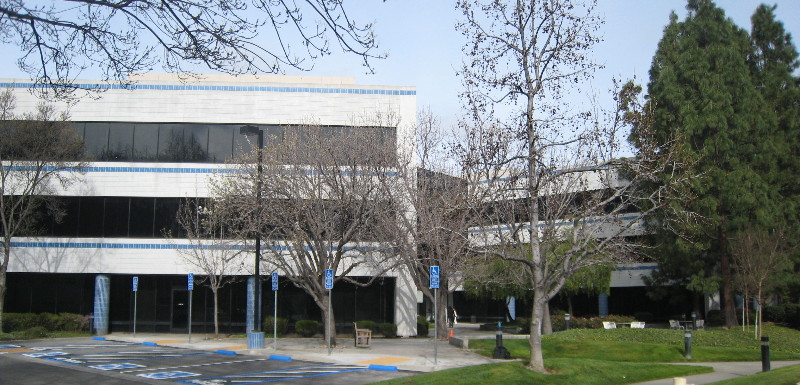
And so I celebrated my 11th anniversary at Apple by walking in to a new building this morning:

It’s actually kind of familiar to me, as two of my friends have worked here for the last few years, and their team headed elsewhere as part of the big game of office musical chairs which involved us coming here.

Everyone’s getting settled in; I spent half the morning under my desk hooking up computers and network cables. There don’t seem to have been any major mishaps, just lots of little details. And we all got new water bottles as little welcome gifts, which I thought was nice. It has the advantage that I don’t have to make the sometimes-tedious left turn into Infinite Loop in the morning, and it’s closer to the fitness center, which will be convenient when biking in. On the other hand, I have to test that I can receive mail here, since I tend to have all packages delivered to work (mainly so I don’t have to play the “signature shuffle” at home if they require a receipt signature).

I wonder if I’ll be in this building for the next 11 years?

This Week’s Haul

  • Batman and Robin #9, by Grant Morrison & Cameron Stewart (DC)
  • Blackest Night #7 of 8, by Geoff Johns, Ivan Reis & Oclair Albert (DC)
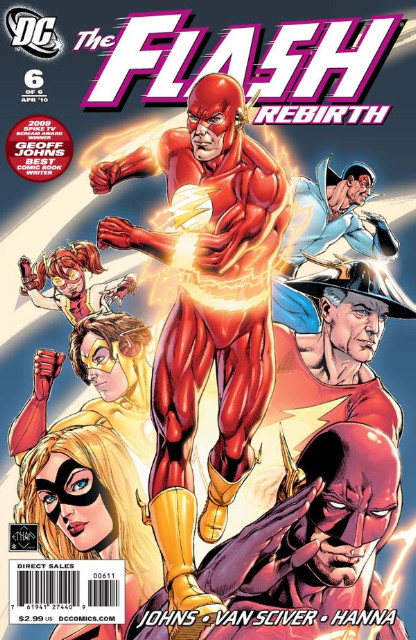
  • The Flash: Rebirth #6 of 6, by Geoff Johns, Ethan Van Scyver & Scott Hanna (DC)
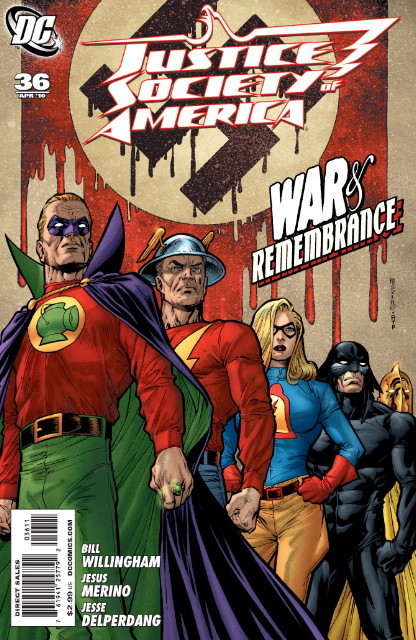
  • Justice Society of America #36, by Bill Willingham, Jesus Merino & Jesse Delperdang (DC)
  • Madame Xanadu #20, by Matt Wagner, Joëlle Jones & David Hahn (DC/Vertigo)
  • Victorian Undead #4 of 6, by Ian Edginton, Davide Fabbri & Tom Mandrake (DC/Wildstorm)
  • Avengers: The Korvac Saga HC, by Jim Shooter, Len Wein, Roger Stern, David Michelinie, George Pérez, Sal Buscema, David Wenzel, Klaus Janson, Pablo Marcos & others (Marvel)
  • Fantastic Four #576, by Jonathan Hickman & Dale Eaglesham (Marvel)
  • The Marvels Project #6 of 8, by Ed Brubaker & Steve Epting (Marvel)
  • Irredeemable #11, by Mark Waid, Peter Krause & Diego Barreto (Boom)
This month’s Batman and Robin is hands-down the best issue of the series so far. Overlooking the rather obvious solution to getting the critically-injured Batwoman out of the cave where the two Batmen fought last issue (ah, the joys of a readily-available deus ex machina), Morrison manages to pull off everything he tries here: The faux Batman returns to Gotham and faces off with Robin, who’s recovering from a spine transplant (!). The impostor speaks in broken English with a mix of old and new styles of Batman jargon, and is gradually decaying as the story goes on. Robin and Alfred put up a stiff fight (always nice to see Alfred show he’s more than just a butler), and then Batman and Batwoman show up to put things away. Robin gets a justified jab in at Batman’s behavior at the end. And Cameron Stewart’s art is outstanding, the finest the series has yet seen (I hate the hair style he and Frank Quitely have saddled Dick Grayson with, though). For a change, I liked this issue better than Greg Burgas did.

The series has been something of a mess so far, because Morrison spends too much time messing around with either peripheral elements, or with the “bigger picture” of what’s going on in the Batman universe, even though that bigger picture is rather silly. (Consider, after all, the Batman here doesn’t even wonder who might have put a fake body – which managed to fool Superman – in place of the original Batman.) If he could just focus on the relationship between Batman and Robin, this would be a much better series.

The delayed finale of The Flash: Rebirth shows up this week. Although Ethan Van Scyver’s artwork is always nice to see (though it seems much less detailed here than usual), this has been a rather pedestrian story all around, certainly not nearly as good as the last time Geoff Johns brought a hero back from the dead. Of course, Green Lantern: Rebirth had to explain why Hal Jordan went bad so he could return to being a hero, whereas Barry Allen has been sainted by DC heroes and fanboys for decades now, so this story was just about giving him a threat big enough to reinstate him among the DC pantheon. And Johns pulls in all the usual Flash tropes, most of them (naturally enough) from Mark Waid’s remarkable run on the title: The Reverse-Flash, the extended Flash family, and the Speed Force. He throws in a retcon where Barry’s father was arrested for the murder of his mother, and a bit of time travel involving the beginning of Barry’s career, but it’s otherwise a pretty routine modern-day Flash story, actually not up to the standards of Johns’ own run on Wally West’s series.

To be fair, a friend of mine described Johns’ Green Lantern relaunch shortly after it began as “the least necessary relaunch in comics”, and it ended up being considerably more interesting than that. With an ongoing Flash series on the way, Johns may be able to work similar magic there. But this isn’t a promising start.

Why do I get the feeling that we’re finally getting to the Justice Society of America story that Bill Willingham really wanted to tell? The last several issues have been nothing more than a fairly stupid way to split the JSA into two teams, getting (mostly) the marginal members into the JSA All-Stars series (where they can be safely ignored) and paring the core team down to manageable levels. Here we jump right into the story – 20 years in the future, where Mr. Terrific is imprisoned by a new regime which has captured and is executing the JSA members. He’s dictating his memoir, expecting his own end to come soon, explaining how the new regime came into power, with a group of Nazi-oriented villains attacking the JSA and killing Green Lantern.

It’s not like we haven’t seen set-ups like this before, but Willingham seems to enjoy and excel at telling war stories, so even if this ends up being resolved through the miracle of time travel, it could still be fun.

The Seven Samurai

It’s been a lo-o-ong time since we’d been to see anything at the Stanford Theatre, but when I saw they were doing an Akira Kurosawa film festival, I persuaded Debbi to go with me to see the classic Japanese film The Seven Samurai (1954). I’ve actually never seen any Kurosawa films, and I’ve always figured I should see at least this one. (No, I’ve never seen The Magnificent Seven, either.)

Set in 16th-century Japan, a peasant village is under threat of a large band of mounted bandits. One of the peasants refuses to just give in, and after consulting with the village elder they go to a larger town to recruit samurai to come defend them. After some initial difficulties, they find an older rōnin, Kanbê, who is willing to help, and he is able to find six others to assist him in the defense, including a young appentice, Katsushirô, and a wild reckless samurai, Kikochiyo. Returning to the village, the samurai find the peasants are suspicious of them, but they earn their trust and start building defenses and training the peasants in basic military skills. After the barley is harvested, the bandits attack, and the samurai lead the villagers in defending their town, even though the samurai receive no payment other than the food the peasants have to eat. (You can read the full synopsis in the Wikipedia entry.)

The Seven Samurai is a long film – nearly 3-1/2 hours – and it often drags. One of the joys of watching films from other eras or cultures is in seeing how conventions in filmmaking differ from what we see today, and yet there are only so many meaningful glances you can take before the film bogs down (I have the same problem with The Good, The Bad and The Ugly, although I enjoy the film overall quite a bit). The first 45 minutes are quite difficult to get through, as it mainly concerns the peasants and their plight. Once Kanbê appears, the film becomes more exciting and more amusing, especially the sequence of recruiting the other samurai. Indeed, the humor is by far the best facet of the film.

Dramatically, the film is very uneven. The acting ranges from strong to poor; the an playing the apprentice, Katsushirô, is quite stiff, and he has a relationship with Shino, the daughter of one of the peasants, who’s played by a woman whose style could best be described as hysterical. Their scenes together were often painful to watch. The other samurai are generally very well acted, especially Kanbê (who Debbi observed resembles Morgan Freeman in his appearance and mannerisms) and Kikochiyo, the latter of whom is over-the-top in all the right ways, his best scene being the one in which we learn something of his background, although he has several other good scenes.

Although the battle sequences appear very well done for their day they sometimes feel a little too contrived and implausible. It’s easy to see how the film influenced later films involving a few going up against many (of which the TV show The A-Team has to be the reductio ad absurdum). And it’s not a cheerful film, with a rather downbeat ending for the samurai, although a satisfying one in terms of the characters. Kurosawa clearly demonstrates many of the skills of great screenwriters and directors, but I don’t think he pulls them all together as well as, say, Alfred Hitchcock was himself doing in the 50s.

I would say The Seven Samurai is mainly of interest to people fascinated by film history, or historical films for that matter. It has much to recommend it, but I think it falls short of being truly great, not least because of its length and pacing. I’m glad I saw it, but I doubt I’ll feel the need to see it again anytime soon.

Bye-Bye Infinite Loop

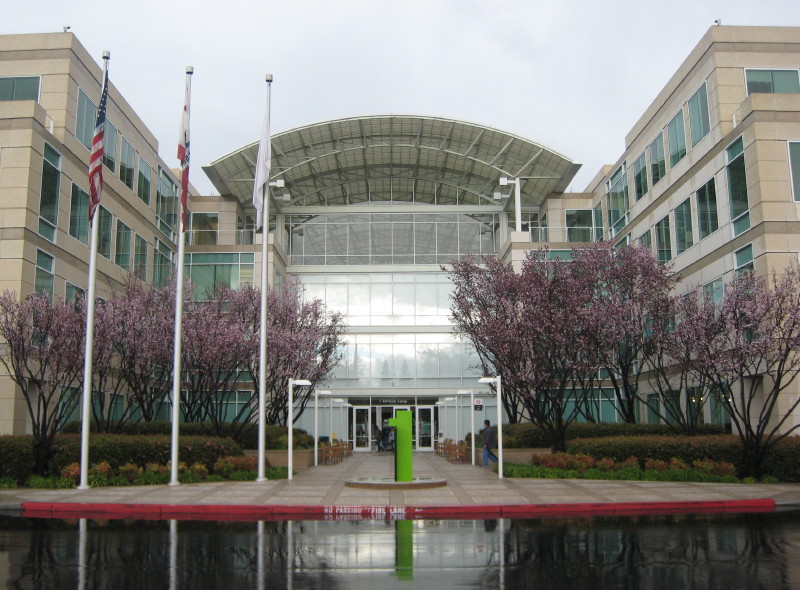
No, I’m not leaving Apple, but our team is moving to a new building this weekend, so today is our last day in Infinite Loop, the main Apple campus. I’ve never worked at Apple anywhere else, having been in 3 different buildings on campus. In fact, I’ve been on the same floor of the same building (albeit in 3 different offices and a temporary cubicle) for 8 years. That’s a long time.

We’re not moving far away – walking over to have lunch at the cafeteria should be easy (a bit trickier on windy, rainy days like today) – and the new building has been substantially remodeled and looks pretty nice (I checked it out on my way out today). But still, I’ll miss being on campus.

But: Onwards and upwards!

Bye-bye!

Roger Ebert

Roger Ebert is one of those people I thought would be around forever, because after all I’ve been watching him since I was a kid, when he and Gene Siskel were hosting Sneak Previews in the late 1970s. It was a little shocking when Siskel died in 1999, but also reassuring (I thought) that Ebert kept their film review show going afterwards. Other than graying hair, Ebert didn’t seem to change very much over the years. I can’t say I was ever a “true fan”, since I didn’t follow his columns (even on the Web), nor watch his show every week (though I’d sometimes watch one if I came across it). Nothing against him, but I’m not truly a film buff, and in fact I’ve spent more time in the last decade watching films made before I was born than films made after I was born. Still, like any other enduring public figure who’s been there for most of your life, you get used to the lack of change.

I came across Ebert’s blog a year or two ago and had read about him having had throat cancer. His picture on his blog showed him with his hands palms-together in front of his face, covering much of his lower face. But other than looking thinner, he basically looked like the same guy.

The picture, it seems, is several years old, as I learned by reading this amazing profile of Roger Ebert in Esquire, which includes a head shot of Ebert as he looks today: He no longer has a lower jaw bone, and cannot eat or talk. And, obviously, he looks quite different. If you cover the bottom of his head, then he looks basically the same as he always has. But the difference of the totality is striking.

I’m not sure why the photo is so fascinating to me. I usually shy away from pictures like this (for example, the seemingly-omnipresent ads in the paper to donate to help children with cleft palates always cause me to turn the page immediately), but not this one. With the equally bewitching article, I think it makes me think that this sort of thing – although rare – could happen to anyone. Ebert seems to deal with it as well as anyone could hope for, at least from the view from the outside: Last month he wrote an entry about not being able to eat, where he seems to be philosophical about it. I’m sure it’s been terrifying for him at times – but you can’t be terrified constantly.

This month Ebert wrote a follow-up to the Esquire article, and it’s also a fascinating read (and has additional pictures). He seems a little surprised that he’s exposed his home life as much as he has, as if he knew intellectually what inviting the writer into his home to write the profile meant, but until he saw it he hadn’t realized it emotionally.

It’s the final paragraph in the blog post that gripped me the most:

I studiously avoid looking at myself in a mirror. It would not be productive. If we think we have physical imperfections, obsessing about them is only destructive.

I don’t think I could do that. I don’t know if I’d be able to deal with it as well as Ebert seems to be. Then again, maybe you deal with it because it’s better than the alternative.

This Week’s Haul

A huge week this week, the most expensive I can recall in recent memory. (Okay, I bought some Magic cards, too, since my Worldwake booster boxes haven’t arrived yet.) Two hardcovers, two paperbacks, and a goodly set of books.

  • Green Lantern #51, by Geoff Johns & Doug Mahnke (DC)
  • Green Lantern Corps #45, by Peter J. Tomasi, Patrick Gleason, Rebecca Buchman, Keith Champagne & Tom Nguyen (DC)
  • Power Girl #9, by Justin Gray, Jimmy Palmiotti & Amanda Conner (DC)
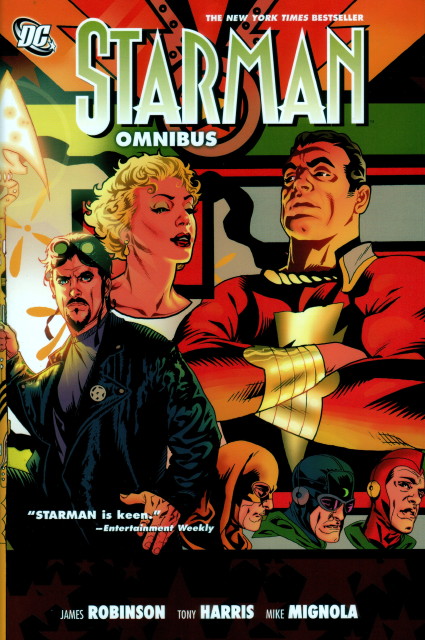
  • The Starman Omnibus vol 4 HC, by James Robinson, Jerry Ordway, Tony Harris,Peter Krause, Mike Mignola, Gary Erskine, Matt Smith, Mike Mayhew, Gene Ha, Wade Von Grawbadger, Dick Giordano & others (DC)
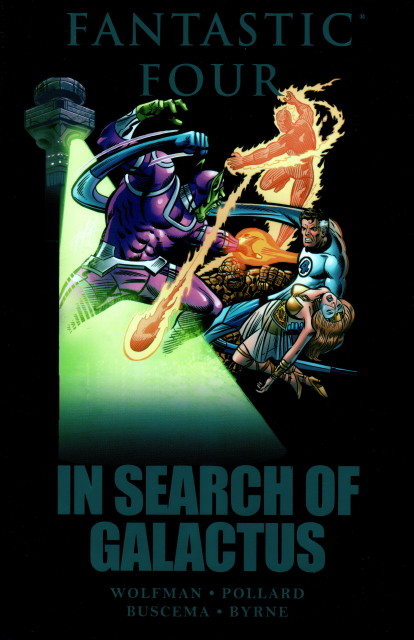
  • Fantastic Four: In Search of Galactus HC, by Marv Wolfman, Keith Pollard, John Buyne, Sal Buscema & Joe Sinnott (Marvel)
  • Guardians of the Galaxy #23, by Dan Abnett, Andy Lanning, Wed Craig & Serge LaPointe (Marvel)
  • The Incredible Hercules #141, by Greg Pak, Fred Van Lente & Rodney Buchemi (Marvel)
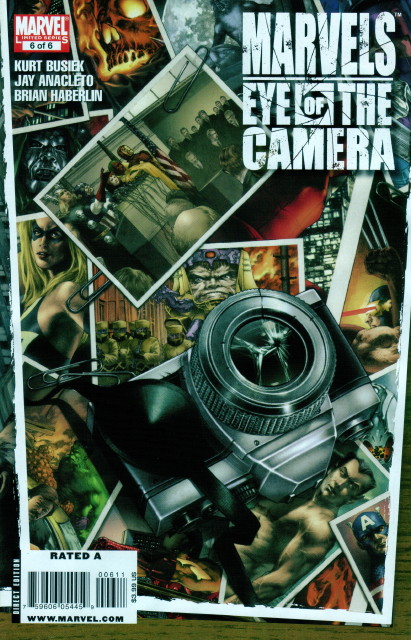
  • Marvels: Eye of the Camera #6 of 6, by Kurt Busiek, Roger Stern & Jay Anacleto (Marvel)
  • Incorruptible #3, by Mark Waid, Jean Diaz & Belardino Brabo (Boom)
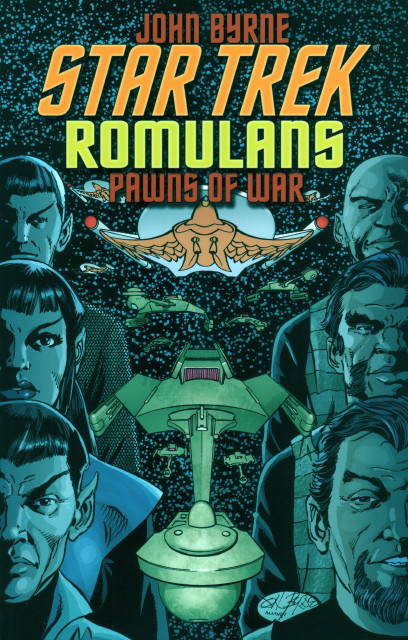
  • Star Trek: Romulans: Pawns of War TPB, by John Byrne (IDW)
  • Invincible #70, by Robert Kirkman & Ryan Ottley (Image)
  • Jack Staff: Rocky Realities vol 4 TPB, by Paul Grist (Image)
  • Atomic Robo: Revenge of the Vampire Dimension #1 of 4, by Brian Clevinger & Scott Wegener (Red 5)
After a long delay, the final issue of Marvels: Eye of the Camera is out this week. My adoration of Kurt Busiek‘s writing knows few bounds, but this is not one of his best series. It follows the protagonist of the first series, Daily Bugle photographer Phil Sheldon, after he learns that he has cancer, and his life in the 1970s and 80s as he watches the Marvel universe develop around him. But rather than being an everyman’s chronicle of key points in the development of Marvel’s world, it’s a rather glum, somewhat sentimental portrayal of Phil coming to grips with the end of his life. And where the first Marvels spotlighted some of the truly great moments of early Marvel comics, few of the scenes depicted in Eye of the Camera measure up. This final issue shows a fight between the X-Men and… someone, a story I dimly remember as it was published around the time I decided X-Men had become unreadable and I dropped it, but compared to the Human Torch vs. the Sub-Mariner, or the Fantastic Four vs. Galactus, it’s an almost comically trivial encounter.

The best stuff in the series really does feature Sheldon, particular in this issue when the mutant Maggie, who as a girl hid out in the Sheldons’ baseman, returns to visit Phil on his deathbed, and they reminisce about that, and Phil puts a big chunk of his life into perspective.

But on the other hand, in a world in which characters survive and barely age for decades, it’s especially sad to see a likable, practically heroic, man like Phil die quietly like he does, and be buried in the ground like anyone else while superheroes fly overhead. As a writer himself (Phil is a writer as well as a photographer), and given his medical history over the last decade, I’m sure Busiek is putting some of his own thoughts and feelings down in this story. It’s not that it doesn’t work at all, but despite Phil’s attempts to put a brave face on his last moments and his legacy, it ends up feeling like too little, not rewarding enough for Phil or for us reading about him.

Jay Anacleto is no Alex Ross, and his figures and expressions often feel a little stiff, and too understated. And where Ross brought a surprising degree of verisimilitude to the superhero sequences he painted, Anacleto can’t duplicate the feat here.

Overall I was disappointed in Eye of the Camera, feeling that the sense of wonder that drove the first Marvels series to be mostly missing, and not really being compelled by the personal drama that was driving the story. I imagine people who read character drama-driven independent comics would get more out of the book than I did, but then people who read those comics are not very likely to pick up a Marvel title.

It’s time for another plug of the lovely Starman omnibus hardcovers that DC is publishing. The series was not entirely collected in paperback, and it’s neat to be able to read the whole thing, including a lot of ancillary material, in this oversized package.

The run is reaching the end of its heyday, as Tony Harris didn’t last a lot beyond this point (we’re up to issue #46 with this volume), and Peter Snejbjerg is a decent artist but he doesn’t have anywhere near the range or rendering awesomeness of Harris. This volume collects the crossover with The Power of SHAZAM, which was a lot of fun as an example of how a non-mainstream series can interact with a completely mainstream one, as well as the excellent Starman 80-Page Giant which featured a story with each Starman character up to that point, including the mysterious Starman of 1951. Plus they collect the Batman/Starman/Hellboy mini-series, which I’d completely forgotten about. Finally, they set things up for the next major story arc, in which Jack Knight goes into outer space to find his girlfriend’s missing brother.

I’d thought the omnibus series was intended to be 6 volumes, but with another 34 issues to go, I bet it’ll be 7 or 8 instead, especially if they include – for instance, the first arc of JSA, in which Jack Knight appeared in a supporting role (as James Robinson helped launch that series). Regardless, I’ll be very happy to have this whole set on my shelf.

Another excellent hardcover collection of a great Marvel Comics story from my childhood. Back in the early 1970s, after first Jack Kirby and then Stan Lee had left the Fantastic Four, the book really suffered creatively. In the late 70s, Marv Wolfman took over writing and editing the book and produced a memorable run full of action, adventure, and character drama – really, bringing it back to the roots that Lee and Kirby had brought up. This era is largely forgotten for two reasons: First, because John Byrne’s later run – actually only about a year and a half later – has been so acclaimed that it’s utterly eclipsed Wolfman’s run. Second, because Wolfman’s run was awkwardly aborted; I’m not sure why, but I suspect it had to do with personality clashes when Jim Shooter became editor-in-chief of Marvel (both Wolfman and longtime Marvel veteran Roy Thomas jumped to DC around that time). Wolfman had spent his two years on the title setting up some long-term plot threads, the most major of which was somewhat abruptly wrapped up after Wolfman left, and another of which – really just a moment of foreshadowing – was dealt with two years later by Byrne. It’s too bad, because I’d have liked to see Wolfman have the chance to build a legacy on the FF similar to that of Lee and Kirby. On the other hand, his departure not only opened the door for Byrne’s run (which is quite good), but also meant Wolfman could write The New Teen Titans, which is, frankly, even better.

This collection is a terrific outer-space odyssey in which Xandar – home of the Nova Corps – recruits the FF to help defend them against a Skrull armada. The FF are captured and sentenced to death – via a ray which will cause them to age to that point in just 3 days. Meanwhile, one of Xandar’s allies, the Sphinx, unlocks the power of his mystical gemstone and goes insane, displaying a cosmic level of power, and returning to Earth planning to reshape his homeworld. The FF are forced into a faustian bargain with Galactus to have the world-eater stop the Sphinx, after which all they have to do is find a way to stop Galactus and save themselves from the ravages of accelerated time.

Wolfman tells as good an adventure story as you’d have found in comics of the day, certainly the equal of what Chris Claremont and Byrne were doing on X-Men, and with art by Byrne, Keith Pollard, and longtime FF inker Joe Sinnott. If you’re a fan of any era of the FF, check this one out, because it’s really good. The current series by Jonathan Hickman and Dale Eaglesham doesn’t really compare, even though it’s not bad by any means.

John Byrne’s Romulans comics get collected this month. His Star Trek comics for IDW (other than Assignment: Earth) are in my mind the best Trek comics I’ve seen since Mike W. Barr and Tom Sutton’s run for DC: He’s got the classic Trek look down, and he’s playing around in the backwaters of the universe while still telling recognizably Trek stories.

This collection is an arc which comes out of the classic episode Balance of Terror (one chapter of the book tells that story from the point of view of the Romulan commander, memorably played by Mark Lenard), and involves the Klingon/Romulan alliance, heavily based around the Klingons trying to manipulate the Romulans to get around the Organian peace treaty. It’s a pretty good story overall, although it has a disappointing ending (the Organians show up and, well, that’s it for the conflict), and when most of the major characters are anti-heroes or villains, well, it’s hard to root for anyone. Still, good stuff. I hope Byrne has more Star Trek stories in the pipeline, because I’d read ’em.

Not-a-Holiday Holidays

Considering this is a week full of holidays – Valentine’s Day, President’s Day, Mardi Gras, and Ash Wednesday – it hasn’t been terribly festive for me!

First of all, I ended up going into work on Saturday. Blah. On the other hand, when I’d told her I’d be going in the day before, Debbi went out and got me a half-pound of marzipan from See’s Candy and gave it to me a day early. She told me that she’d had to brave the crowds after work on the Friday before Valentine’s Day. So I went to my bag and pulled out some See’s Candy I’d bought for her. It’s turns out that See’s is a lot less crowded at 12:45 in the afternoon the Friday before Valentine’s day.

We had a quiet Valentine’s Day, as it turned out. We exchanged cards, ran some errands, and in the evening I cooked dinner. I made a pasta dish with chicken, asparagus and pistachios in a cream sauce. The chicken was a new addition that Debbi suggested. I think it turned out the best of any time I’ve made this dish, and I’m not sure why. The sauce was not as thick as usual, which I think was a big factor. We nommed it down pretty quick, and Debbi had leftovers for dinner on Monday.

To add insult to the injury of my one-day weekend, Debbi got President’s Day off (which I don’t), so she had a three-day weekend. Sigh. (Well, good for her, though!)

Work has been hectic as all get-out lately (as you might guess since I went into work on Saturday). This week my main project got interrupted by a series of more important projects. Sigh. But I’m plowing through them as fast as I can.

Meanwhile, I’m waiting for an order of the newest Magic set, Worldwake, to arrive. Ironically, I ordered them (via eBay) from a store up in Sacramento, figuring that they’d get here pretty quickly. But the store’s owners had a family emergency on release weekend, and they haven’t shipped them yet – a week and a half later. I’m sympathetic that they got backed up on shipping orders, but this is starting to get a little ridiculous. And frustrating. Hopefully they can get it out this week; I’m pinging them every few days for status updates.

Oh, and the weather has been absolutely beautiful this week, foggy in the morning (which sadly may have led to a small airplane crash in the area this morning), then sunny with highs near 70 by early afternoon. Of course, the rain’s supposed to return by Friday… but that’s okay, since I like rain, too.

So that’s the news from here: Some ups, some downs. And probably more of the same for the foreseeable future.

Approaching Pavonis Mons by Balloon

My favorite science fiction writer, Alastair Reynolds, has a new blog: Approaching Pavonis Mons by Balloon.

It includes the first chapter of his forthcoming novel, Terminal World. Which I really need to preorder soon…

Incidentally, I recently read his “hardcover Ace double“, Thousandth Night/Minla’s Flowers, which was fun. Minla’s Flowers is perhaps a bit obvious, but Thousandth Night is a very good prequel to his fine novel House of Suns, and it’s worth reading just for that.