This Week’s Haul

Actually two week’s worth of comics, since I didn’t pick them up while I was on vacation. This includes Marvel’s notoriously large shipment from that week:

  • Astro City: The Dark Age Book Three #3 of 4, by Kurt Busiek, Brent Anderson & Alex Ross (DC/Wildstorm)
  • Batman and Robin #2, by Grant Morrison & Frank Quitely (DC)
  • Green Lantern #42, by Geoff Johns, Philip Tan, Eddy Barrow, Jonathan Glapion & Ruy José (DC)
  • Justice Society of America #28, by Jerry Ordway & Bob Wiacek (DC)
  • The Literals #3, by Bill Willingham, Matthew Sturges, Mark Buckingham & Andrew Pepoy (DC/Vertigo)
  • Madame Xanadu #12, by Matt Wagner & Michael Wm. Kaluta (DC/Vertigo)
  • Astonishing X-Men #30, by Warren Ellis & Simone Bianchi (Marvel)
  • Avengers/Invaders #12 of 12, by Alex Ross, Jim Krueger, Steve Sadowski & Jack Herbert (Marvel)
  • Guardians of the Galaxy #15, by Dan Abnett, Andy Lanning, Brad Walker, Victor Olazaba & Livesay (Marvel)
  • The Incredible Hercules #130, by Greg Pak, Fred Van Lente, Ryan Stegman, Rodney Buchemi & Terry Pallot (Marvel)
  • The Immortal Iron Fist #27, by Duane Swierczynski, Travel Foreman, David Lapham & Timothy Green II (Marvel)
  • Nova #26, by Dan Abnett, Andy Lanning & Andrea DiVito (Marvel)
  • War of Kings #5 of 6, by Dan Abnett, Andy Lanning, Paul Pelletier & Rick Magyar (Marvel)
  • Echo #13, by Terry Moore (Abstract)
  • Irredeemable #4, by Mark Waid & Peter Krause (Boom)
  • Sir Edward Grey: Witchfinder #1 of 5, by Mike Mignola, Ben Stenbeck & Dave Stewart (Dark Horse)
  • The Boys #32, by Garth Ennis & Carlos Ezquerra (Dynamite)
  • Prince Valiant: 1937-1938 vol 1 HC, by Hal Foster (Fantagraphics)
Green Lantern #42 The interesting thing about Green Lantern #42 – which wraps up the “Agent Orange” story before we launch into “Blackest Night” – is that it so baldly demonstrates how machiavellian the Guardians of the Universe have become. The Guardians started off as mysterious and withdrawn arbiters of justice, and over the years have become less and less sympathetic, pursuing their own agendas, answering to nobody (least of all their own Green Lantern Corps), and making decisions humans would consider questionable.

In “Agent Orange”, a group of Lanterns confronts Larfleeze, the keeper of the orange light, an obsessive collector who desires the blue ring that Hal Jordan has acquired. (For those keeping score at home the lights we’ve seen so far include green for will, yellow for fear, magenta for love, blue for hope, and orange for avarice.) Hal manages to hold him off until the Guardians – Larfleeze’s old enemies – show up and make peace with him by giving him something he wants. What he wants is a blue ring, so they tell him where the two renegade Guardians who are forming the blue corps are hiding, and he attacks them. Yes, the Guardians essentially threw two of their own under the bus to build a treaty with this insane creature. Hal doesn’t know what exactly they gave him, but he knows it can’t be a good thing, whatever it is.

I wonder where Johns is going with all this – and I wonder it in a good way. Are we heading towards an eventual rebellion of the Lanterns towards the Guardians? Is something going on with the Guardians to make them so nasty? It’s hard to see how this status quo can hold without the heroes becoming complicit in the questionable actions of their bosses. Yet it’s also a fascinating romp through the relationships among the powerful beings that inhabit DC’s outer space milieu. Good stuff.

The Literals #3 Well thank the powers that be that that’s over.

The Literals #3 wraps up “The Great Fables Crossover”, which has been so horribly written that it actually made me consider giving up on Fables altogether. The premise is that Kevin Thorn has the power to rewrite reality, and he’s decided that our reality has worn out its welcome, so he’s going to wipe it out and create a new one. He kills his brother, Writer’s Block, and stops his father, his son, and several other characters from interfering, spending eight issues eventually getting around to taking action – before the heroes get to him and do, indeed, stop him.

There was maybe three issues of story here, stretched out to nine issues. The rest of the space is filled with plenty of Jack of Fables’ annoying antics (reminding me why I dropped his book in the first place – I can’t stand reading about him), introducing a new character (Jack Frost, the other Jack’s son), and stretching out Kevin’s efforts to overcome Writer’s Block and other minor obstacles as far as possible.

And honestly I just didn’t give a damn about any of it, especially since most of the setup appeared to revolve around the Jack of Fables supporting cast, and having nothing at all to do with the ongoing story in Fables itself.

The Literals appears to have been created specifically to play out this crossover story, featuring several character who represent various elements of literature (individual genres, as well as more abstract elements). It looks like this was the last issue of the series, which is something of a mercy: While these characters are interesting ideas in the abstract, this story has been the worst possible manner in which to launch a new series.

Honestly I’m not sure what Willingham and Sturges were thinking here. The whole thing was badly conceived, badly written, and unrewarding, a strong contender for the award of worst comics story I’ve read this year. I hope Fables gets back on track next issue and we can all forget that “The Great Fables Crossover” ever happened.

Avengers/Invaders #12 Avengers/Invaders has been perhaps the best of the Alex Ross/Jim Krueger collaborations. Unfortunately, that doesn’t set the bar very high, so this 12-issue series has been merely “okay”.

I’m not sure exactly what it is, but every Ross/Krueger book I’ve read has been ponderously paced, striving to be thoughtful but instead being merely dull. I don’t know whether this is a fundamental flaw in Ross’ approach to plotting, or if Krueger brings out the worst in his storytelling, but either way Earth X, Project Superpowers and this one have all been pretty tedious.

What elevates this series above the others is that it seems more tightly focused (even though it’s told in three discrete four-issue segments), having a clear direction and a reasonable resolution at each stage of the way. The other books seemed to get bogged down in their ambition, losing sight of what they were doing and ultimately just being unsatisfying both to read and to have read. A/I also has more action and some sympathetic characters, from tragic World War II soldier Paul Anselm who is thrown into the present along with the Invaders and who causes the problems they’re trying to resolve in this third chapter, to the two Captains America, the first of whom is currently dead in modern times, and the second of whom is his partner Bucky, who is one of the Invaders thrown forward in time. The cast is way too large to give everyone equal time – most of the Avengers are merely troops supporting the main characters – but the focus on the main figures, especially the Invaders, makes the story work well enough.

Unfortunately, the story isn’t really very original: We have Ultron again, the Red Skull controlling the Cosmic Cube again, characters from the past viewing elements of the present day as downright evil (a theme explored more brutally in the DC Two Thousand JLA/JSA story from 9 years ago). So the story has less of an impact than it might have since it feels largely rehashed.

Steve Sadowski’s artwork is pretty nifty, although I find his layouts to be a little confusing at times, and his action sequences to feel somewhat muted. I think he’s inking himself here, but a stronger inker might bring out his best elements more effectively. (His inks seem influenced by Tom Palmer, whose style worked best over a more dynamic penciller.)

Anyway, I don’t regret having read it, but Avengers/Invaders doesn’t make me optimistic that the Ross/Krueger tandem has turned the corner. And certainly I still have no interest in reading anymore of Project Superpowers.

The Immortal Iron Fist #27 The Immortal Iron Fist ends its run this week, although it’ll be followed by an Immortal Weapons mini-series, focusing on the Fist’s peer heroes from the other Seven Capital Cities of Heaven. (The preview of the first issue at the end of this issue looks pretty good.)

The series on the whole has been quite entertaining, and the switch from Ed Brubaker and Matt Fraction and writers to Duane Swierczynski has barely been noticeable, as the style and quality hardly changed at all. The art has generally been strong, and the book’s strength of exploring the background of the Fist’s mystical city of K’un Lun has been intriguing and often exciting. If I have a criticism, it’s that the characterizations of Fist and his friends has been rather thin, so his personal struggles to maintain his relationship with his girlfriend Misty Knight, retain control of his company, and come to grips with getting older have felt superficial. I guess there’s just been too much stuff to pack into a regular-sized monthly comic to make the characters truly engaging.

(For example, this issue ends with a revelation in the Fist/Misty relationship, which is touching and makes his future a little more intriguing, but it feels like it comes out of left field.

Nonetheless, it’s been a fun ride, and I hope Iron Fist will be back after the interregnum of the mini-series. But if not, well, I’m sure he’ll be back sometime.

Prince Valiant vol 1: 1937-1938 My choice for the greatest comic strip in history would be Hal Foster’s epic adventure strip Prince Valiant. And now Fantagraphics is reprinting the series in a series of spiffy, oversized hardcover collections, with the first volume out this week. And even though I own the whole 40-volume set of the Foster-drawn pages that Fantagraphics published in the 1990s, I’m perfectly happy to buy this new series, with larger pages, better-quality paper, and much better-quality coloring. The first volume covers the first two years, 1937-1938, and while the earliest episodes feel a little primitive by the standards of Foster’s tremendous skills, by the end of 1937 you can clearly see Foster getting his footing and developing into the artistic legend he’s become.

What makes Prince Valiant so great? After all, it’s about a fictional hero from Norway who’s exiled along with his father to the British isles during the age of the equally-fictional King Arthur (circa the 5th century). Val becomes a Knight of the Round Table and embarks on many adventures of varying plausibility, so in the large it sounds like pretty standard stuff.

Well, aside from Foster being one of the greatest pop artists of the 20th century, the story feels like nothing else in graphic storytelling: It’s told in narration rather than in the immediate action-and-dialogue style of comic books, yet it loses none of is impact. Foster conveys action and excitement without many of the conventions of superhero comics. And Val gradually grows up, matures, gets married, and has children during the course of the strip. In this volume he’s a young man of maybe 15 or 16 years of age, full of bluster and passion, yet still finding his place in the world. He’s clever, yet makes mistakes along the way and is often saved through dumb (sometimes tragic) luck. It’s an epic saga a little bit different from anything like it, and Foster’s dedication to his craft makes it better than even the notable stories by his not-inconsiderable peers (Alex Raymond, Milton Caniff, etc.).

The next volume is announced for “spring of 2010”, so it looks like we’ll be getting 2 years worth of pages every 9 months or so, which will make for a pretty slow crawl to get to the strip’s apex in the 1950s. I think it will be worth it, though. It’s excellent stuff, and I look forward to enjoying it all over again.

Rainy Vacation, And That’s Okay

Debbi and I rounded up June with a trip back to Massachusetts to visit our families, for the first time in a year and a half, flying out the night of June 19. Debbi jokes that we go on these vacations but hardly see each other, since our families live 30 miles apart. The vacation itself was quite good, although slightly marred by the trip back.

The weather was, objectively, so-so: Cloudy and drizzly (if not rainy) most of the week. This was fine with me, though, since I didn’t have anywhere I needed to go, and when I wanted to go out, it wasn’t nasty enough to be a real problem. It was definitely better than hot-and-humid, which is a risk in Boston during the summer!

I was able to do the shopping I wanted (including visits to That’s Entertainment and Pandemonium), plus having dinner with my friend Bruce. I also read a book and a half, and was pleased to find that my Mom’s (relatively) new Internet connection has built-in wi-fi, which meant I could browse the Web and get my e-mail on my laptop rather than using her computer.

My first outing was to go down to visit Debbi’s family on Tuesday the 23rd. I think Debbi was happy to have someone else to chase around her nieces and nephews, who are 10, 8 and 5. The 10-year-old is getting quite fast, and chasing them around the house I was only able to catch her because she had to stop to keep from running into her siblings! The 8-year-old likes to play chase-and-catch games, and she way underestimated how far I can leap in a single step, surprising the heck out of her. We also reduced Debbi to hysterical laughter during dinner when I told the kids we should settle down because their mom was getting that look, to which the 8-year-old said, “You know the look?” Debbi almost spit out her dinner.

Thursday Dad and I drove down to Cape Cod for a day-trip around the peninsula. We chose the right day, as it was sunny and warm for the whole day, probably the one day it was while we were there. We had lunch at Cooke’s in Orleans, stopped in Wellfleet and then went up to Provincetown for some fried dough and to look into the stores. There’s a nifty game store there now, Puzzle Me This, which would be worth a trip every visit if I were still going to the Cape regularly. After that we stopped in Chatham to see the ocean, and then had dinner in Orleans again, this time at the Saltwater Grille.

We vacationed on the Cape every year while I was growing up, and my parents still go there each year, so the Cape holds a lot of memories for me. Orleans, where we stayed, is so different from the olden days: Most of the stores I remember no longer exist, and parts of town are considerably built up. Cooke’s is really the main holdout – it’s been there forever, and is just as good as it’s ever been. I remember finding some great used comics and books at stores around the Cape which either no longer exist, or are shadows of their former selves. And also a terrific kite store in Provincetown, which weirdly carried a few games like Star Fleet Battles. And biking on the excellent Cape Cod Rail Trail.

Dad said that Cape Cod feels like a second home to him. Even years after I last stayed there, it does to me too, despite all the changes. I should see if I can take a vacation there again some year.

Sunday night Debbi and I double-dated with her sister and brother-in-law, as we did a few years ago, having dinner in the North End, followed by coffee and dessert. They’re fun people to have a night out with, and we all had a great time. (With three kids I’m sure they enjoy getting a night out once in a while, too.) Debbi came back to spend an evening at my Mom’s afterwards, letting her sleep in on Monday.

This would have been a great end to the vacation, except for the flight home: Due to weather on the east coast plus a systems glitch at the airport, our flight back was delayed, delayed, delayed, until we would have missed our connection. So we switched to a different flight, and it was delayed, delayed, delayed, until it finally took off after we’d been at the airport for nine and a half hours. This one was a direct flight, but it landed in Oakland rather than San Francisco, and since it got in after 1 am, it was too late for anyone to pick us up (although Subrata did try, but it was too late even for him). So we took a cab to get Debbi’s car, and finally got home around 2:45 am. We were both exhausted and cranky by the time we got to bed. It was one of the worst travel experiences I’ve ever had.

Despite that, it was overall a very nice vacation. We get back there a little less often over time, but we always enjoy it when we do.

RIP Michael Jackson

When I was a young teenager, Michael Jackson was almost inescapable: His music was on every pop radio station, and he was one of the darlings of MTV. His album Thriller was a generational advent, especially when the video for the title track showed up (it’s still influential today).

So I couldn’t help but pay attention to Michael Jackson as a teen. Despite this, I never bought any of his albums or singles. They were nice enough, but mostly not my thing. (Though to be fair, I did enjoy his music casually, especially the “Thriller” video.)

To be fair, Jackson at his best was better than dance-pop music (especially the synth-pop of the early 80s, which was largely execrable and which, unlike Jackson’s music, sounds even sillier today than it did then). It had some depth and complexity to go along with the rhythm and melody, and I think that’s what over the long haul separated him from most of his contemporaries. Jackson was also a showman, but what he brought were not just slick dance moves and a pretty face (although he brought those, too), but a sense of grown-up style atop his fundamental energy and enthusiasm. Really, all of this is perfectly captured in the cover to his album before Thriller, Off The Wall. Even in his later years, I think it’d be fair to say that Jackson was basically a big kid in an adult body.

Why do so many pop stars become so eccentric? Okay, everyone’s eccentric in their own way (look at me, for instance. No, on second thought, stop looking at me), but something about the rise to the top or the fall from the top seems to make these people nuttier than normal. Arguably Madonna and George Harrison’s eccentricities are more the result of the media coverage that they received, but consider Elvis Presley and Michael Jackson, who embraced their eccentricities and ultimately crafted their images around them, and then seemed to get stuck in a feedback loop of getting weirder as they’re farther removed from their peak.

(Aside: Elvis, The Beatles and Jacko are clearly the dominant pop stars of the 50s, 60s and 80s; who was the dominant star of the 70s? The Bee Gees? Somehow they don’t seem to be in the same class.)

Jackson’s later years became more spectacle than performance (his last album was released in 2001), but his death yesterday still reverberates (even though I’m still a little surprised at the number of passionate Jackson fans out there today). I can’t yet think of the music of my teen years as “golden oldies”, but Jackson’s passing is a big step towards making it so.

(Another reminiscence at Standing on the Shoulders of Giant Midgets.)

This Week’s Haul

  • The Brave and the Bold #24, by Matt Wayne & Howard Porter (DC)
  • Ex Machina #43, by Brian K. Vaughan, Tony Harris & Jim Clark (DC/Wildstorm)
  • Green Lantern: The Sinestro Corps War vol 2 TPB, by Geoff Johns, Dave Gibbons, Peter J. Tomasi, Ivan Reis, Patrick Gleason & Ethan Van Sciver (DC)
  • Jack of Fables #35, by Bill Willingham, Matt Sturges, Russ Braun & José Marzán Jr. (DC/Vertigo)
  • Power Girl #2, by Justin Gray, Jimmy Palmiotti & Amanda Conner (DC)
  • The Starman Omnibus vol 3 HC, by James Robinson, Tony Harris, Wade Von Grawbadger, Gene Ha, J.H. Williams III, Bret Blevins, Michael Zulli & others (DC)
  • Sleeper Season One TPB, by Ed Brubaker & Sean Phillips (DC/Wildstorm)
  • Incognito #4, by Ed Brubaker & Sean Phillips (Marvel/Icon)
  • Invincible #63, by Robert Kirkman & Ryan Ottley (Image)
  • Phonogram: The Singles Club #3 of 7, by Keiron Gillen, Jamie McKelvie, Leigh Gallagher & Lee O’Connor (Image)
Green Lantern: The Sinestro Corps War vol 2 The odd thing about The Sinestro Corps War is that it’s an epic battle with way more carnage than your average mainstream superhero comic, but it ends up feeling like a prologue to a larger story. Which in a way it is, since there are all sorts of broad hints dropped about the upcoming event Blackest Night. Plus there’s Superman Prime and Sodam Yat, who both headed off to appear in Legion of 3 Worlds, the Anti-Monitor, and various other nasties running around who pop up later. This gives the ending anything but an air of finality; we know all these guys will be back. It’s a little disappointing that the story feels so up-front about it.

Anyway, the premise is that long-time GL villain Sinestro gets his own corp, wielding yellow rings, and they go to war with the Green Lantern Corps. The Sinestros are willing to kill, while the Guardians of the Universe won’t let the GLs kill, which makes the battle somewhat lopsided. Plus the Sinestros recruited the aforementioned villains to help take down the good guys. Meanwhile the Guardians are struggling with a prophecy in the Book of Oa (their homeworld), which most of them resist believing in, even though it seems clear it’s all going to come to pass. So the war is sort of a test for the Guardians sticking up for what they believe in, which would be more comforting except that over the years the Guardians have seemed less and less trustworthy in that regard. Which of course is why things start to go downhill from here.

Green Lantern is writer Geoff Johns at his best, as I’ve said before: His best plotting, and his best character bits, seem to end up in here. The story’s climax has the best moment, with Hal Jordan and Kyle Rayner taking down Sinestro after they’ve all been taken out of the larger conflict. Unlike the Guardians, Hal and Kyle are all about sticking up for what they believe in. Ivan Reis’ art is perhaps the best it’s even been in this volume.

The story also includes several issues from Green Lantern Corps, which are not as strong as the mainline GL ones: Patrick Gleason’s art isn’t as polished as Reis’, and the characters are generally not as interesting as Hal Jordan. The issue where Prime and Sodam Yat fight is disappointing; I still don’t understand why Prime is so powerful, that a Daxamite with the full force of the Corps at his disposal can’t take him down.

Overall, this volume and the one that precede it are a nice package. Green Lantern might be the best mainstream superhero comic out there… if it weren’t for Invincible, which also came out this week, and which seems to raise the bar with each new issue.

Sleeper Season One Even though I’m not generally a fan of pulps and noir stories, I’ve been totally sucked in to Ed Brubaker and Sean Phillips’ comics series. Incognito is a clever suspense yarn, and this week we also get the Sleeper Season One collecting the first 12 issues of an older series of theirs. The main character is a guy with superpowers – well one rather awkward yet terrifying power – who’s nominally a good guy, but his agency has sent him as a deep-cover agent into a nest of super-villains, working a long-term mission to bring down the organization. The problem is that when you’re undercover for that long, you start to identify with the guys you’re infiltrating, and it becomes difficult to tell which side you’re really on.

I’m only two issues into the volume so far, but it’s quite good, better than Incognito, maybe better than Criminal. It’s got an open-ended set-up, so it certainly seems to have legs, but stories like this also have to have a big payoff. The first two volumes of Criminal did, so I’m hoping this one does, too. It’s certainly got everything else going for it.

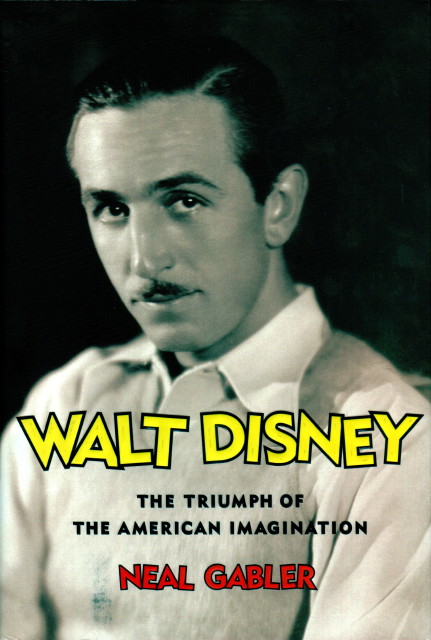
Walt Disney: The Triumph of the American Imagination

Since my girlfriend is a huge Disneyland fan, I was finally motivated to pick up this biography of the man behind the mouse. I chose this book rather than a smaller volume because I figured if I was going to read a biography of Walt Disney, I’d rather get all the story, rather than something which made me want to go read another book with all the story. And on that score, Gabler mostly delivers.

It’s always a little awkward reading an extended sequence about the childhood of a famous man, since it’s rare that the childhood is truly interesting, but in Disney’s case, his youthful experiences seemed to inform his later life considerably. Gabler traces Disney’s childhood from his pastoral days in the small town of Marceline, to his teen years in Kansas City where he worked almost non-stop to help his hard-luck father keep food on the table. His two pleasures as a teen were drawing, and being a jokester and prankster. Following a turn with the Red Cross after World War I, he went into commercial art, where he soon was exposed to the nascent art of animation, and formed his own studio, which went under, and then he formed another one when he moved to California.

Gabler’s theory is that Disney’s efforts were largely dedicated to two goals: First, to form a community of friends and like-minded individuals to replace the family and friends he’d left behind when he moved to California, and later, to recapture and recreate the idyllic feel of small town America at the turn of the century. So he was driven to form and maintain his animation studio, and later to turn it to produce films and TV shows about the American past as he saw it.

Disney turned out to be at the right place at the right time, of course, innovating in the animation field when it was still brand new. But he was also a strong storytelling, idea man, and frequently had his finger on the pulse of popular culture, even if he didn’t really understand himself how he did it. But he was also a strong control freak, wanting the final word over everything his studio did, obsessively reviewing minute details and sending his staff back to the drawing board, and being unwilling to delegate authority, to the point of reorganizing the company whenever someone else started to accumulate too much power. To the extent that Disney could do it all himself, it worked, but in later years it became clear that much of the company’s success was due to the unheralded employees who worked on the features.

Still, Gabler doesn’t stint on crediting Disney himself and his studio with being innovators in their time, being among the first to adopt color and sound in their cartoons, transforming the prevailing style of animation in the early 30s with “The Three Little Pigs”, turning their properties into marketing gold mines, and of course practically inventing the animated feature film in Snow White and the Seven Dwarfs, as well as being the first Hollywood studio to fully embrace television in the 1950s and to create the modern theme park in Disneyland. In this way, the book reads like an early history of animation in America.

But Gabler also points out Disney’s flaws – and he had many, as a man and a manager, not least his tendency to lose interest in older projects when his studio was still on the hook for them, and turn to newer things while leaving his employees on their own without his guiding hand. Later in life he began to believe his own proverbial press releases, feeling he could change the world when in fact he was not quite an entertainer so much as the man behind the true entertainers (although he still did motivate some true innovations right up to his last years of life).

The book reads fairly quickly, for all that it’s a large tome of a book. It feels well-balanced, although I have little to compare it to. Its biggest failing is that after World War II it goes into less depth than I’d have liked, such as the nuts and bolts of building Disneyland (the opening day was a disaster, but little is said about it), or the studio’s later films. Relatively little about the nature of Disney’s legacy is said, as the book ends shortly after his death.

Nonetheless, it’s an insightful and informative book, and I’d recommend it to learn more about Walt Disney the man, as opposed to the myth behind the giant company.

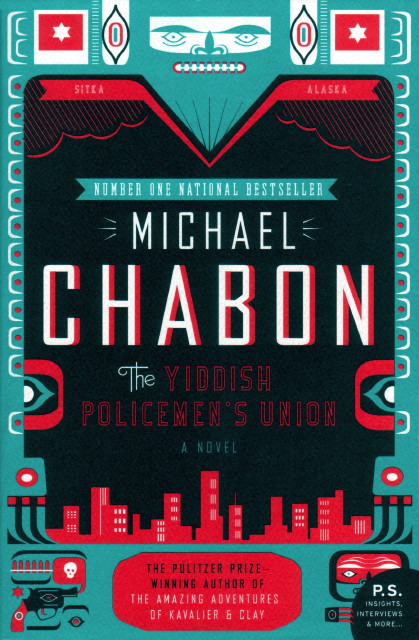
Michael Chabon: The Yiddish Policemen’s Union

I’m not generally a fan of literary fiction – I stick to genre fiction for the most part – but I did read Michael Chabon’s celebrated novel The Amazing Adventures of Kavalier and Clay some years back, and I found some parts of it arresting, and other parts of it tedious, topped off with a disappointing ending as the book peters out. For my book club we tackled his novel The Yiddish Policemen’s Union this month, and by and large I had the same reactions.

The story is an alternate-worlds story, in which the United Stated created in 1940 a district for Jews to immigrate to in Sitka, Alaska, Israel then falls in 1948, and Sitka grows to four million Jews. However, the district will revert to US territory after 60 years, and the story opens with less than a year before reversion, and the populace of Sitka are contemplating the diaspora facing them. In this milieu, Meyer Landsman is a police detective, formerly very successful, but now living in a fleabag hotel following a divorce from his wife. In this hotel a young man is found murdered, shot in the head execution-style, and despite being ordered not to investigate, Landsman and his half-Tlingit partner Berko look into it anyway. They find that the victim was the son of the leader of the Verbovers, a powerful criminal organization. Despite being suspended following a gun battle, Landsman continues to investigate the case, uncovering a conspiracy and the secrets of several power figures en route to unraveling the mystery.

The centerpiece of the novel is the setting of Sitka, its culture, and the sometimes-whimsical, sometimes-sarcastic sense of humor of many of the characters. Becoming immersed in this culture is the main source of fun in the book, seeing how this marginalized society with a strong criminal element has survived in this remote environment for decades. The aged buildings, the history of the city’s chess club, the island of the Verbovers, and the history of the prominent individuals all contribute to the setting, an impressive and subtle bit of world-building.

The characters of Landsman and Berko are well-drawn. Landsman is the down-trodden noir detective, fighting for what he thinks is right even though he’s not entirely sure what that is anymore, or even whether it matters. Berko is the supportive, sidekick, albeit a big bear of a man who waxes philosophical even as he wears his emotions on his sleeve. These two dwarf all the other characters, although there’s a fair amount of variety here, and the main function of most other characters are as ones for Landsman and Berko to interact with.

The story meanders all over the place, taking some unusual approaches to the standard hard-boiled detective story: Landsman is suspended, yes, but not really for the reasons you’d expect, and he doesn’t assume the role of the outsider as a result because he’s already assumed that role following the collapse of his marriage. Landsman’s peeling back of the conspiracy and uncovering of the identity of the murderer feel anticlimactic: The ultimate goal of the conspiracy, which is focused on the coming diaspora, seems like a dream unfolding because it’s so grand, so improbable, and also left unfinished, being only the first salvo in a longer plan beyond the scope of the book. The murderer’s identity feels like it’s from out of left field, perhaps not entirely irrational, but more like a tying up of a loose end rather than a satisfying resolution of the event which drove the plot. The other subplot is Landsman’s relationship with his ex-wife, Bina, which I think is perhaps the least successful element of the book, as Bina is a pretty thin character, and the culmination of their story doesn’t really feel believable.

I’m conflicted about Chabon’s writing style: I love his ability to define both a setting and characters who fit comfortably within that setting. But his use of language frequently feels too self-consciously arty, and the story meanders around too much, with many flashbacks and digressions, some of which work, some of which don’t. While his command of the overall structure of the story is quite strong, he also sometimes pulls in new elements from seemingly nowhere, such as when Landsman’s late sister becomes a central element of the story more than half-way through, despite having barely been mentioned before then. On balance, I think what keeps the narrative from getting bogged down by all this is the fact that Chabon’s primary style is folksy and humorous, so there’s always the promise of another chuckle a few pages ahead even if the current sequence isn’t so exciting.

The Yiddish Policeman’s Union certainly doesn’t live up to the effusive words of praise on the back cover, but it’s still a pretty good book. Chabon’s overall approach is enjoyable enough that I feel like I ought to read more of his stuff. I’m thinking of The Final Solution.

This Week’s Haul

  • Booster Gold #21, by Dan Jurgens & Norm Rapmund (DC)
  • Fables #85, by Bill Willingham, Matthew Sturges, Tony Akins, Andrew Pepoy & Dan Green (DC/Vertigo)
  • The Flash: Rebirth #3 of 5, by Geoff Johns & Ethan Van Scyver (DC)
  • JSA vs. Kobra #1 of 6, by Eric S. Trautmann, Don Kramer & Michael Babinski (DC)
  • The Unwritten #2, by Mike Carey & Peter Gross (DC/Vertigo)
  • Adam: Legend of the Blue Marvel TPB, by Kevin Grevioux, Mat Broome, Roberto Castro, Sean Parsons, Álvaro López & Lorenzo Ruggiano (Marvel)
  • The Unknown #2 of 4, by Mark Waid & Minck Oosterveer (Boom)
  • Unthinkable #2 of 5, by Mark Sable & Julian Totino Tedesco (Boom)
  • B.P.R.D.: War on Frogs #3, by John Arcudi & Karl Moline (Dark Horse)
  • The Life and Times of Savior 28 #3, by J.M. DeMatteis & Mike Cavallaro (IDW)
The Flash: Rebirth #3 The Flash: Rebirth gets downright silly in this issue: Barry is the new Black Flash, a sort of reaper of people tied to the Speed Force, which was one of the dumber ideas from the Grant Morrison/Mark Millar fill-in sequence during Mark Waid’s run a decade or so ago. Since Barry’s presence threatens the lives of the other speedsters, he decides to return to the Speed Force (basically committing suicide), but of course as he gets there we find out that an old enemy seems to be mixed up in the proceedings. This is all amazingly trite, seemingly sending this series on the fast track (ha!) to irrelevance.

The issue’s best moment is when it evokes memories of the old “Who’s faster, Superman or the Flash?” races, when Supes tries to stop Flash, saying that he’d won some of their past races. Flash replies, “Those were for charity, Clark”, and takes off faster than Superman can even see.

In a better story, scenes like that would be an “Oh, that’s clever” moment to lighten the drama, but that it’s actually one of the high points is a little depressing. There are some hints that there’s a little more going on here, but only hints, so far. Unfortunately, Rebirth continues to be dogged by the fact that there just wasn’t any good reason to bring Barry back from the dead, especially as Wally has filled his shoes so ably. There wasn’t a real good reason to bring Hal Jordan back as Green Lantern, either, but in that case Johns constructed a clever story explaining why things had gone bad in the first place, and why he could come back and resume his previous role. That sort of explanation is sorely missing here, at least so far.

JSA vs. Kobra #1 JSA vs. Kobra is a mini-series pitting the superhero team against an extraordinary terrorist groups that’s been running around the DC Universe for decades, the rationale for the confrontation being that Mr. Terrific is not just a JSAer, he’s also the White King of the government organization Checkmate, which I guess has a history with Kobra. Nonetheless, my impression is that this is one of the least-necessary mini-series of recent years, as Kobra is a group whose day came and went about, oh, thirty years ago. The first issue involves Kobra embarking on several missions which seem to be misdirection to keep the JSA ignorant of what they’re really up to.

The art seems weirdly stiff. Don Kramer’s pencils seem okay, though rather subdued, but I suspect it’s a combination of Michael Babinski’s inks and the weirdly painterly coloring job by Art Lyon that give it a frozen look and feel. There are books their combined style could work with, but a superhero title isn’t it, I think.

The second issue will have to be a big step up, or this is one mini-series I might not even get to the end of.

Adam: Legend of the Blue Marvel TPB I missed most of Adam: Legend of the Blue Marvel when it came out, so I picked up the paperback this week. The premise is very similar to The Sentry as he was first presented: A silver age Superman-like hero disappears at the height of his career, and today he’s barely remembers, but today’s heroes have to find him when his greatest enemy reappears and no one else can stop him.

The main difference is that the Sentry was mentally disturbed and his enemy was actually a manifestation of the dark side of his mind, while the Blue Marvel is a black man who was asked by President Kennedy to step down once his identity became known. The other difference is the the Sentry’s existence was wiped from everyone’s memory, even though he was friends with practically everyone in the Marvel Universe, while the Blue Marvel operated before today’s heroes came on the scene, so to them he’s a legend, practically a myth.

Both are good series, although overall I think The Sentry was a better series, because his background was more complex and more personally tragic, and his interactions with the other heroes made his story more nuanced. The Blue Marvel has to carry his book on his own, and he’s a little too generic a character to pull it off: A little downtrodden, but also a through-and-through hero who always does the right thing regardless of the circumstances. The indignant reactions of Iron Man and others to how he was treated 45 years ago are very heavy-handed. The book’s heart is in the right place, but it ends up feeling rather lightweight, and the tragic moment during the climax feels unnecessary and disappointing.

It seems that Mat Broome was replaced by Roberto Castro part-way through, and I don’t think Castro’s style works very well following up on Broome’s polished pencils. It’s too bad Broome couldn’t do the whole series.

In a way, Adam is one of the more ambitious superhero books from Marvel in a while, but I don’t think Kevin Grevioux quite got it all to work. It’s an interesting effort, though, and I don’t regret giving it a try.

Doctor Who, Season Four

It took us a little while, but this weekend we finished off the fourth season of Doctor Who. As usual, I’ll run down the episodes from best-to-worst (in my opinion, anyway), and then some comments with spoilers:

  • Silence in the Library/Forest of the Dead (written by Steven Moffat)
  • Turn Left (Russell T. Davies)
  • Planet of the Ood (Keith Temple)
  • Midnight (Russell T. Davies)
  • The Stolen Earth/Journey’s End (Russell T. Davies)
  • The Doctor’s Daughter (Stephen Greenhorn)
  • The Fires of Pompeii (James Moran)
  • The Unicorn and the Wasp (Gareth Roberts)
  • The Sontaran Stratagem/The Poison Sky (Helen Raynor)
  • Partners in Crime (Russell T. Davies)
  • Voyage of the Damned (Russell T. Davies)

Season four got off to a very shaky start indeed, with the Christmas special “Voyage of the Damned”, which was silly, dumb, nonsensical and several other adjectives. A bad episode, as the Christmas specials generally have been. But still, forgivable as it was just a special.

Unfortunately, the season proper got off to a start nearly as poor, with a ridiculous (and rather gross) villain and plot. The redeeming quality of “Partners in Crime” was the whimsical relationship between the Doctor and new companion Donna Noble, with the memorable musical theme for their pairing. But the episode itself bent over way too far to keep the two just missing each other for its first half, and the premise of creating little baby aliens from human fat was disgusting for basically no good reason. Between them, these two episodes made me put off watching the rest of the season for quite a few weeks, because they were both really weak.

Unfortunately this is a consistent problem in Russell T. Davies’ writing: His characterizations are pretty good (occasionally great), but his plotting and premises – even by the loose standards of Doctor Who – tend to be very weak.

The next few episodes are decent “bread-and-butter” episodes: “The Fires of Pompeii” is about as middle-of-the-road an episode as you could get. “Planet of the Ood” is a pretty good thriller. “The Sontaran Strategem/The Poison Sky” is a mediocre invasion-of-Earth yarn. “The Doctor’s Daughter” is a straightforward colonization-gone-wrong yarn, made a little better through the exuberant performance of Georgia Moffett as Jenny, and titular character; however, I guessed the episode’s punchline about 15 minutes in. “The Unicorn and the Wasp” is a far-too-pretentious science fictional mystery featuring Agatha Christie as one of the characters; despite a few good moments, the episode is too ludicrous to hold together.

At this point we’re more than halfway through the season and it’s been a pretty mediocre lot so far. And as a companion Donna has been something of a mixed bag. She’s at her best when she’s acting as a mature, capable woman; as with Martha Jones in season three, at times she’s more mature than the Doctor himself. But her characterization is uneven, as she’s often overwhelmed by events she’s thrown into, which although it’s fairly reasonable that she would be, it’s also ground that feels recently trod-over in the current series. Catherine Tate seems swept away by the eddies of the writing, doing well when given good material, but seeming whiny or annoying with weaker material. Ultimately I blame the writing, as I think it would take an actress of historic talent to forge a consistently great performance out of the character of Donna as portrayed here.

Fortunately, the second half of the season is a marked improvement over the first, unsurprisingly starting with Steven Moffat’s two-part entry, “Silence in the Library/Forest of the Dead”. It starts off as an effectively eerie horror episode – a global library which is utterly silent and deserted when the Doctor and Donna arrive – and soon become much more with the introduction of archaeologist RIver Song, who knows the Doctor but he doesn’t know her; this is the first time he’s met her, but she’s known his future self for a while. Alex Kingston is terrific as River, and makes me look forward to seeing her (hopefully) in the future, although the way television series work, I’m not holding my breath. The story has the frantic-yet-terrifying feel of some classic episodes, with the characters beating a hasty retreat from their opponents while slowing figuring out (at some cost in body count) what’s going on. If I have a gripe with the episode, it’s the fate of River Song, which although not utterly tragic, is less optimistic than I’d hoped. I like to think that she eventually is reincarnated and is able to live her life and meet the Doctor again. Nonetheless, this two-parter is – as was the case with Moffat’s last two stories – the clear standout of the season.

The season ends with four Davies-written episodes, which isn’t as bad as it might sound. “Midnight” is an effectively creepy locked-room story, more atmosphere than story, about an alien creature that takes over the body of a woman on a broken-down transport in the middle of an unlivable planet’s wilderness. The story’s main flaw is one of motivation – what’s the alien trying to accomplish, and why does it behave as it does once it’s rendered the Doctor powerless? – but as a suspense yarn it’s pretty good.

Donna barely appears in “Midnight”, so conveniently “Turn Left” is all about Donna: An alien fortune teller inflicts her with a creature which causes her to turn right rather than left back when she interviewed with the company where she ended up meeting the Doctor. As a consequence, the Doctor dies because she’s not there for him in “The Runaway Bride”, and terrible things befall the Earth because of his absence. This sets the theme for the season finale: Donna feeling like she’s just an insignificant person, when her presence has changed the world. It’s quite a good episode, although the sense of destiny imparted to Donna feels grafted-on after the way her character’s been handled so far, and again, the fortune teller’s motivations are left unexplained.

The big finish is “The Stolen Earth”/”Journey’s End”, in which the Earth is, well, stolen – by the Daleks, of course. It’s hard to understand why they keep losing when they have the technology to steal planets and keep them out of phase with mainstream time, which is just one of many flaws in the story. But as a Davies story, much of the plot is left unexplained and/or doesn’t make much sense. The theme of the story is that of the Doctor’s large extended family, all of whom (since the series reboot) appear in this episode, usually accompanied by a plot hole or a moment of sheer coincidence. Everyone pulls together to make things turn out okay, and there’s a rather nice sequence of saying farewell to everyone who’s been on the show the last few years, a sort of farewell to Russell Davies’ tenure.

Davies seems to be a sucker for both the Daleks and big, world-changing climaxes, both of which have worn thin their welcome with me over the last few years. He injects Davros, the Daleks’ creator, though other than giving a manic voice to the Daleks’ ambitions he doesn’t contribute much. The episode looks nice – the producers have learned how to apply their special effects budget quite well – and there are many touching moments (and a few clever ones, like when Jackie escapes certain death), but the whole thing feels like it’s trying too hard.

The story ends with a half-human clone of the Doctor, which gives Rose (who’s acquired a lisp since she last appeared) a happy ending with (after a fashion) the man she loves, and with Donna gaining the Doctor’s mind, which overloads her human brain, forcing the Doctor to make her forget all about him and leave her back on Earth. This latter bit seemed not only completely improbable, but largely unnecessary from a story standpoint: Either kill her off cleanly, or find some better way of having her leave the TARDIS. Wiping her memory, too, seems just like cruel writing.

Overall I think the fourth season was a little better than the third season, even though I liked Martha Jones better as a companion than I did Donna. But I’m looking forward to Steven Moffat taking over as head writer. I think he has the right sense of gravitas to give the series some meaning, but hopefully his tighter storytelling will carry over to structure for a whole season, without the kitchier extremes of Russell Davies’ writing.

Oh, and also, we’ll have a new Doctor, as David Tennant is departing along with Davies after this year’s specials. So it’ll be a fresh start. Again.

This Week’s Haul

It seems like it’s one hefty week after another at the comics shop these days. This was largely a meat-and-potatoes haul, with one big series premiere, and a new Avengers collection, albeit of some fairly undistinguished stories:

  • Batman and Robin #1, by Grant Morrison & Frank Quitely (DC)
  • Astro City: The Dark Age Book 3 #2, by Kurt Busiek, Brent Anderson & Alex Ross (DC/Wildstorm)
  • Marvel Masterworks: The Avengers HC vol 117, collecting The Avengers #80-88 and The Incredible Hulk #140, by Roy Thomas, Harlan Ellison, John Buscema, Herb Trimpe & Tom Palmer (Marvel)
  • War of Kings #4 of 6, by Dan Abnett, Andy Lanning, Paul Pelletier & Rick Magyar (Marvel)
  • Irredeemable #3, by Mark Waid & Peter Krause (Boom)
  • The Boys #31, by Garth Ennis & Carlos Ezquerra (Dynamite)
  • Star Trek: Crew #4 of 5, by John Byrne (IDW)
  • Atomic Robo: Shadow From Beyond Time #2 of 5, by Brian Clevinger & Scott Wegener (Red 5)
Batman and Robin #1 Recently, the twists and turns of the DC Universe have resulted in Batman being killed off. Well, not really, but you know how it goes. In any event, as far as the world is concerned, Bruce Wayne is dead, and as long as that’s the status quo it’s a good time to launch Batman and Robin, a new series by Grant Morrison (the writer who handled the dispatching of Bruce) and Frank Quitely, in which Dick Grayson – formerly Robin and then Nightwing – puts on the cowl, and Bruce’s son Damian (whose background I can barely understand) is Robin.

Although the blog Second Printing says “it feels so brand new, like discovering Batman and Robin for the first time”, it didn’t feel that way to me. Indeed, it took only a few pages for it to feel an awful lot like John Byrne’s Generations series, in which in the 1960s Dick Grayson becomes Batman and Bruce’s son BJ becomes Robin, which itself is an homage to an “imaginary story” published back in the 1950s. Presumably Morrison’s paying homage to the same story, having realized that the characters available in the current milieu happen to make such a scenario possible.

Comic history aside, the set-up only really feels “new” in some incidental ways, mainly by contrast with the traditional Batman: Dick is more of a teacher to Damian, with more empathy for others than Bruce has displayed in recent decades, while Damian – the grandson of the head of the League of Assassins – is apparently brilliant but callous, and only barely regards Dick as a mentor. But in the large the premise is the same as Batman’s been going back to the 40s. I wonder whether someone who’s not familiar with Batman lore would really find it all that different, either.

I’ve given Morrison’s writing a lot of flak recently – largely because Final Crisis was such a disaster at the writing end – but I continue to buy (most of) his work because he’s always been a solid ideas man, even though his characterizations and execution can be lacking. The story here is rather the reverse of what Morrison usually delivers: A little more characterization (as noted above), but the ideas content is pretty thin: Outre-looking villains, not much plot. But then, it’s only the first issue, and the story has a very “uncompressed” pace.

All-in-all, it’s an okay first issue. Quitely’s art seems a little more nuanced than usual, which is welcome since I find his art can get repetitive (and his women always look creepy and a little ghoulish). But the gosh-wow factor is low, and as I said, it feels like we’ve seen this before. Plus, Byrne did it better.

“Up” Date

One last, more personal, note about Up. Spoilers ahead in case you haven’t seen the film.

The opening montage of the film in which we see how the disappointment’s in Carl’s life shaping him into a cranky old man really resonated with me. My thought while watching it was that its message is not to put off following your dreams, not to let the little day-to-day things get in the way. My temperament is that of a steady, day-to-day guy, and from time to time I worry that I’m spending all my time just going through the motions and not doing anything truly memorable, the sort of thing I’ll look back on when I’m old and think, “That’s something I’m glad I did.” I also haven’t had any great ambitious goals in life like Carl and Ellie did to go to Paradise Falls.

The later montage shows Carl reading through Ellie’s adventure scrapbook, filled with pictures of their life together. In contrast to the first montage, this one shows how all of the little things, in aggregation, makes up a fulfilling and memorable life. Rather than resonating deeply with me like the first sequence, this one gave me something to think about. I’m still thinking.

The evening of the day we saw the film, I asked Debbi if she’s happy with me even though I don’t go on any adventures with her. She said that we do go on adventures: We went to Hawaii, to Las Vegas, and to Portland, and Disneyland. And I know I’ll remember that Hawaii trip for years to come.

It still seems like it falls short of fulfilling some lifelong dream, though.