March 2010
S M T W T F S
« Feb    
 123456
78910111213
14151617181920
21222324252627
28293031  

Archives

This Week's Haul

Between the death of my beloved cat Jefferson last week, and before that a weeklong visit by my girlfriend’s family, I haven’t had much time for comics reviews. But I’ll get down a few comments on titles from the past week.

By-the-by, if you’re an insane fan of Planetary, as I am, the final 9 issues were collected in hardcover two weeks ago. The regular hardcovers are a really nice package, easily the equal of the large-and-unwieldy Absolute editions, and since John Cassaday’s skills lie primarily in his designs and not his detail work, the art doesn’t significantly benefit from the larger size of the Absolute version (not the way, say, George Pérez’s does).

Two Weeks Back:

  • Astro City: The Dark Age Book Four #2, by Kurt Busiek, Brent Anderson & Alex Ross (DC/Wildstorm)
  • First Wave #1 of 6, by Brian Azzarello & Rags Morales (DC)
  • Planetary: Spacetime Archaeology vol 4 HC, by Warren Ellis & John Cassaday (DC/Wildstorm)
  • Age of Reptiles: The Journey #3 of 4, by Ricardo Delgado (Dark Horse)
  • The Boys #40, by Garth Ennis & Darick Robertson (Dynamite)

Last Week:

  • Batman and Robin #10, by Grant Morrison, Andy Clarke & Scott Hanna (DC)
  • Ex Machina #48, by Brian K. Vaughan & Tony Harris (DC/Wildstorm)
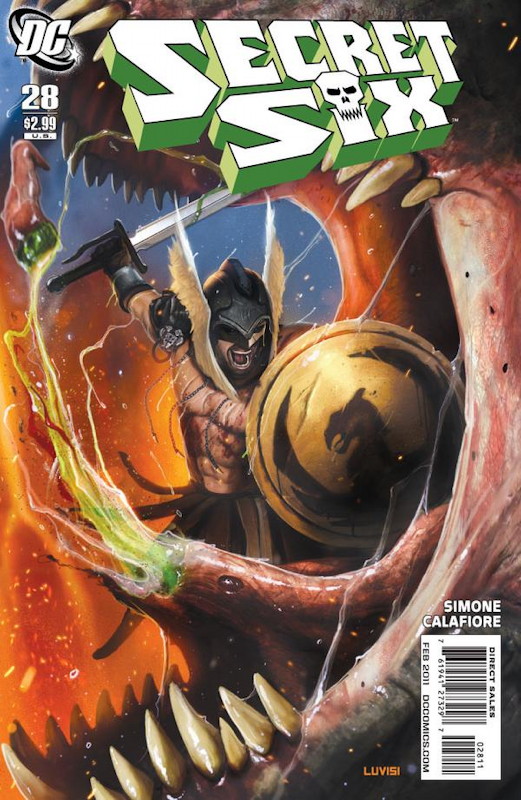
  • Secret Six #19, by Gail Simone & Jim Calafiore (DC)
  • The Unwritten #11, by Mike Carey, Peter Gross & Jimmy Broxton (DC/Vertigo)
  • Criminal: The Sinners #5 of 5, by Ed Brubaker & Sean Phillips (Marvel/Icon)
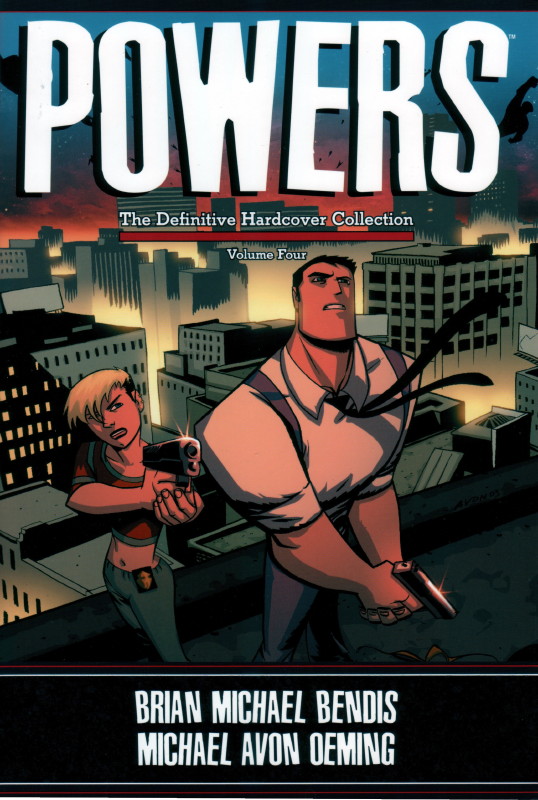
  • Powers #3, by Brian Michael Bendis & Michael Avon Oeming (Marvel/Icon)
  • B.P.R.D.: King of Fear #3 of 5, by Mike Mignola, John Arcudi & Guy Davis (Dark Horse)
  • Chew #9, by John Layman & Rob Guillory (Image)
Brian Azzarello’s First Wave is a mash-up of a number of 30s and 40s heroes, from Batman and Doc Savage to The Spirit and Rima the Jungle Girl. It takes place outside regular DC continuity, and it’s unclear whether it takes place in the 30s or in the present day; designs and fashions seem to evoke a little of both, but without a clear emphasis in either direction. One wonders whether Azzarello is making a subtle comment about how fundamentally the world hasn’t changed all that much in the last 80 years.

This first issue focuses on the Spirit investigating a smuggling operation, Doc Savage returning to New York after missing his father’s funeral, and Rima rescuing a man who was captured by savages and a giant robot. It’s just the hint of where the 6-issue series is going, so it’s way too soon to tell if it’s any good. But despite the artwork by the always-fantastic Rags Morales (who always seems to get stuck doing not-as-good-as-they-ought-to-be miniseries), First Wave doesn’t start off as particularly intriguing or stylized, indeed it feels a little generic, and definitely way too self-conscious in its handling of Will Eisner’s Spirit, a character who was unique in a way that defined his becoming an icon (the anti-Doc Savage, in a way), yet Azzarello seems to want to put the icon stamp on him here.

Given the breadth of material Azzarello is working with, though, I’ll give him the benefit of the doubt after just one issue. But he’s got some work ahead of him.

(Incidentally, there will be both Spirit and Doc Savage spin-off series coming out in the next couple of months – yes, before the miniseries finishes – but I don’t plan to sign on for either of them.)

The latest Batman & Robin is so silly I almost like it. Robin has been programmed by his mother (leader of the League of Assassins) to take out Batman. Meanwhile, fresh from learning that the Bruce Wayne they tried to resurrect last story isn’t the real thing, they start looking for clues as to where Bruce has gone, and they conclude that he was thrown into the past and has been leaving hints in Wayne Manor to that effect, which leads Batman to a secret Batcave.

Little of this makes a lick of sense, of course: Why wouldn’t Bruce Wayne or Dick Grayson have noticed these hints in the last few decades? Morrison’s suggestion that they hadn’t been looking is of course absurd. Okay, Bruce may have noticed and realized that he would just have to deal with the issue when it arose, but you’d think he’d have confided in Dick at some point, advising him of the quest yet to come to the extent that he could. The set-up seems intended to evoke some of the sillier time travel stories of the 50s (like the “secret origin of the Batcave” one), and it’s a cute little conceit, but it’s also just outright silly.

Very nice art by Andy Clarke, but Morrison just doesn’t seem able to achieve a consistent level of quality in this series. Parts work, parts are so ludicrous that they clash badly with the realistic elements. Little of it feels much like Batman stories, and of course Morrison seems completely lost when it comes to characterization, which is a crying shame since the set-up was perfect for a great character drama.

Brubaker and Phillips’ Criminal, like their other work, bring pulp sensibilities to the table like First Wave does, but unlike the DC series, these guys put their own indelible stamp on everything they do, with Brubaker’s hard boiled writing and Phillips’ heavily shadowed figures. They do some of the most engaging comics around.

The fifth Criminal story is a sequel to the second one, featuring ex-soldier Tracy Lawless, effectively indentured to a crime lord, having an affair with the boss’ wife, and charged with investigating a series of murders of underworld figures. Lawless is a bent but not yet broken man, trying to do the honorable thing without getting himself killed, and he navigates a series of threats (getting beat up more than a little in the process, because that’s the sort of series this is) to clean up loose ends and settle some scores before meeting his own fate. Yet, I bet we’ll be seeing Tracy again in a future series. As always, though, if you like this kind of stuff, you can’t go wrong with Brubaker and Phillips’ take on it.

Remnants

When we put Jefferson to sleep, Debbi started crying, and she said, “I was trying to be strong for you.”

In fact, I’ve rarely seen Debbi cry during our relationship, and for the most part this week when she’s gotten weepy it’s been because I started first. But two times I have seen her cry have been back in 2005 when Roulette escaped from the car when she drove up for their weekend visit (and we spent two twilight hours hunting for her), and today when she deleted Jefferson from our Wii Fit, since seeing his avatar sitting there every time we seemed just cruel to us.

I really hate to see Debbi cry. I rarely think about the day Roulette escaped because she was so terribly upset, and I never want to see her that way again.

I think we’re going to be putting away remnants of Jeff’s life here for weeks to come, and each piece will be hard.

It’s especially hard to think that I’m going to live for decades more with only memories and photos of him.

Coping

It’s been hard, as you might guess. I realized that this is really the first time I’ve had someone this close to me die. I’ve never had a friend or a immediate family member die, and the pets I grew up with passed away after I’d moved out (and while I appreciated and remember my grandparents, I’m not sure I’d say I was close to them). But now I understand why friends who have had pets die in recent years have been so broken up by it. I guess you can’t really understand until it happens to you.

Yesterday morning I was sitting on the bed crying a little, and Blackjack came in and looked up at me, jumped up on the bed and nuzzled me, and then sat down next to me. I wouldn’t have guessed it, but he seems to be reacting to our emotions more than Newton or Roulette. Although I think Roulette has been looking around for her sleeping buddy from time to time. Today she got into the cat window and sniffed every corner of it before lying down in the cat bed; it must still smell like Jefferson.

The things that make me smile are seeing our cats doing their normal things. I think it reassures me that they’re okay, especially Newton who, after all, is Jefferson’s brother. Debbi bought some new food dishes (they used to eat out of two 2-sided dishes, and we decided it would be uncomfortable to use those and not fill one of the bowls each day) and they’ve all been eating. Newton’s still taking his pill every morning. He jumps up on my bathroom counter and licks the water after I finish shaving, and all three cats have come in to check out my shower after I get out of it. We’re getting full-on sun today, and they’ve all been lying in the sunbeam in the front room. I was able to get both Newton and Roulette to play last night. I cleaned the porch today and let them out on it; Blackjack rolled around on his back in happiness, and both he and Newton (the dummies) chewed on the surviving snapdragon.

There’s still a big hole in the house, though. In some ways Jefferson was the glue that held the other three cats together, and I think they’re figuring out their new dynamics. Jefferson was top cat, and I expect Blackjack will become top cat now, but he’s a lot more rambunctious than Jeff, so that will be different. Roulette I think wants to start cuddling up to Newton, so we’ll see whether that happens.

We’re going to try not to spend too much time at home this weekend, as it could be a bit morbid. I don’t want to leave the cats alone all the time, either, but then, midday is their prime nap time, and there are all these great sunbeams around.

It’s a bit of emotional thrashing around. We’ll get through it, but it’s going to take some time.

Meanwhile, here’s a picture of me and my cats from 2003 (before we got the kittens, I believe), which I think sums up our relationships fairly well:

The Morning After

I slept well last night, so that’s something. Newton and Roulette both came in to join us for bed last night. I’m not sure if they were confused by Jefferson’s absence, or if they were reacting to our emotions. Or both. I gave Newton a lot of extra attention last night, which he loved, of course, purring up a storm and rolling onto his back and kneading me. (I need to clip his claws.) Debbi is worried that Roulette will get depressed, since she loved Jefferson so much. Blackjack has gone around meowing a little, but he does that anyway, and I’m not sure if it means anything. He often seems to live in his own little world.

Blackjack and Newton were both snoozing with me when I woke up this morning. I played with Blackjack a little (let him rabbit-kick my foot), and then he jumped down. Newton got his usual attention, and then stood up and looked toward the door. I told him (not knowing what he was thinking, of course) that Jefferson wasn’t going to come in to join us this morning. Jeff would often jump up with Newton, and give him some licking while they were both standing on me.

Usually Jefferson comes in to the dining room while I’m reading the paper and meows to get up on my lap, and I put him off until I get to the funnies (which I read last). Blackjack has been joining me for the paper recently – he’s become a lie-on-the-paper kitty – so he came over for a little while and then went to his cat bed in the window. But, no more morning snuggles and purrs with Jeff at breakfast.

Roulette burrowed under the blanked on the futon in the front bedroom as she always does, coming down once to have some breakfast. Newton lay for a while in his usual spot on the bed, and just before I left he’d moved to the front room to lie in the sunlight.

I’ve been wondering if Jefferson’s last few weeks were what he’d have wanted. I know he got some playing in with the laser pointer and cat catcher in the last few months. He’s had some treats. He got some petting. He loved potato chips – he’d come running across the house when I opened a bag of them – but he hadn’t had any in a while. I gave him plenty of chin skritches in his last minutes yesterday. Unfortunately his last week was spent dealing with out crowded house as Debbi’s family and some other friends were visiting, and none of the cats enjoy large crowds. Monday night I went to Magic and Tuesday night I had frisbee, so I feel like I didn’t really get to see him in his last few days. That makes me really sad.

But I know that he had a really good life, even if the last few days weren’t the best they could have been if I’d known what was coming.

I cried a little after I got in to work this morning. I may be working with my office door closed off and on today and tomorrow.

I sent mail to my ex-girlfriend Colleen, who was Jefferson’s first “mom”, since I haven’t seen her on Facebook recently.

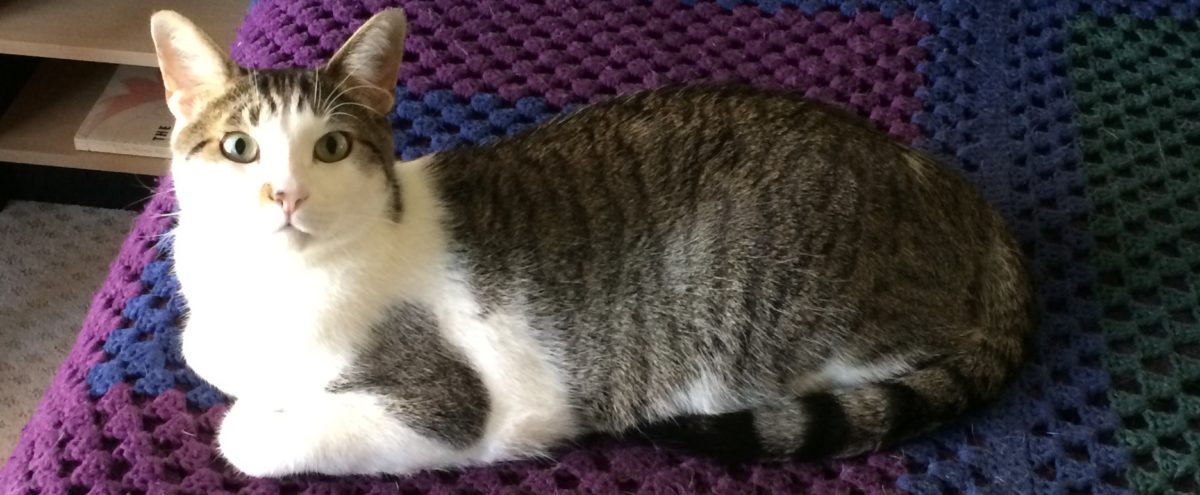
If you’re curious, I have some pictures of Jefferson (and the other cats) from the last 4 years visible via this tag.

Remembering Jefferson: 1994-2010

This morning I noticed Jefferson was not eating – not even a treat – and was being very lethargic. He’d lost a lot of weight over the last 8 months, and he looked even more gaunt than he has recently. I took him into the vet, and by noon she called with the bad news: Jeff had had what she called an “acute renal incident” and whatever measurements they used on his kidneys were “crazy high”.

I spent most of the day agonizing over what to do: To have him hospitalized for 2-3 days getting hydrated and perhaps getting close to normal, and then facing daily subcutaneous fluid injections and other treatments for perhaps a few months to two years of life, or deciding that, as the vet put it, he’d had a good 16 years. By late afternoon, I decided to do the latter. The vet said she thought it was a reasonable decision, that his measurements were not good and it was no guarantee that he’d get back to normal.

Debbi and I met at the vet and said goodbye. Jefferson was snuggly and cuddly, and just before the doctor came in he wanted to get put down on the towel on the exam room table, where he lay down. The doctor gave him a sedative (he didn’t close his eyes, she said they never do), and then she put him to sleep for good. It was very quiet. he even had one lip curled up like he did sometimes.

I didn’t take a final picture of him lying there, and I decided not to keep his ashes. That’s not the sort of person I am. He’ll go to kitty heaven along with several other kitties, and I’ll have my memories and my photos of him.

I got Jefferson and his brother Newton (well, I was told they were brothers) from the humane society in October of 1994, when they were 6 months old. I’d left graduate school in May, started working at Epic in June, and moved to my first solo apartment in August. I’d been going to the Humane Society twice a week for several weeks looking for just the right kittens. It was awfully hard, not adopting the other kittens or cats. I remember in particular two 11-month old orange tabby brothers who were there for week after week; I hope they got adopted. Jefferson and Newton showed up one day and I immediately put in to interview them. I was told that someone else had put in to interview Newton, but when my appointment came later that week it turned out they’d decided not to take him. The two of them were full of energy, jumping all over me and my then-girlfriend Colleen, and I quickly decided they were the guys for me.

The Humane Society screwed up and didn’t neuter them on the day they were supported to be neutered, so I had them home just for a weekend before I had to take them in again, and leave them overnight. That was hard, too. But then they were home for good, little bundles of energy running around my apartment.

It took me a month to name them. They totally stressed me out getting into things, and just being the “little brown guy” and the “little orange guy”. Newton named himself by always falling off my lap while rolling around getting petted. Jefferson’s name just came to me as one that matched Newton, when I decided I had to give him a name, to make him feel more like a member of my home. But it fit.

Newton was the bold one, but Jefferson was the smart one. I’m sure he figured out how to open my front door – if only he could reach the handle. I let them both into the building’s hallway, where they’d go down the hall and intimidate my friend Jim’s cats, walking right into his apartment if we let them.

Those early years, the brothers were inseparable. They’d snooze together and play together, habits they grew out of in their later years. Early on Jefferson would climb into bed with me and curl up alongside my torso; over time he’d move to the foot of the bed (probably because of the extra-comfy blanket I draped down there at the time) and lounge over my foot.

When I moved to California, the cats flew in the cargo hold. When they came out the other end, Newton was hiding at the back of this cage, while Jefferson was loafed up front and center, with a look that said, “I am never going to forgive you for this, you realize that, right?” Both cats (predictably) never liked moving to a new home; they’d slink around the place on their bellies, and then hide somewhere until nightfall, at which point they’d come out and check everything out. They got it all figured out pretty quickly, though.

One day I came home from work and pulled up to my car port, thinking, “Hey, that orange cat sitting at the foot of the stairs to my floor looks just like Newton!” In fact, it was Newton – at some point during the day they’d pushed the screen out of a window over the kitchen sink and gotten outside. Who knows how long they were out there, and it’s lucky they weren’t killed. Jefferson ran back inside as soon as I went upstairs, but I had go down down to entice Newton back.

When Debbi got her kittens, she brought them down every weekend. Blackjack had delusions of being top cat, but Jefferson was having none of it, and quickly taught the kittens their places. Despite this, Roulette loved Jefferson, and the two of them became fast friends, mostly curling up in the papasan together every evening. Jefferson always seemed just a little put out, but sometimes he’d give in and lick Roulette’s head.

I think the coming of the kittens spelled the end of Jefferson and Newton’s close relationship, though. They rarely slept together anymore, and Newton would sometimes play dominance games by holding Jefferson by biting the scruff of his neck.

Most of all, though, Jefferson was my cat – no one else would do. I’d come home and he’d jump down from the bookcase upstairs and come running down to greet me, and then follow me around meowing at me until I picked him up. Other people were not sufficient, and he’d only grudgingly give them attention. He was always quick to purr his deep purr (it took Newton quite a while to find both his purr and his meow). When I was on the phone, Jefferson would jump into my lap, or meow at me if I wasn’t sitting down, no matter where we’d each been when the phone rang. Debbi often said that Jefferson wanted everyone else to just go away, so it would be just him and me.

This morning Newton was meowing his head off around 3:15 in the morning. In retrospect I wonder if he knew something wasn’t right.

On his last day Jefferson came in to greet me when my alarm went off. He came down for breakfast, but didn’t eat. He went up to lie in the sunbeam for several hours, and later I found him sitting in the green cat couch in the hallway – a couch he’d claimed as his some time ago – and finally in the cubbyhole of the cat tree. He meowed all the way to the vet. He’d gotten down to 8 pounds – literally half the cat he once was.

After we said goodbye, I went to buy comic books (I listened to podcasts of Wait! Wait! Don’t Tell Me! on the way, which helped take my mind off it by making me laugh), and Debbi put away our two-sided feeding dish and found a round ceramic one for Newton. The other three cats seem a little bewildered, but I don’t think they know why. Oddly, Blackjack is the one who’s been walking around yowling.

Jefferson would have been 16 years old next month. That’s a pretty good run for a cat. I’ve known for a while that cats at that age can go very quickly. Maybe we could have gotten a few more good months with him, but maybe they wouldn’t have been good months. It will take me a little while not to think about that.

Goodbye, Jeff, my little brown guy. I honestly could not have asked for a better cat. I love you and I’ll always miss you.

Adjusting to my New Environment

This is the end of my first week in our new building at work (well, almost; I was out yesterday to go with Debbi and her parents to the Monterey Bay Aquarium to see their sea otter pup, who is awfully cute and energetic, by the way), and it’s been a lot of little adjustments:

  • As predicted, walking to Infinite Loop to have lunch in the cafeteria has not been a big deal. I leave a few minutes earlier than I used to, and end up finishing lunch quite a bit earlier. Recruiting people to go to lunch with me has been trickier, though: More people have been bringing their lunches or going out for lunch. I see the cafeteria (which is really quite good) as a middle ground between the two. Plus, I get more exercise walking to and from, and I’ve convinced people to take the slightly longer walk back twice so far.
  • Gathering folks for afternoon coffee has been tougher, though. We have a coffee bar in our building, but very little seating, whereas Infinite Loop had the cavernous atrium with large, comfortable couches and many tables besides. Once it warms up and dries out we can have coffee outside, where there is more seating, but this week we tried it in a conference room, which made cow-orker K say she felt like we needed to bring an agenda for coffee, and wasn’t very satisfying. So I’m not sure what the solution will be here. I bet what will ultimately happen is “afternoon coffee less often”.
  • Being in a building with fewer people definitely feels a little disconnected from the rest of the company. I’m also in an office which gets less foot traffic, so it’s more up to me to go chat with people. But I think I’m up to the task. :)
  • Still haven’t quite figured out the best route to drive to the building from the freeway – I think I need to come in the back way to avoid the main traffic light (where I used to turn left to go to my old building). At least we have plenty of parking – until the upstairs gets populated, anyway.
  • My office is right next to the bathroom, which is nice, but a long hike from the printer, which is a tad annoying. I’d rather be close to the bathroom, though!

Differences I haven’t taken advantage of yet include being closer to the fitness center, and on the other side of the major road separating us from Infinite Loop, both of which will be convenient when I start biking to work again. And also being a little closer to some stores and restaurants where we could go for lunch. (I hope to get folks to go to Armadillo Willy’s once a month or so.)

Also, it rained like crazy on Wednesday but I didn’t hear it at all through my office’s floor-to-ceiling windows – talk about soundproofing! On the other hand, I can easily hear the truck that just drove by. You can’t have everything.

So the downsides of the move have been little stuff. The upside – in the long run – will be some groups who have been off in yet another building for the last year – which include some of my better friends in the department – moving into our new building too. That’s what I’m really looking forward to, and that will make the move ultimately worthwhile, I think.

Doctor Who: The End of Tennant

We recently caught up with the last episodes of Doctor Who starring David Tennant. Taken a whole, they were okay, better than the fourth season, but they still show lead writer Russell T. Davies’ tendency to be overly sentimental.

The theme of the season is both one of the Doctor’s impending regeneration (which we know about thanks to the mass media, but he obviously doesn’t), and the Doctor’s relationship to his companions generally, i.e., why he has and needs them, since he spends these adventures without any companions.

The first episode is a big tease: “The Next Doctor” (written by Davies) has the Doctor land in London in 1951 where he becomes embroiled in a plot by the cybermen, but more importantly he encounters a man (David Morrissey) who claims to be the Doctor, and even has a companion, Rosita (Velile Tshabalala), who resembles the Doctor’s past companion Martha Jones. It quickly becomes apparent that this Doctor isn’t who he claims, and the fun is in figuring out who he really is. The explanation doesn’t aim too high, which is fine, since it provides some insight into the Doctor himself as well as making the other character interesting in his own right. The cybermen story is much less satisfying, culminating in a truly ridiculous monstrosity menacing the city. So this one was a bit of a mixed bag.

The second episode, “Planet of the Dead” (written by Davies and Gareth Roberts) is the least interesting story of the season. The Doctor gets on a London bus on which a jewel thief, Lady Christina (Michelle Ryan) is also travelling, and they end up getting sucked through a hole in space to a desert planet, from which they need to learn how to escape, since going back through the hole kills anyone who tries it. They meet aliens who have recently crashed on the planet, and learn why the world is a wasteland, but none of that is really interesting: It’s just a lackluster monster story. The emotional core of the story is the Doctor’s relationship with Lady Christina, who find the Doctor and his life of travelling alluring, but the Doctor realizes that the amoral Christina would be a poor companion and rejects her. There’s a foreshadowing here of the Doctor’s impending demise, but that’s really the high point of the episode. This one was a misfire.

By contrast, “The Waters of Mars” (Davies and Phil Ford) is the best of the specials. The Doctor lands on Mars in 2059 during the days of the first manned mission, but he knows that every person on the base is doomed to be killed in a huge explosion, although Captain Adelaide Brooke (Lindsay Duncan) inspired her granddaughter to help lead Earth outside the solar system. Things start to go wrong when several crewmembers are infected with some sort of virus, causing their bodies to be controlled by some sort of water-based alien. The Doctor tries desperately to depart, but he’s delayed just long enough to have a change of heart: As a time lord, he can change history, and he resolves to do so, to save whomever he can from the base.

This episode is in the tradition of many of the classic series’ “locked inside with a killer” stories, as the characters get gradually herded to a place where they have to make a stand or die, with the added tinge of melancholy since the Doctor knows their fates. It tie into the overall theme of the specials is to show how the Doctor can act unchecked if he doesn’t have a companion tying him to humanity. It’s a tense story with compelling acting and drama, although any long-time viewer of the series will be a little perplexed (as I was) that companions are so important to the Doctor, since he’s gone for periods without them in the past and his fundamental character hasn’t changed. I guess you can chalk it up to specifically the Tenth Doctor being a man whose hubris led him to making this frightening decision. In any event, this is probably he single best episode Davies has written.

Finally we have the two-part episode “The End of Time” (Davies), in which the Master returns (played again by John Simm, although this time as a sort of young punk rather than an insane aristocrat – quite an impressive turn, really). The Doctor arrives on Earth to prevent this, where he again meets Donna’s grandfather Wilfred (Bernard Cribbins) who has been having nightmares about the Doctor and the end of the world. The Master is captured by a billionaire who wants him to activate a piece of alien technology, which he does, except that he turns the tables by using it to take over the Earth himself. But all of this may end up being incidental, as we learn that the President of the Time Lords (Timothy Dalton) has been using the Master as a means for Gallifrey to escape the time lock it was plunged into at the end of the Time War. The Doctor has to stop all of them to save humanity and the rest of the universe besides, but at the price of his tenth incarnation.

This story is annoying for two reasons: First, it’s yet another of Davies’ over-the-top season-enders, which honestly gets very boring after a while. You can’t keep ratcheting up the suspense and excitement level all the time, it’s not “Doctor Who Saves the Universe Again and Again”. Second, even after he’s been fatally wounded, there’s a lengthy denouement where he travels around to visit or see the many friends he’s had in his tenth life, a sort of melancholy mirror to the events of “Journey’s End” at the end of the fourth season, but which really feels entirely unnecessary. A little nostalgia here and there is okay, but geez, this was too much. The scene with Captain Jack was amusing for the decor of all the aliens in the bar, and the encounter with Rose was amusing, but I think this sequence should have been scaled back considerably.

Some bits are quite good: Wilfred is an endearing character, and the fate of Donna is still rather tragic. John Simm is excellent as the Master, especially in the first half, Timothy Dalton is always a delight to see, and the final confrontation between all parties is quite good (although it perhaps goes on a bit too long, and the solution the Doctor chooses seems so simple as to undercut the length even further; Davies is not really the strongest plotter). But overall I found “The End of Time” a bit disappointing, especially after “The Waters of Mars” (whose themes were largely dropped in this story, which is also too bad; I’d been intrigued by the possibility of the Doctor heading down a path of hubristic self-destruction, which isn’t how it played out).

I’ve said several times before that I didn’t think David Tennant was as good a Doctor as Christopher Eccleston. This is selling Tennant short to some degree: I think he was let down by the writing as much as anything. Although I do feel he played the character in a way too similar to some past Doctors, whereas Eccleston’s Doctor didn’t really resemble any of his predecessors (which was, uh, fantastic). But Tennant’s earnestness and comic tinges have been entertaining.

For next season, I’m most excited that Steven Moffat will replace Davies as executive producer and head writer, as Moffat has written several of the very best episodes of the series, and I’m looking forward to the quality of the writing going up next season. Here’s hoping that’s how it works out.

(You can read my reviews of other nouveau Doctor Who seasons here.)

My New Environment

And so I celebrated my 11th anniversary at Apple by walking in to a new building this morning:

It’s actually kind of familiar to me, as two of my friends have worked here for the last few years, and their team headed elsewhere as part of the big game of office musical chairs which involved us coming here.

Everyone’s getting settled in; I spent half the morning under my desk hooking up computers and network cables. There don’t seem to have been any major mishaps, just lots of little details. And we all got new water bottles as little welcome gifts, which I thought was nice. It has the advantage that I don’t have to make the sometimes-tedious left turn into Infinite Loop in the morning, and it’s closer to the fitness center, which will be convenient when biking in. On the other hand, I have to test that I can receive mail here, since I tend to have all packages delivered to work (mainly so I don’t have to play the “signature shuffle” at home if they require a receipt signature).

I wonder if I’ll be in this building for the next 11 years?

This Week's Haul

  • Batman and Robin #9, by Grant Morrison & Cameron Stewart (DC)
  • Blackest Night #7 of 8, by Geoff Johns, Ivan Reis & Oclair Albert (DC)
  • The Flash: Rebirth #6 of 6, by Geoff Johns, Ethan Van Scyver & Scott Hanna (DC)
  • Justice Society of America #36, by Bill Willingham, Jesus Merino & Jesse Delperdang (DC)
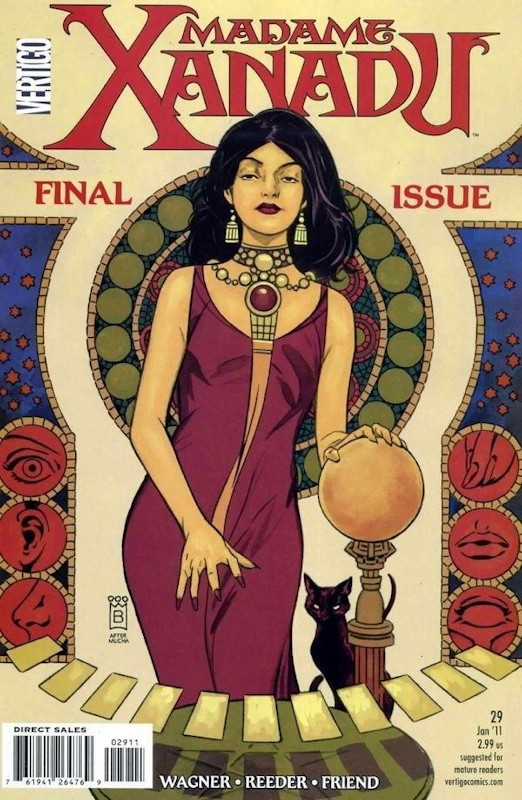
  • Madame Xanadu #20, by Matt Wagner, Joëlle Jones & David Hahn (DC/Vertigo)
  • Victorian Undead #4 of 6, by Ian Edginton, Davide Fabbri & Tom Mandrake (DC/Wildstorm)
  • Avengers: The Korvac Saga HC, by Jim Shooter, Len Wein, Roger Stern, David Michelinie, George Pérez, Sal Buscema, David Wenzel, Klaus Janson, Pablo Marcos & others (Marvel)
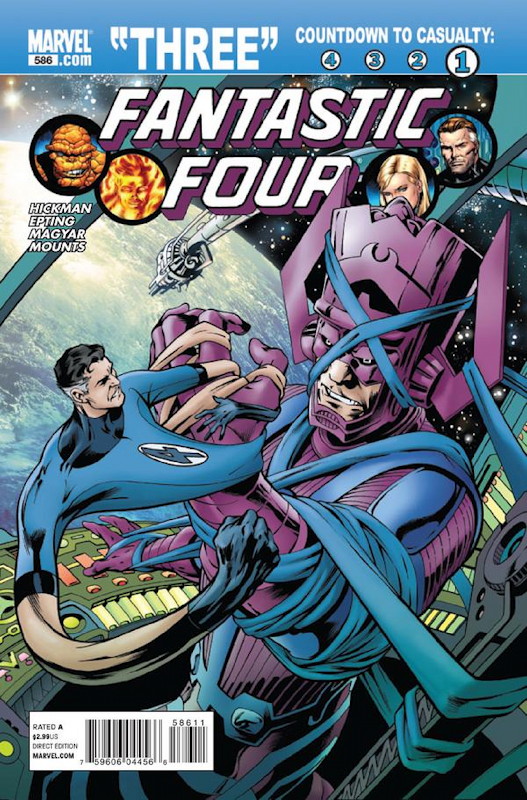
  • Fantastic Four #576, by Jonathan Hickman & Dale Eaglesham (Marvel)
  • The Marvels Project #6 of 8, by Ed Brubaker & Steve Epting (Marvel)
  • Irredeemable #11, by Mark Waid, Peter Krause & Diego Barreto (Boom)
This month’s Batman and Robin is hands-down the best issue of the series so far. Overlooking the rather obvious solution to getting the critically-injured Batwoman out of the cave where the two Batmen fought last issue (ah, the joys of a readily-available deus ex machina), Morrison manages to pull off everything he tries here: The faux Batman returns to Gotham and faces off with Robin, who’s recovering from a spine transplant (!). The impostor speaks in broken English with a mix of old and new styles of Batman jargon, and is gradually decaying as the story goes on. Robin and Alfred put up a stiff fight (always nice to see Alfred show he’s more than just a butler), and then Batman and Batwoman show up to put things away. Robin gets a justified jab in at Batman’s behavior at the end. And Cameron Stewart’s art is outstanding, the finest the series has yet seen (I hate the hair style he and Frank Quitely have saddled Dick Grayson with, though). For a change, I liked this issue better than Greg Burgas did.

The series has been something of a mess so far, because Morrison spends too much time messing around with either peripheral elements, or with the “bigger picture” of what’s going on in the Batman universe, even though that bigger picture is rather silly. (Consider, after all, the Batman here doesn’t even wonder who might have put a fake body – which managed to fool Superman – in place of the original Batman.) If he could just focus on the relationship between Batman and Robin, this would be a much better series.

The delayed finale of The Flash: Rebirth shows up this week. Although Ethan Van Scyver’s artwork is always nice to see (though it seems much less detailed here than usual), this has been a rather pedestrian story all around, certainly not nearly as good as the last time Geoff Johns brought a hero back from the dead. Of course, Green Lantern: Rebirth had to explain why Hal Jordan went bad so he could return to being a hero, whereas Barry Allen has been sainted by DC heroes and fanboys for decades now, so this story was just about giving him a threat big enough to reinstate him among the DC pantheon. And Johns pulls in all the usual Flash tropes, most of them (naturally enough) from Mark Waid’s remarkable run on the title: The Reverse-Flash, the extended Flash family, and the Speed Force. He throws in a retcon where Barry’s father was arrested for the murder of his mother, and a bit of time travel involving the beginning of Barry’s career, but it’s otherwise a pretty routine modern-day Flash story, actually not up to the standards of Johns’ own run on Wally West’s series.

To be fair, a friend of mine described Johns’ Green Lantern relaunch shortly after it began as “the least necessary relaunch in comics”, and it ended up being considerably more interesting than that. With an ongoing Flash series on the way, Johns may be able to work similar magic there. But this isn’t a promising start.

Why do I get the feeling that we’re finally getting to the Justice Society of America story that Bill Willingham really wanted to tell? The last several issues have been nothing more than a fairly stupid way to split the JSA into two teams, getting (mostly) the marginal members into the JSA All-Stars series (where they can be safely ignored) and paring the core team down to manageable levels. Here we jump right into the story – 20 years in the future, where Mr. Terrific is imprisoned by a new regime which has captured and is executing the JSA members. He’s dictating his memoir, expecting his own end to come soon, explaining how the new regime came into power, with a group of Nazi-oriented villains attacking the JSA and killing Green Lantern.

It’s not like we haven’t seen set-ups like this before, but Willingham seems to enjoy and excel at telling war stories, so even if this ends up being resolved through the miracle of time travel, it could still be fun.

The Seven Samurai

It’s been a lo-o-ong time since we’d been to see anything at the Stanford Theatre, but when I saw they were doing an Akira Kurosawa film festival, I persuaded Debbi to go with me to see the classic Japanese film The Seven Samurai (1954). I’ve actually never seen any Kurosawa films, and I’ve always figured I should see at least this one. (No, I’ve never seen The Magnificent Seven, either.)

Set in 16th-century Japan, a peasant village is under threat of a large band of mounted bandits. One of the peasants refuses to just give in, and after consulting with the village elder they go to a larger town to recruit samurai to come defend them. After some initial difficulties, they find an older rōnin, Kanbê, who is willing to help, and he is able to find six others to assist him in the defense, including a young appentice, Katsushirô, and a wild reckless samurai, Kikochiyo. Returning to the village, the samurai find the peasants are suspicious of them, but they earn their trust and start building defenses and training the peasants in basic military skills. After the barley is harvested, the bandits attack, and the samurai lead the villagers in defending their town, even though the samurai receive no payment other than the food the peasants have to eat. (You can read the full synopsis in the Wikipedia entry.)

The Seven Samurai is a long film – nearly 3-1/2 hours – and it often drags. One of the joys of watching films from other eras or cultures is in seeing how conventions in filmmaking differ from what we see today, and yet there are only so many meaningful glances you can take before the film bogs down (I have the same problem with The Good, The Bad and The Ugly, although I enjoy the film overall quite a bit). The first 45 minutes are quite difficult to get through, as it mainly concerns the peasants and their plight. Once Kanbê appears, the film becomes more exciting and more amusing, especially the sequence of recruiting the other samurai. Indeed, the humor is by far the best facet of the film.

Dramatically, the film is very uneven. The acting ranges from strong to poor; the an playing the apprentice, Katsushirô, is quite stiff, and he has a relationship with Shino, the daughter of one of the peasants, who’s played by a woman whose style could best be described as hysterical. Their scenes together were often painful to watch. The other samurai are generally very well acted, especially Kanbê (who Debbi observed resembles Morgan Freeman in his appearance and mannerisms) and Kikochiyo, the latter of whom is over-the-top in all the right ways, his best scene being the one in which we learn something of his background, although he has several other good scenes.

Although the battle sequences appear very well done for their day they sometimes feel a little too contrived and implausible. It’s easy to see how the film influenced later films involving a few going up against many (of which the TV show The A-Team has to be the reductio ad absurdum). And it’s not a cheerful film, with a rather downbeat ending for the samurai, although a satisfying one in terms of the characters. Kurosawa clearly demonstrates many of the skills of great screenwriters and directors, but I don’t think he pulls them all together as well as, say, Alfred Hitchcock was himself doing in the 50s.

I would say The Seven Samurai is mainly of interest to people fascinated by film history, or historical films for that matter. It has much to recommend it, but I think it falls short of being truly great, not least because of its length and pacing. I’m glad I saw it, but I doubt I’ll feel the need to see it again anytime soon.