|
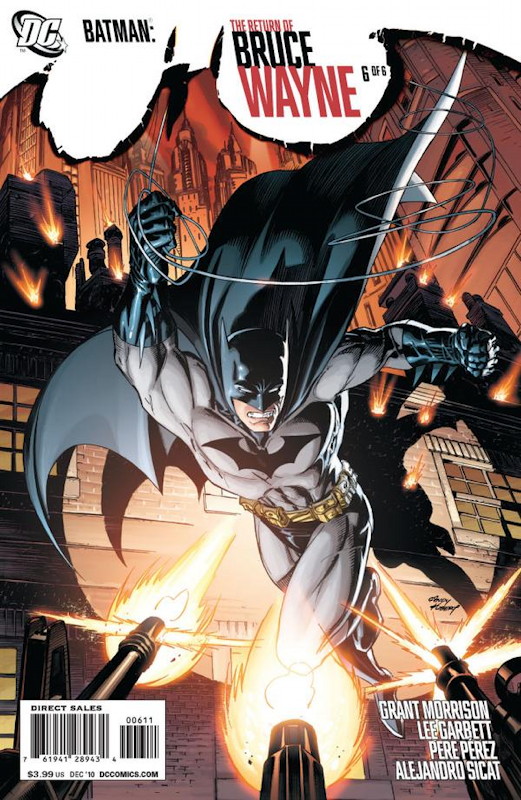
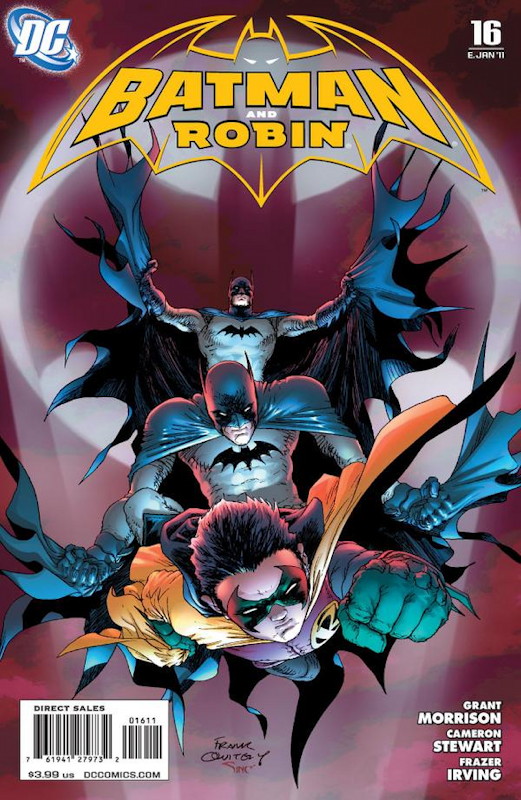
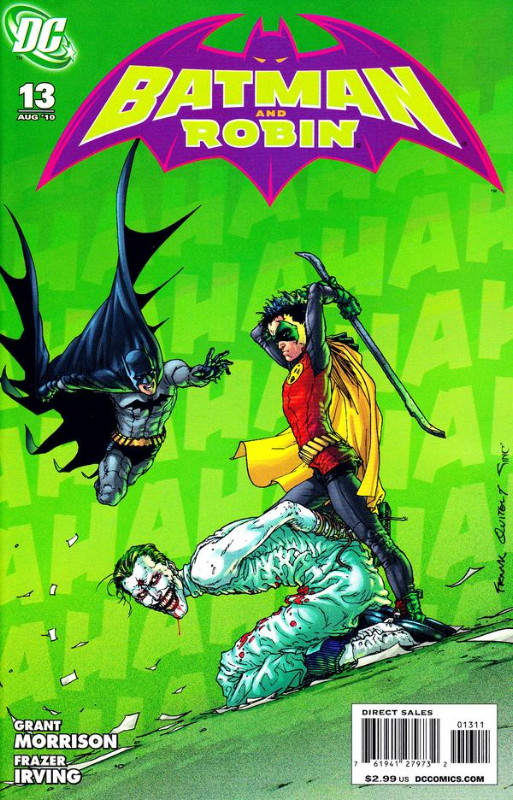
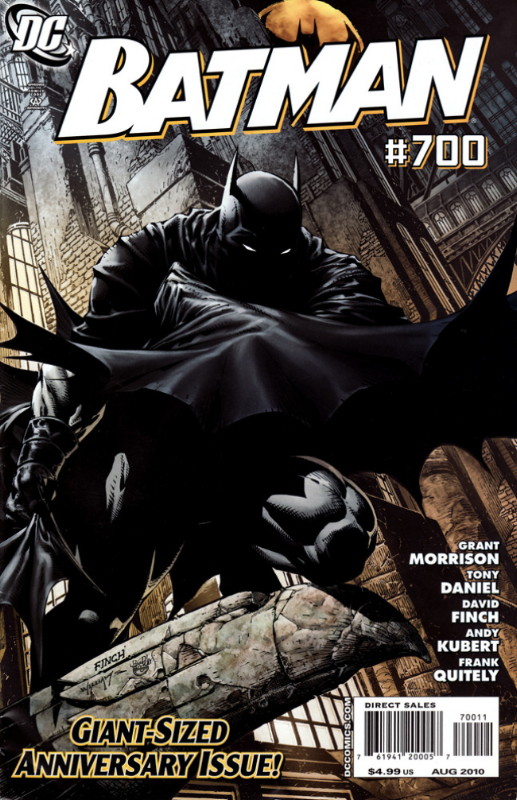
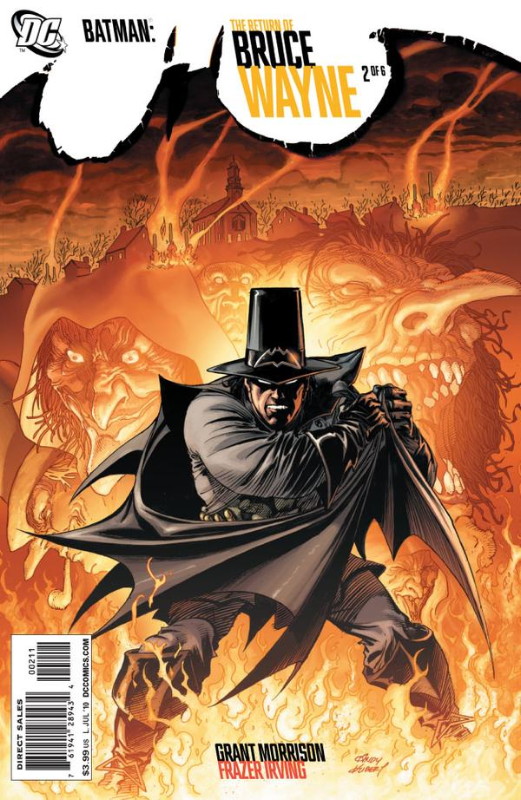
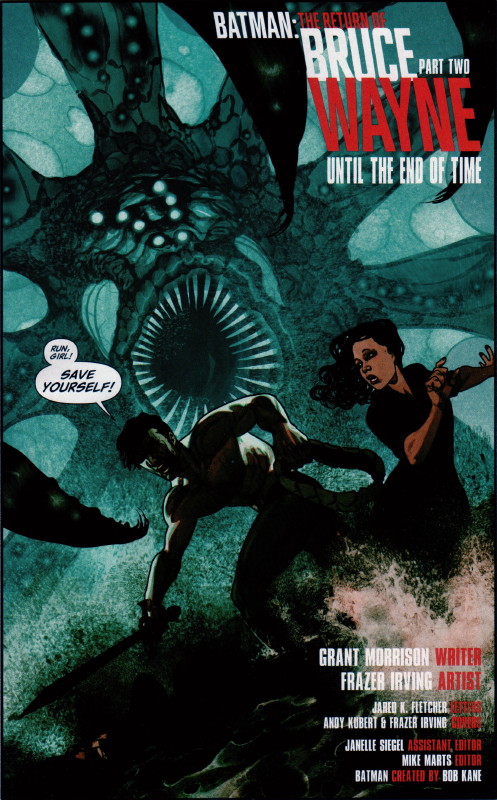
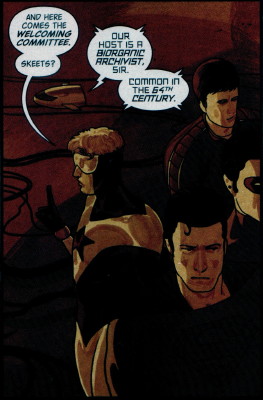
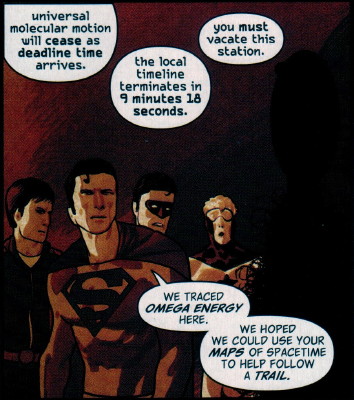
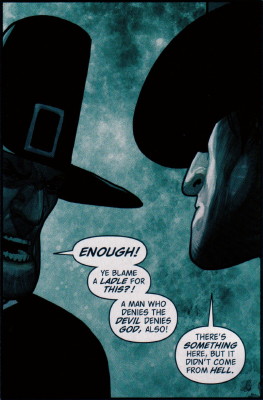
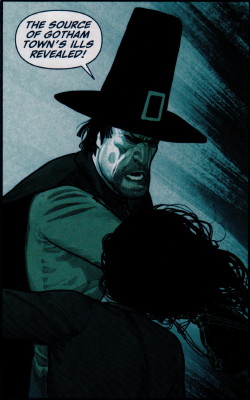
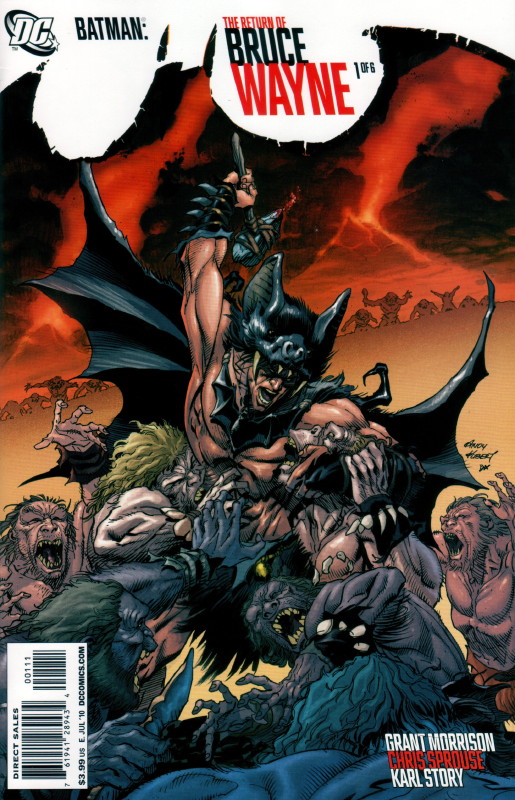
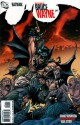
I’ve been pretty harsh on Grant Morrison’s comics over the last couple of years – Final Crisis in particular was nearly-pure drek – but The Return of Bruce Wayne, despite its bizarre conceit, is actually pretty good. The idea is that rather than being killed by Darkseid in Final Crisis, Batman was instead thrown into the past and – as we recently learned in Batman and Robin – has been somehow fighting his way back to the present. Now we see what he’s been up to, as in this issue he lands in the era of the cavemen where he falls in with a friendly tribe, and then avenges them after Vandal Savage’s evil tribe all-but-eliminates them. Then he mysteriously disappears into a body of water, just before Superman and others show up to try to save him (as I guess we’ll see in an upcoming Dan Jurgens mini-series), saying that if Batman makes it back to the 21st century on his own then “everyone dies”. And the issue ends with Wayne arriving in what appears to be Puritan England or America (though it’s hard to be sure).
Although vaguely evocative of some 1950s Batman time travel story, this is otherwise about as un-Batman-like a story as you can imagine, other than the fight with Savage, which is the highlight of the issue. It doesn’t really make a whole lot more sense than those old stories (in which Batman and Robin would travel through time or – if I recall correctly – to other worlds through hypnosis), as Wayne and the cavemen vaguely communicating through language makes no sense at all, nor (of course) does Batman disappearing through time, or various other details of the story. (It actually would have been pretty cool has Wayne become immortal by being exposed to the same meteor which made Savage immortal, and just living his way to the present, but that would have presented different problems.) But as a light adventure story it’s enjoyable enough. I think Morrison is once again being too clever by half to make it more deeply satisfying, though.
Much of the credit for the story’s success has to go to the always-outstanding Chris Sprouse on pencils. Sprouse has taken many a flawed story and made it enjoyable through the sheer strength of his artwork (Alan Moore’s Tom Strong, Warren Ellis’ WildC.A.T.s vs. Aliens), and I’d love to see him do more regular work or at least get paired with a first-rate story so he can shine even brighter. Someday, perhaps.
The Return of Bruce Wayne certainly isn’t a home run, but it’s got me intrigued, to see if Morrison can end up overcoming the weaknesses in the premise.
|
|
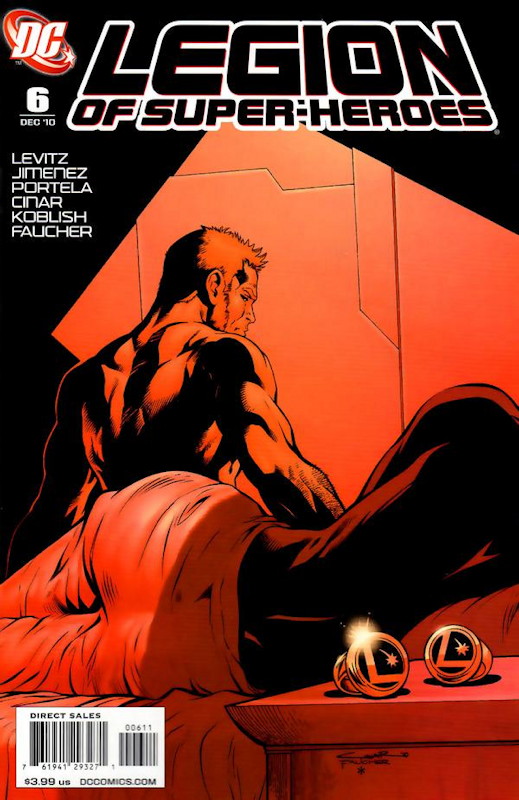
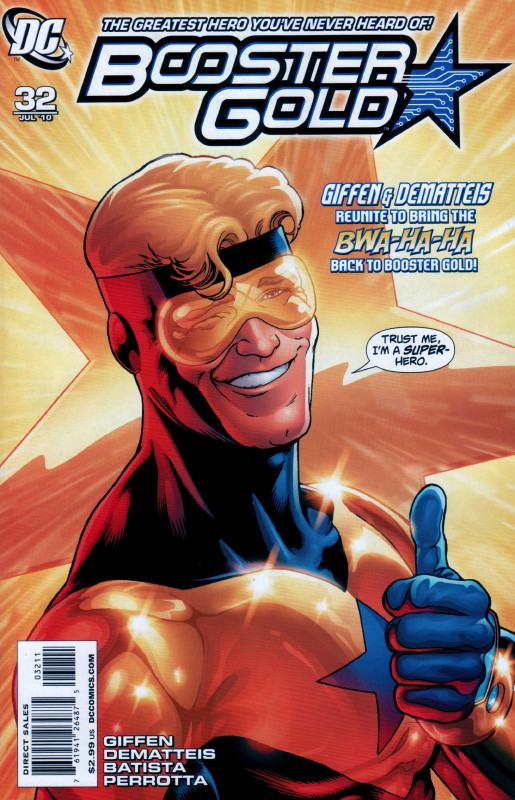
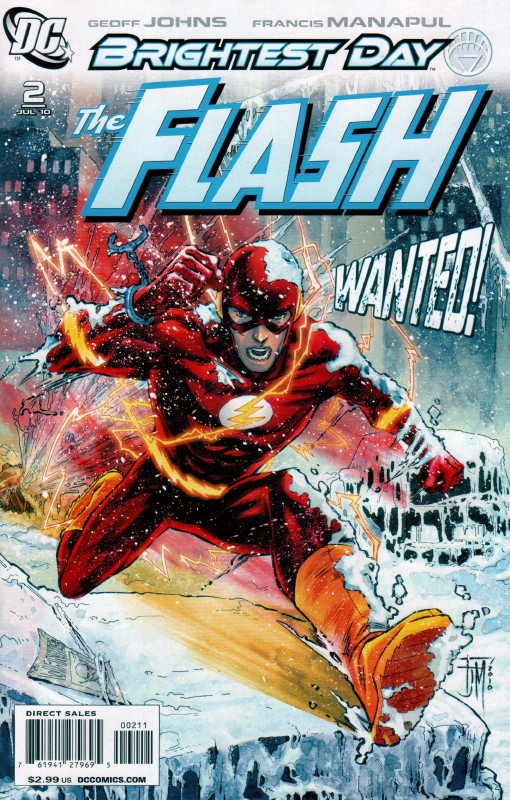
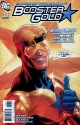
When I heard Keith Giffen was taking over writing Booster Gold, I’d had visions of him writing serious, weighty, dramatic material like he did for the excellent Marvel series Annihilation. I didn’t realize he was bringing J.M. DeMatteis and the execrable attitude of the awful Justice League International along with him. Yes, it’s just one stupid gag after another, wrapped up in a story of death and destruction as Booster goes to the 30th century to rescue an artifact from the planet Daxam just after Darkseid has turned all Daxamites into Superman-level killers near the end of the Great Darkness War.
At least they’re honest in the opening credits:
Have pity on poor Dan Jurgens, because Keith Giffen & J.M. DeMatteis are back — ready to soul his cherished creation, just like they did back in the 80s! […] Dan Didio & Jim Lee should really know better.
Yes, they really should. This is an awful, tasteless story of bathroom humor (literally) while people are being massacred, and there’s nothing remotely funny about it. There’s a particularly macabre moment when Booster realizes that in flying off to deal with one threat, he’s left the people under his protection fatally vulnerable to another one – a moment of pathos which might have been effective if the rest of the issue hadn’t been such a piece of trash.
31 issues of pretty good stories, and these clowns destroyed everything it built up in a single issue. I’m so out of here after reading this.
|
|
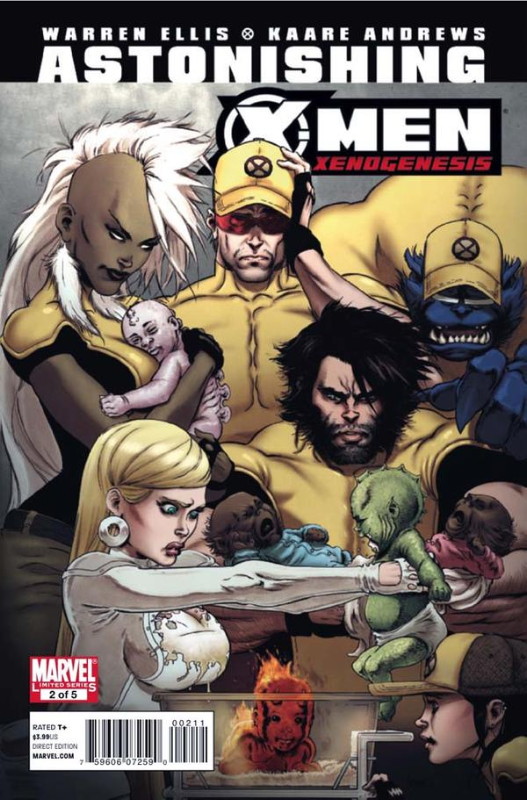
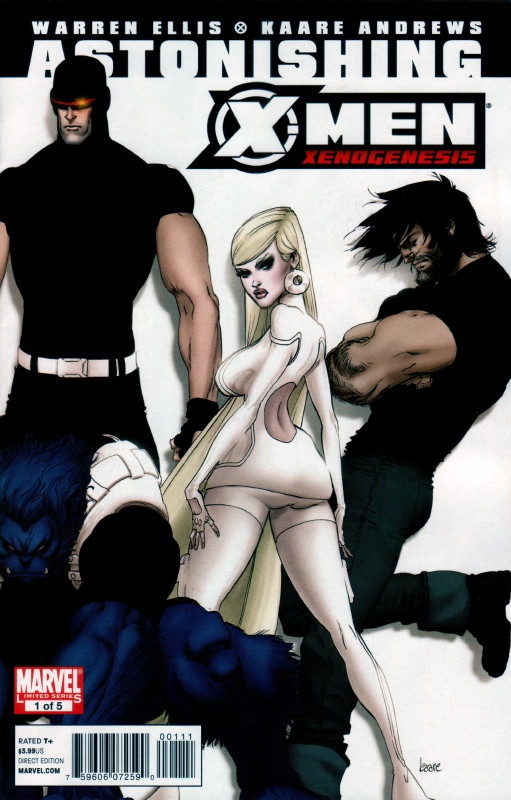
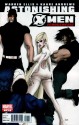
Did I mention there were plenty of awful comics this month? Astonishing X-Men: Xenogenesis is the third of Warren Ellis’ X-Men stories. Story-wise, it’s off to a weak start: Babies being born in a section of Africa are showing signs of being mutants right after birth, so the X-Men head off to check it out. That’s pretty much all that happens: The issue is otherwise just an excuse for mildly amusing banter among the heroes. This team of X-Men (Cyclops, Emma Frost the White Wueen, the Beast, Wolverine, Storm, and the young Armor) are interesting because almost all of them are adult, experienced, and have known each other for a long time, so they know each other’s foibles and quirks. Emma’s schtick mostly seems to be that she’s a bitch, but everyone else basically respects one another. Yet despite this, the banter is pretty superficial, and mostly seems to revolve around Emma (whom Cyclops has been sleeping with since Jean Grey died). Ellis’ snark can be pretty funny, but it doesn’t work here.
I’ve seen little of Kaare Andrews’ art before, and what I see here isn’t my cup of tea: Exaggerated figures, ugly faces, minimal backgrounds, and facial expressions that run from scowling to grimacing. His covers for the next two issues have taken some hits in the comics blogging community, but the cover to this one is no great shakes either: Not only is Emma’s pose utterly ridiculous (and grotesque – and there are plenty more shots of her exaggerated breasts inside the book), but none of the figures are interacting in any way, even to get out of each other’s ways; it looks like they were drawn separately and then pasted into a single frame.
If this is indicative of the whole series, I’m not sure I’ll be able to make it through to the end.
|
|
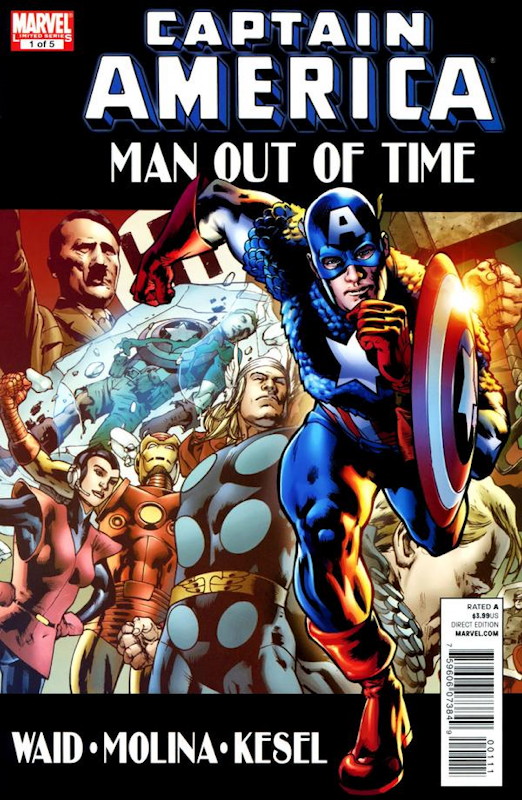
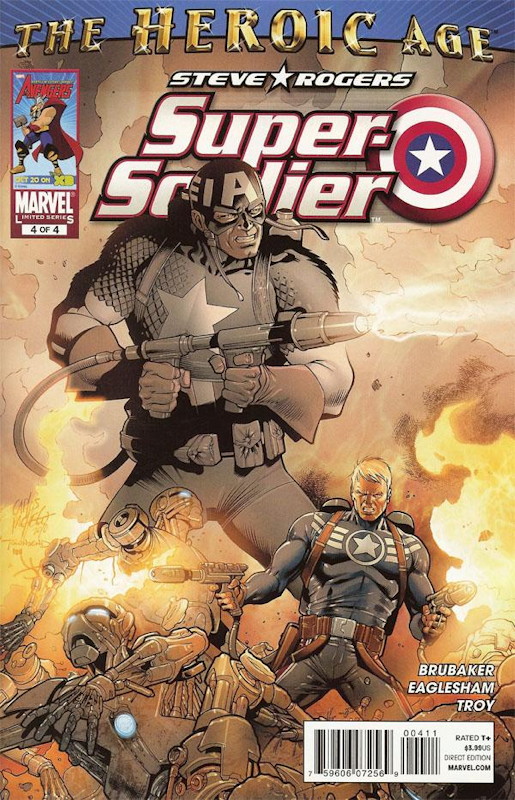
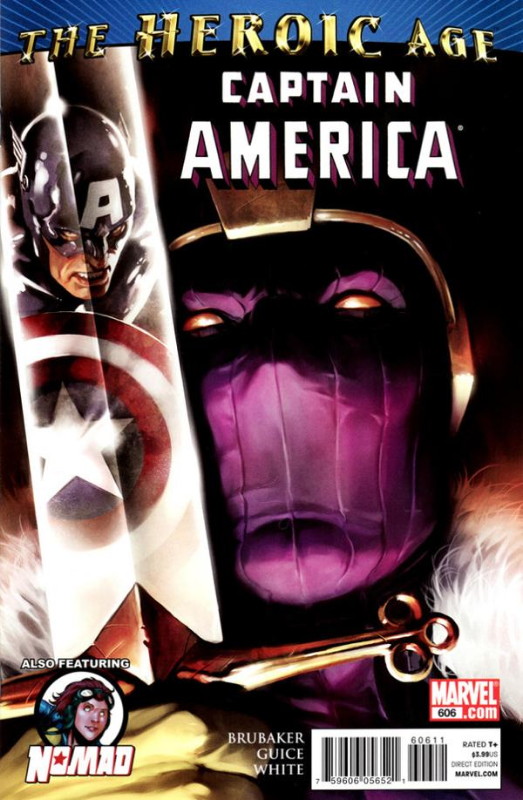
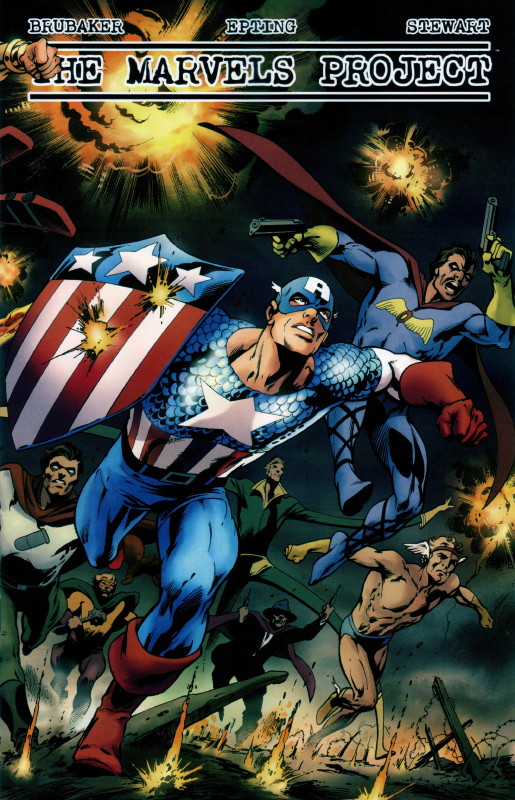
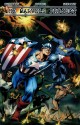
I’ve become a big-time convert to Ed Brubaker’s comics lately (I’ve just read a big chunk of his Captain America run this past week, and it’s terrific), but The Marvels Project, which wraps up this month, isn’t one of his best works. The title suggests it’s related to Kurt Busiek & Alex Ross’ seminal series Marvels, but it’s only tangentially related, covering the rise of Marvel superheroes in the early 1940s, up to the formation of the Invaders. There’s a framing sequence in the present day, the memories of one of the minor heroes of the era, which at first suggested there would be some sort of event the character’s memories would uncover, a greater purpose to the story, but it’s really just another secret history of those times.
The story’s well-told, and Steve Epting’s art is excellent, as it always is, but there’s nothing new here. It felt like a basically unnecessary series.
|
|
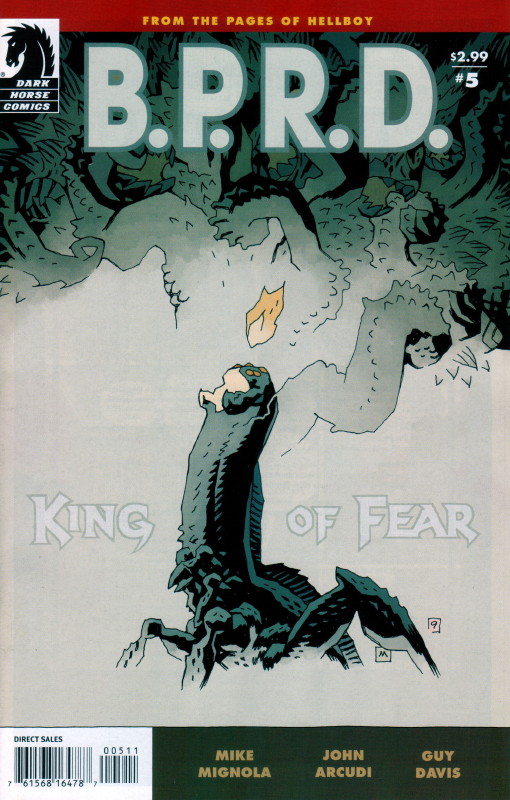
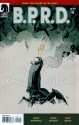
B.P.R.D. has been a long-running independent series, spinning out of Hellboy, where the Bureau for Paranormal Research and Defense tries to defend the world against, well, paranormal threats, particularly the ongoing plague of giant frog-men around the world, dating back to the first Hellboy story. Sameness set in on this series several years ago, and I’d just about given up caring, but there were indications that the series was heading to a definitive conclusion, and eventually a statement that King of Fear would wrap up the frog-men storyline.
So here we are, and it’s certainly not been worth the wait.
Honestly I have a hard time summing up what exactly has happened in the last few series, or even in this one. A couple of races of monsters have teamed up to try to conquer the world, a 19th-century occultist claimed that pyromancer Liz Sherman was crucial to saving the world, and the team ran into the accumulated forces facing them in this series… and then it all came to an end, in some way I can’t quite figure out.
King of Fear opens with Abe Sapien, Liz Sherman and the crew preparing to assault the frogs, while Kate Corrigan heads to Austria to save the spirit of their teammate Johann Kraus, and free the spirit of the adventurer Lobster Johnson. In the second issue, Abe, Liz & company descend into the Earth, while Johann comes back to his ectoplasmic suit. Liz disappears, and in the third issue we see that she’s being given a vision of the future where the demonic forces have won and destroyed humanity, including her friends. Abe and company are captured by the allied forces of monsters, apparently being led by the dark entity from The Black Flame, who claims that in fact Abe is the spearhead of the forces which will take over the world. In the fourth issue, the entity suggests Abe is related to the frog-men, while Liz in her vision unleashes her flame, apparently destroying everything in the underground network where the rest of her team is.
Somehow, though, the heroes survive and are convalescing in the final issue, while the director of the Bureau, and Kate and Johann are being grilled by the United Nations. Its not clear how everyone else survived while all the bad guys were destroyed by Liz. Ultimately the UN re-ups the Bureau’s funding, and the issue ends with hints of future threats they’ll face.
Honestly, when I read the final issue I felt like I’d missed an issue, but I went and pulled out the first four, and I didn’t. Liz apparently just killed all the monsters, left her friends still alive, and disappeared from them. It’s about as far from as satisfying ending to 8 years worth of comics as I can imagine. Frankly, I feel kind of ripped off. But I guess it’s my own fault for ignoring my suspicions these last couple of years that the story really wasn’t going to go anywhere.
B.P.R.D.‘s basic problem has been that the storylines haven’t really carried any weight or really had any resolution or catharsis to them, so they just keep going on and on, and the characters don’t really change or develop (they just come and go). There’s just not much point to it, and it lacks the strong character, never mind the wit and excitement, of Hellboy himself. Neither any single character, nor the characters all together, can really carry B.P.R.D.. There are occasionally some nice moments, but as a whole it’s just kind of pointless and unsatisfying.
I’ve also been reading Sandman Mystery Theatre as it comes out in paperback collections, and like B.P.R.D. it is (mostly) drawn by Guy Davis. While Davis’ art took a while to grow on me (mainly because his characters mostly look a little dumpy and all tend to have large noses), it eventually won me over in SMT, largely because of the detail in his period work, and the fact that most of the Sandman characters are supposed to look like ordinary schmoes. Unfortunately his work hasn’t won me over on B.P.R.D., where his layouts and finishes all seem much more simplistic, his characters more cartoony, with faces that look squashed. It just didn’t work for me, and didn’t help elevate the story above its level.
So this is it for me with B.P.R.D., though I’ll probably stick with Hellboy for a bit longer (though it’s been no great shakes, either). B.P.R.D. always felt like it had potential for something cool to be right around the corner, but it never really delivered (save for the two side-stories 1946 and 1947, which really aren’t part of the regular series). Quite a shame, really.
|