May 2013
S M T W T F S
« Apr    
 1234
567891011
12131415161718
19202122232425
262728293031  

Archives

  • 2013
  • 2012
  • 2011
  • 2010
  • 2009
  • 2008
  • 2007
  • 2006

Webcomics I Read (2012 edition)

Just in time to beat the end of the calendar year, it’s time for my annual round-up of webcomics I’ve started reading in the past year. As usual, I cover both strips I liked and strips I that didn’t work for me, and quite a few in between. If you’re just interested in the good stuff, I’d most recommend Derelict, False Positive, Guilded Age, Widdershins, and Carpe Chaos.

You can find my past entries here: 2009, 2010, 2011.

Let’s get to it:

  1. The Adventures of the 19XX, by Paul Roman Martinez: I discovered this strip through its Kickstarter, and backed it because I find buying the physical collections is a great way to catch up on a long-running Webcomic (more convenient than clicking through a couple hundred web pages). The second volume is wrapping up on the web now. The premise is that of a group of adventurers in the early 1930s who are crossing the world looking for mystical artifacts which could change the future, perhaps by preventing the second World War that’s coming. They’re opposed in this by a secret cabal who want these artifacts for their own purposes (usually to rule the world). The story features a lot of period settings and technology, so it has an Indiana Jones feel to it.

    That said, I’m lukewarm towards the strip. The storytelling is pretty flat, and the dialog often feels stiff. The characters – and there are a lot of them – are pretty simple and their motivations are not very strong. Since the strip has a strong pulp feel all of this is in keeping with that, but there are a lot of pulpy stories around today which have more modern sensibilities underlying that pulp feel, and this one doesn’t measure up. The art is pretty good, but again often feels stiff, carefully laid out but not very fluid.

    Overall if adventures in this time period are your thing, then you’ll probably enjoy this. But if not, then it probably won’t be.

  2. Balazo, by Bachan: Bachan is the artist for Power Nap, and he’s quite good. Balazo is the English-language site of this Mexican illustrator’s work, and I’d characterize it as “lightweight, but entertaining”. It involves anthropomorphic characters, and focuses on the adventures of an outside-the-boundaries cop. In that way it somewhat resembles the print comics Grandville or Blacksad, but it’s not as hard-hitting or meaningful as either.
  3. Boston Metaphysical Society, by Madeleine Holly-Rosing & Emily Hu: I came across this at APE and decided to check it out. It looks like it’s being published as a webcomic with the intent of ultimately publishing it as a comic book mini-series. It’s a steampunk adventure about a group working to contain psychic forces which have been unleashed on the world, in the structure of a young woman trying to persuade an experienced male agent to let her accompany him. Various historical figures show up, too.

    In the large, it resembles The 19XX, down to similar flaws in both writing and art. It’s okay, but feels very rough. (The site also feels like it was assembled around the turn of the millennium and is awkward to follow from the RSS feed.)

  4. Carpe Chaos, by Eric Carter, Jason Bane, Anthony Cournoyer, Daniel Allen and others: I picked up a collection of this science fiction webcomic at APE last year, but it took me a while to catch up on the full site. This is a “soft” SF story, in that it’s more space opera then crunchy science; it focuses on the interactions of several alien races (which all look extremely alien), exploring themes of tolerance, understanding, difference, prejudice, and the like, highlighted by the different outlooks of each of the species. It’s very well done, and the individual stories are generally excellent. The creators clearly have a large universe they’re working in, but it’s often not at all apparent to the reader at which point on the timeline a story occurs, which makes some of the stories a little confusing. Other than that my biggest complaint is that it updates infrequently, but it’s well worth reading. All-digital art by multiple artists is quite good, too.
  5. Cat vs. Human, by Yasmine Surovec: Gag-a-day comics about the author and her feline obsession. Funny if you love cats, probably not if you don’t.
  6. Cyanide and Happiness, by various: Another gag-a-day strip by multiple people, all working in a common almost-stick figure style. Highly cynical and irreverent, often being deliberate obscene, occasionally with punchlines that seem like non-sequiturs. I guess this is one of the more popular webcomics, but I think it’s merely okay. If you can’t tolerate gratuitous obscenity and nastiness in a strip, then avoid.
  7. Derelict, by Ben Fleuter: After going a while without finding a new webcomic I really adored, Derelict was a revelation: Fantastic artwork, fine world-building, and a gripping story. The heroine is a young woman in a future after the world has been flooded, operating her own salvage ship and trying to stay alive in a changed world where no one can be counted on to be friendly (and which is also populated with some strange things). The details in the art are stunning at times, and the atmosphere of loneliness punctuated by occasional hope is powerful. The biggest downsides are that the heroine’s face sometimes looks awkward (although she’s very expressive), and the erratic update schedule. Despite these, I still recommend it highly.
  8. False Positive, by Mike Walton: An anthology comic written and mostly drawn by Walton, each story lasts a few weeks and is frequently in the horror vein. If you enjoy The Twilight Zone then you’ll probably enjoy this, although the illustrations are sometimes quite graphic. Walton’s art is outstanding, and his coloring – which uses a distinct limited palette for each story – compliments the art very well. “Season two” just started, but read through season one – you won’t be disappointed.
  9. Guilded Age, by T. Campbell, Phil Kahn, Erica Henderson & John Waltrip: I had tried to read this once before and got bogged down, I don’t know why. When I tried again this year, I was hooked. From the start it’s an entertaining medieval fantasy strip (I guess it’s based around World of Warcraft), though it takes a few chapters to get going as initially it’s a series of vignettes mixing adventure and comedy, focusing on a band of five heroes. The strip features a number of anachronisms, especially in turns of phrase and the attitudes of the characters, which seem to be there to add some color and relatability for the reader.

    The strip really comes together in chapter 8, which reveals a number of previously-unrevealed things about the world, and providing a larger structure for the story which makes you really feel for our heroes. There are strong indications of what’s really going on, but it’s taking a while to get there (not that the journey isn’t enjoyable on its own).

    Read this one from the beginning; there are several hundred pages to catch up on, but it’s worth it. Just be a little forgiving of the first few chapters, until the story finds its feet.

  10. The Hero Business, by Bill Walko: A superhero strip in which the heroes have a publicity company, it’s been around for a while but I just started reading it recently. It’s written like a soap opera, drawing comparisons in my mind to Love and Capes. L&C is to my mind the better of the two, having a stronger character focus and, well, generally better gags. Walko’s art is quite stylized, with the characters all looking like teenagers to my eye. Overall it’s a cheerful strip – kind of an homage to 60s and 70s superhero comics – which hasn’t won me over yet.
  11. Incidental Comics, by Grant Snider: This came to my attention via his oft-reblogged comic “Pig Latin”, his site is a series of understated, philosophical jokes which should appeal to fans of xkcd or certain New Yorker cartoonists. A recent favorite of mine is “Story Structures”. His art is somewhat minimalist, but still eye-pleasing.
  12. Rich Morris: An artist who did an epic Doctor Who comic titled “The Ten Doctors”, and who does various other strips on this site. These are strips he does for fun in his spare time, so the art is often sketchy, but he’s obviously quite skilled (I think he’s a commercial artist by profession), and TTD is very good. He hasn’t updated much since I started following him, but check out his archives.
  13. Nerf Now!!, by Josué Pereira: I have to say this is one of those strips that I just don’t get, at all. I think it’s a somewhat meta strip based around video games? It seems to involve a curvaceous woman and her friend who is a tentacle (?), in a series of gags without a running storyline. It’s drawn in a simple manga-esque style, but I just don’t get it.
  14. The Oatmeal, by Matthew Inman: Another irreverent gag strip, whose creator got a lot of attention recently for thumbing his nose at a lawyer who pressured him. That incident aside, the comic is generally funny, though probably not everyone’s cup of tea. Inman’s exuberance comes through in every panel, including in his ode to Nikola Tesla, giving it a rather different attitude than the usual wry humor of many gag-a-day strips, and one that feels more genuine than, say, Cyanide and Happiness, which often seems nasty just to be nasty. The Oatmeal is surely not for everyone, but I like it.
  15. The People That Melt in the Rain, by Carolyn Watson Dubisch and Mike Dubisch: A creepy comic about a mother and her daughter who move to a new town and promptly get rained on by frogs, and then learn that actual rain burns the people who live there. The comic follows the daughter, Laura, learning about the curse that hangs over the town, and the various effects it has on its inhabitants and visitors. The strip went on an extended hiatus, and when it came back the art seemed sketchier and murkier than before, and the story feels like it’s meandering around rather than making progress. It’s okay – you might find it easier to follow than I have.
  16. Saturday Morning Breakfast Cereal, by Zach Weiner: SMBC is a popular gag-a-day strip with no recurring characters and strips that run from a single panel to ten or twelve. Subject matter is typically irreverent and sometimes over-the-top, with a regular theme of taking ideas to their logical and ridiculous extreme. Despite this, the strip doesn’t really grab me: It’s not as clever as xkcd, not as profane as Cyanide and Happiness, and the art is simple bordering on sketchy. I know lots of people who are fans, but it doesn’t do a lot for me.
  17. Shortpacked!, by David Wallis: I’ve actually already stopped reading this one. It’s a slice-of-life strip centered around employees of a toy store, with hijinks that regularly ensue, but it just didn’t grab me: I found it hard to tell the characters apart and the gags didn’t really work for me. The art is okay, on the simple side. Overall I think Comic Critics covers similar territory more effectively (though to be fair I find a comic shop a lot more interesting than a toy store). On the flip side, All New Issues also takes place around a comic book store, and I like it only a little more than Shortpacked!
  18. Wesslingsaung, by Eric Cochrane: This has to be the most exotic comic I’ve found this year, as most of the characters are nothuman. The title character is, well, I think he’s an adventurer who travels his world – occasionally traveling through time – with a centipede-like partner named Gossip. Wesslingsaung is looking for humans, and eventually finds one, and then his adventures really begin.

    It’s a strangely compelling strip, although its dreamlike quality and loose plot has made it hard for me to follow, and the characters’ motivations are still murky to me. It feels like it could be a much better strip with some additional clarity. On the other hand, the inventiveness is appealing, and though Cochrane’s art is fairly simple, it’s equal to the story in inventiveness. So I’m sticking with it to see where it’s going.

  19. Widdershins, by Kate Ashwin: Taking place on the cusp of the Victorian age (the first story starts in 1833), Widdershins is a town in an England where magic is real. There have been two complete – but separate – stories so far. The first features artefact hunter Harry Barber and down-on-his-luck young wizard Sidney Malik forced to work together to recover a valuable treasure. The second involves a pair of wanderers who get caught up in an evil plot involving mystical spirits. The third story started recently and returns to Barber and Malik for their next adventure That’s putting it all very simply, but both adventures involve colorful characters and incredible plots, and it’s quite a fun ride. Ashwin’s art is on the cartoony side, but detailed enough, and it fits the fairly lighthearted tone of the strip. Refreshingly, it’s not really steampunk because all the fantastic elements are magic, not science.

    It also had a Kickstarter recently.

  20. The Wormworld Saga, by Daniel Lieske: This is not your typical webcomic. For one thing, each chapter is published in its entirety when Lieske finishes it, with several months between each (there are four chapters currently up, the last having been published in August). For another, each chapter is a single vertical “page” with panels arranged within it, and you scroll down continuously to read it. This gives it a look like no other webcomic I’ve seen, and the fact that Lieske’s full-color art is gorgeous helps too.

    As for the story, it’s about a boy in our world in 1977 who discovers a portal in his grandparents’ house to another world, a fantasy world in which he is apparently destined to be a major participant. It has themes of childhood imagination and wonder, but also alienation and being thrown into adult concerns while still a child. But while lavishly envisioned and illustrated, the story is (so far) not much more than that; I enjoyed reading it more for the art than because I really wanted to know what happens next. I’m also somewhat suspicious of any story with the world “saga” in the title, as it always strikes me as being a little pretentious (or at least non-descriptive). But if youthful fantasy if what you like, then you’ll probably love this.

Hobbes and Bacon

By far the entry on this site with the most hits is the one about Calvin & Hobbes‘ last strip. It also gets a lot of comments like “That’s not the real last strip!” from people people who surf in there and just read the title and the strip in the entry without reading any of the actual entry. Sigh. Internet nitwits, what can you do?

If you’re a fan of C&H, though, probably the closest you’ll ever get to a fix of new strips comes from a webcomic called Pants are Overrated (now apparently defunct), which did an occasional strip about Calvin all grown up, but really more about his daughter Bacon (!) who hooks up with Hobbes in much the same way Calvin did.

You can read the four strips they did here:

  1. 26 Years Later
  2. Parents are so weird
  3. No time to spare!
  4. A better game

Good stuff!

Webcomics I Read (2011 edition)

It’s been over a year since my last webcomics round-up (you can find my first two such posts here and here), and I wanted to squeeze in a new such entry before the new year. As usual, I found a few I really liked, and there are a few that I don’t much like, but I’ve tried to give them a decent chance. Here are webcomics I’ve started reading in the past year, listed alphabetically:

  • All New Issues, by Bill Ellis & Dani O’Brien: A slice-of-life gag strip set in a comic book shop, I still giggle at the clever title from time to time. Unfortunately the strip otherwise is only so-so: The art is decent, the gags are pretty routine, and I find the characters to be flat. Probably not a strip I’ll follow for much longer.
  • Atomic Laundromat, by Armando Valenzuela: Another slice-of-life gag strip, this one drawn in a manga-like style and concerning a young man who runs a laundromat for superheroes and super-villains. However, I have the same problems with it that I have with All New Issues, in both art and writing. One recent arc involved the protagonist’s father, a major superhero, on trial because he has a tendency to indecently expose himself in public, which could have been amusing if it had been totally over-the-top, but just seemed creepy given the understated way it was written. Bad Guy High worked some similar territory, but was a more compelling strip, I think. Not to mention Evil, Inc.
  • The Bean, by Travis Hanson: I discovered Hanson at APE in 2010, and have three of his prints framed and hanging on the wall. The Bean is his ongoing strip, a fantasy adventure about a boy having a very bad day, a goblin invasion, and the various heroes and supernatural creatures involved in it all. Very nice artwork, and the story is moving right along, albeit with a number of side trips to follow all the characters. My one lament is that I wish it was in color.
  • Bucko, by Jeff Parker & Erika Moen: The title character is a down-and-outer who stumbles on a dead body and tries to solve the crime, a challenge since he ends up on the run from the police. I started reading this strip hoping for some real detective fiction with a side of whimsy, but the crime is an extremely small part of the strip, and it’s been more like a romp through some alternative subcultures (my interest in Juggalos: zero). Moen’s artwork is simple and features a lot of swoops and curves, but while it’s effective enough, the style isn’t my cup of tea. I’m just clearly not the target audience for this strip.
  • Destructor, by Sean T. Collins & Matt Wiegle: Now here’s one that I am the target audience for: Destructor is a powerful armored man rampaging across a fantastic world with the goal of… something. But he seems to be assembling allies for some goal not yet revealed. Each chapter is pretty nifty: Destructor invades a city of crocodile-men, Destructor stages a prison break, Destructor frees a powerful and mysterious woman. There’s more mystery than character so far, but the mystery (and the adventure) is quite a lot of fun. Wiegle’s artwork is inventive and effective. I haven’t seen this strip getting much buzz, but it’s a good one.
  • Doghouse Diaries, by Will, Ray, and Raf: Basically xckd for non-geeks: It’s got stick-figure artwork, popover second-punchlines, and a generally snarky attitude, but so it fills very much the same space. The humor leans to the crude side, but it’s still fairly funny. No, I’m not blown away, but it’s an okay gag-a-day strip.
  • Dresden Codak, by Aaron Diaz: “42 Essential Third-Act Twists” is the funniest thing I read all year. I ordered a print of it. Dresden Codak is partly an ongoing strip, and partly a gag-a-day strip (well, more like a gag-every-three-weeks – it takes Diaz a while to do each strip, but the art is often gorgeous). Either way, it’s entirely geeky. The first extended arc, “Hob”, involved time travel, the singularity, alternate universes, and all that good stuff. The main character, Kim, is a scientist almost of the Girl Genius variety. She’s not a very likable character (she shares a little of her egotism and inability to relate to others with Sheldon Cooper from the TV show Big Bang Theory), but the ride is quite enjoyable.

    Diaz passes time between the few major arcs with various one-off strips, and a few shorter arcs. Another good sample of the hardcore meekness of the strip is “Dungeons and Discourse” (“Abilities – Immune to metaphysics”), along with, of course, “Advanced Dungeons and Discourse”. If those don’t convince you that this is a great strip, well, then there’s no hope for you.

    I think I’m dreadfully late to the party in discovering Dresden Codak, but it did mean I got to spend an afternoon laughing my ass off as I caught up. Highly recommended.

  • Drive, by Dave Kellett: A science fiction humor strip, similar in that regard to Spacetrawler: The SF is serious, but the storytelling is light and funny. A tough mix to brew, yet here we have two different strips doing it well. Drive concerns a human empire built on FTL technology inherited from aliens, and controlled by a single family. A mysterious alien is discovered who can pilot one of the ships better than anyone else, but he doesn’t remember who he is or where he came from. The empire is interested in him because they’re about to go to war with the race that created the FTL drive, and they’re clearly going to lose if they can’t find an edge. An eccentric crew is given a ship to try to solve the mystery. Politics, adventure, and humor. Only drawback is that updates have been sporadic.
  • d20Something, by Mitz: His wonderful supervillain strip Plan B ended earlier this year, and this is his new one. Unfortunately, it’s not as good. It features a collection of Dungeons & Dragons type 20-somethings (each with their own character class) living in modern society and dealing with various monsters who also live there. I find that none of the characters are distinctly drawn (I couldn’t really tell you anything about any of them at this point), and the plot doesn’t yet seem to be going anywhere, problems that Plan B didn’t have. I still like his art, and some of the gags are amusing, but color me disappointed by this one so far.
  • Ectopiary, by Hans Rickheit: A serialized graphic novel, a girl and her mother come to live in an exotic house, with unfriendly hosts and strange things going on in the yard. The girl’s curiosity of course gets the better of her, and she’s getting caught up in whatever it is that’s happening. The story doesn’t move fast, but it’s making progress. The art is intricate and beautiful, especially the highly-detailed backgrounds. I’m not sure where it’s going, but I’m enjoying it. Hiatuses occur from time to time when life gets in the way of the artist.
  • Family Man, by Dylan Meconis: One of the most polished webcomics out there as far as the art and web site go, Family Man takes place in 18th century Germany, and is the story of Luther Levy, a half-Jewish young man (with a nose longer than Cyrano de Bergerac‘s) who was ejected from the school where he pursued a Theology degree. He ends up as a teacher at a rural university and falls in love with the rector’s daughter. Oh, and we’re promised that there will be werewolves at some point.

    Meconis’ art shifts between the slightly-cartoony and the dead-on realistic (favoring the former style for the figures, which makes the latter more striking when it’s employed). The story – now over 230 pages in – is not exactly galloping along, but it’s well-crafted and witty. At a page a week, I wonder how many long-time readers are getting over-eager for the shoe to drop.

    The first chunk of the story has been collected in a high-quality paperback edition, which you can order from Meconis.

  • Frankenstein Superstar, by John Hazard: The Frankenstein monster in modern times, having married and settled down. Hazard’s art is among the best out there, but the stories and jokes are not, as the humor often feels cheap if not gratuitous. There’s an ongoing mystery involving a friend of the couple which suggests something more serious in the future.
  • The Gutters, by Ryan Sohmer & various artists: Ryan Sohmer, writer of Least I Could Do, has been doing this several-times-weekly graphic editorial of the comic book industry for a year and a half. Think of it as The Joy of Tech for comic book fans rather than technology enthusiasts and you get the idea, with the difference that Sohmer uses swear words and R-rated imagery a lot more. Overall I think I’ve been numbed sufficiently by the comic book blogosphere’s snark about the industry that nothing here is fall-over funny to me (and honestly sniping at DC and Marvel these days seems not only too easy, but de rigueur), but some of his observations are still pretty good. If you’ve been looking for the comics blogosphere distilled into comic strip form, then this is the strip for you.
  • K and J, by Sara Park Sanford & John Sanford: The story of two sisters and their Korean mother, focusing on their growing up and the culture clash of Korean and American values. A bit wordy, but otherwise really good. While the art is on the sketchy side, it actually works quite well. Updates have been sporadic recently, but it’s worth catching up on.
  • Kukuburi, by Ramón Pérez: Delivery girl Nadia finds herself shunted into a surreal alternate dimension where she joins a variety of weird creatures in a struggle against a skeletal entity. The strip is just recently back from a long hiatus, so my memory of the storyline is pretty fuzzy; my general recollection is that it was a fun ride but hard to discern who all the characters were and what their motivations were. The art is outstanding.
  • Lady Sabre and the Pirates of the Ineffable Aether, by Rick Burchett & Greg Rucka: Fairly new, this is a straight-up adventure strip by a couple of comic book pros (Rucka also writes novels). Wild west steampunk with a side dose of the supernatural. Too soon to know where it’s going – the characters have barely been introduced – but it’s enjoyable so far.
  • Let’s Be Friends Again, by Curt Franklin & Chris Haley: Irreverent pop culture satire, sort of The Gutters crossed with Penny Arcade – there’s not much continuity, and if you’re not familiar with the subject matter then it probably won’t make any sense to you. I don’t really understand the meaning of the title, but it’s enjoyable for what it is.
  • Living With Insanity, by David Herbert, Paul Salvi & Fer: I’m not sure what to make of this one. It often seems semi-autobiographical, concerning writer David Herbert’s struggles to make it in the comics (or other writing) biz, but there have been extended sequences involving zombies, aliens, and whatnot. Overall my brain has summed it up as “Whatever the writer feels like writing.” A recent arc involves one of the characters hiring a busty model to represent his super-heroine. It’s just earnest and irreverent enough to keep me reading (updates can be infrequent), even though I’m not sure what to make of it.

    Artist Salvi recently left, replaced by new artist Fer, whose style I like better, although neither is a very polished artist. Still, the webcomics landscape is littered with artists who started off unpolished and grew to be quite good. I don’t know if Herbert has greater aspirations for the strip (it feels like when it grows up it could be something like Least I Could Do), but if not, it’s enjoyable enough.

  • The Meek, by Der-shing Helmer: I discovered this strip at APE last year. I’m not sure how to describe it: It’s sort of a post-Renaissance, pre-industrial setting with a variety of characters at various levels of society, from thief to noble. The strip updates erratically and the story is slow, so it feels like it’s still in the prologue stage. Helmer’s art is absolutely gorgeous, though, from figures to layouts to coloring. She’s collected it into 2 comic book issues (so far), which look equally lovely. I’m hoping the direction of he overall story will soon be revealed.
  • Ph.D. Comics, by Jorge Cham: Gag-a-day strip about the dangers and humors in academic life, sometimes quite clever. Probably worth following for anyone who’s serious pursued a graduate degree, and probably not meaningful to anyone who hasn’t.
  • Power Nap, by Maritza Campos & Bachan: Science fiction adventure strip with a good dose of humor. In the future, drugs allow people to go without sleep – unless you’re allergic to the drugs, as our hero, Drew, is, in which case you try to sleep as little as possible so you can keep up with the competition for your job, and then you fall asleep at awkward times and/or experience strange hallucinations. Smart and funny, with very good art, and the first major twist to the story just occurred, so this is a good time to jump in and catch up.
  • Rigby the Barbarian, by Lee Leslie: Woman archaeologist is suddenly transported to a barbaric world where she takes on a Conan-esque role of sword-wielding savior. Overt gender politics in this one, as you might guess, but it’s pretty clever and well-illustrated, and the fact that Rigby doesn’t take any crap from people who want to put her in her proverbial place (and she has the big sword and prophecy to back her up) makes it an entertaining ride. It’s been on hiatus for a while (looks like the archives are not currently accessible, either), but promises to be back in 2012. I’m looking forward to it.
  • Sam Zabel and the Magic Pen, by Dylan Horrocks: Cartoonist Sam Zabel struggles with depression, and then his characters come to life and start talking to him (or do they?), and he finds himself lost in their worlds (or does he?). Metaphysical angst, and good artwork, mimicking a variety of art styles as the story calls for it. Unfortunately another strip which goes into hiatus from time to time.
  • Savage Chickens, “cartoons on sticky notes” by Doug Savage: The only strip I’ve added in the last year that updates every weekday. Gag-a-day strips which are pure irreverence with a dash of geekism. Fun.
  • S.S. Myra, by “Tom Walker”: If you’re looking for a covertly pornographic science fiction strip, then you’ve found it. Newlyweds Bran and Tink are given a starship as a gift and head off on it on their honeymoon. The ship’s computer, however, has the personality of the previous owner, who was, uh, rather hedonistic. Played for broad humor – NSFW, but surprisingly not-very-raunchy and not much nudity.

    Tom Walker is definitely not also known as Christopher Baldwin of Spacetrawler (he even says so); the fact that their art style is nearly identical is just one of those weird coincidences.

  • Unsounded, by Ashley Cope: Serious medieval fantasy, somewhat similar to The Meek, and with similarly excellent artwork. The story focuses on Sette, the daughter of a man who I think is probably a mob boss, who’s been sent on a mission with an undead warlock, Duane Adelier. Duane is capable, focused and serious, while Sette is a capable thief, but lacks focus or seriousness, and gets out of tough scrapes more through luck than skill. She’s still a girl, and gets overwhelmed by some of what she sees along the way. The story meanders all over the place and it’s not clear where it’s going, but it’s still pretty fun, and the world is inventive. And as I said, the art is great. Hopefully the story will get better as it goes along. If you like The Meek then you’ll probably like this, and vice-versa.

I’ve stopped reading some strips I’ve previously listed: Last Call updated less and less frequently and was losing its cohesion anyway. Bad Guy High and FreakAngels both ended. And Something Positive just never grabbed me; the art was too stiff for my tastes, and the humor didn’t work for me either.

A few strips seem to be on indefinite hiatus, but if they ever come back I’ll keep reading them. These include Aardehn, Border Crossings (the artist departed), The Guns of Shadow Valley (too bad, this sort of strip really needs regular updates to work), Maya, Moon Town (supposedly returning in 2012), and Rocket Road Trip.

More Webcomics I Read

It’s been a little over a year, so I thought this would be a good time to follow up on my post “Webcomics I Read” with a list of some others I’ve started following since then:

  • Aardehn, by Eric Vedder: A high fantasy comic involving a heroine who’s bonded to a demon, and maybe the subject of a prophecy, as well as an evil sorceress consorting with demons and an elf trying to escape her clutches. The story doesn’t set the world on fire, but Vedder’s art is gorgeous (though decidedly on the hot-babe end of the art spectrum, in case that’s not your cup of tea). Seems to be on hiatus since June.
  • Bad Guy High, by TheRedDeath: A straight-up superhero parody about a young villain at a school for villains, and his best friend, SuperDan (who got his powers when he was bitten by a radioactive Superman). The parodies are (deliberately, I think) heavy-handed, but sometimes quite clever when you see where he’s going with a joke. The writing style is one of action-adventure, not gag-a-day. The art has advanced from crude to actually pretty solid superhero fare. You pretty much have to like superhero parody to enjoy this one, but within those bounds, it works well.
  • Bad Machinery, by John Allison: Allison’s earlier strip Scary Go Round had been recommended to me, but it came to an end before I started reading it. Bad Machinery features a group of schoolchildren in England, and conducting investigations into the strange goings-on in their town. The strip is very English in temperament and dialogue, and the characters are all emotionally vivid, whether angry or insecure or whatever, which makes for some unique reading. Allison’s story meanders all over the place, focusing mainly on the characters’ interactions, while the individual stories move forward slowly (the second story is nearing its end right now).

    I was dubious about the strip for a while, but the first story ended quite satisfactorily, with some nice surprises and a nifty denouement. I’m hoping the second story ends as strongly. Allison’s style involves crisp lines and figures with gangly arms, but he also fills in all the backgrounds and gives the strip a distinct, yet fully-realized look. While not everything in the strip is my cup of tea, it’s a good one.

  • Blip, by Sage Leaves: The premise of this is that the heroine, K, was born outside of God’s plan, and so her actions – especially when she writes or draws – can shape the world in unplanned ways. She’s a “blip” in the universe. Consequently there are angels who watch her to keep her from being creative, and the forces of Lucifer who are trying to pull her in another direction. And her best friends are a witch, a robot and a vampire – although K knows none of this.

    Despite the fantastic overtones (and there’s a lot of conflict among the various empowered characters), Blip is largely a slice-of-life comic, especially where K is concerned, a far more whimsical Questionable Content, overlaid with elements of Gunnerkrigg Court. The art is cartoony and energetic, especially when portraying K, who is very expressive (elated, angry, frustrated, etc.). On weekends the creator runs sketch panels which nonetheless fill out the story and sometimes move it forward, so it’s a true 7-days-a-week strip. This strip is pretty representative of the strip’s sense of humor.

    Overall I’d say it’s quite good, maybe a bit light; I’d like to see the fantastic elements move forward a little faster.

  • Border Crossings, by Christian Sager & Andrew Sides: A serious fantasy adventure in which a surfer girl, falls through a hole into an alternate universe, a world which is nearly all water, with a single island and city on it, where humans are unknown and elements of our world’s culture occasionally fall through to bewilder its inhabitants. She ends up as a crewmember of a nautilus-like submarine, perhaps the only outpost of freedom on the planet, and also learns to use wield some of the world’s magic.

    I’m not quite sure where it’s going, and it’s hard to relate to Venetia as the nominal protagonist, but it’s entertaining. The art is good, but not quite doing justice to the designs, which are often amazing – the best element of the strip.

  • The Guns of Shadow Valley, by David Wachter, James Andrew Clark & Thomas Mauer: This is the stuff! A supernatural old west adventure. Despite raving about the comic book The Sixth Gun and this one, I don’t have any particular love for westerns, these are both just really good stories. Here a sheriff puts together a posse to head into Shadow Valley, a mysterious place where weird things happen, and where a mysterious treasure is apparently there to be found and taken. Of course, the posse has a few special individuals itself, including an outlaw named Frank who can draw a gun faster than any other man – and has a few other special talents besides. On the other hand, a Colonel leading a force including some supernatural beings seems to be on the same quest.

    The level of craftsmanship in this series is high: The characters and dialogue are both compelling, and Wachter’s artwork is amazing, nailing the period look as well as the supernatural elements, while drawing a bunch of characters with distinctive faces. His style reminds me of Tim Truman’s, but with more fluid layouts and figures. Excellent all around.

  • Maya, by Chris Noeth: Another adventure strip, this one with a female Indiana Jones-type adventurer. I don’t have a lot to say about it, since only 13 pages have appeared, mostly early in 2010, and it seems to be on hiatus. Noeth is a good artist, not quite as good as Eric Vedder of Ardehn for my money, although this one’s in color, which I appreciate. If it can get on a regular schedule, there’s potential here, but at the moment the story’s still in its prologue, so it’s hard to judge.
  • Ménage à 3, by Gisèle Lagacé: Recommended by a cow-orker of mine, this is a straight-up relationship comic with a heavy dose of farce: Introverted virgin Gary learns his roommates are gay lovers; they move out and in move the enthusiastic Zii and the busty French-Canadian Didi. Mix in heavy doses of bisexuality, misunderstandings, and a strong manga-influenced art style, and hijinks ensue on a regular basis. I find it a little disappointing that the hijinks have overshadowed the characters in the strip, as it feels like the strip has achieved a steady state of comedy-without-development (putting it more in the gag-a-day category than the slice-of-life category, I guess). But it’s often funny and the art is quite good (although, as they say in TV listings, it contains “nudity and strong sexual content”).
  • Moon Town, by Steve Ogden: Straight-ahead space opera adventure involving an inspector who’s come to check out some suspicious goings-on in a mining town on the moon. The story is still in its early stages, and progress has been slow because Ogden keeps putting the strip on hiatus to deal with his real life. But if you’re willing to stick with it through that, this is a quality adventure strip, a worthy descendant of SF newspapers strips of the past. I hope he can get back on a regular schedule, because I want to read more of it.
  • Possessed!, by Bryan Burke & Eryck Webb: A fairly new strip about three women who move into a haunted apartment, and make friends with the ghost living there. The story’s just getting started, but Webb’s art is already improving by leaps and bounds. Looking forward to seeing where it goes.
  • Sister Claire, by Yamino (a.k.a. Elena Barbarich): Its tag line is “Pregnant nun. Holy crap.” Though that might sound like a different sort of strip, in fact this is a post-apocalyptic adventure: Sister Claire is in fact pregnant, apparently with a messiah, which is a problem not just because she’s a nun, but because the other nuns regard her as something of a screw-up. But with the forces of evil interested in capturing her, the other nuns realize they need to take care of her and help her learn to take care of herself.

    My biggest criticism of the strip is that it’s slow-moving: Other than a few encounters with the forces of evil, it seems like not a lot has really happened since the strip began. It is well-drawn and amusing, but feels like it hasn’t lived up to its potential. Plan B has a similar feel but I think is a better strip. Updating can be sporadic due to the artist having (I think) repetitive stress issues. Not a favorite, but I’m sticking with it to see where it goes.

  • Something Positive, by R.K. Milholland: I discovered this one through Girls With Slingshots, as the two strips cross continuity on occasion. But I just haven’t been able to get into this one. The characters are an array of smartasses (from the seemingly-innocent to the just-plain-angry variety), and the strip is very wordy, though it doesn’t often make me laugh. I have trouble telling the characters apart, and would have a hard time recapping what’s happened in the strip over the last six months: One woman escaped from apparently being held captive, the main character, Davon, is apparently trying to reform from what I infer are his past womanizing ways and settle down with one woman, and one young woman seems to have run away from home. But it’s difficult to keep straight. There are also frequent interludes in which Davon’s cat talks to the reader – I mostly blip over those.

    Milholland’s art is simple and repetitive, stylistically it bears some resemblance to Jeph Jacques’ over at Questionable Content, but I think Jacques has lapped Milholland in his skills.

    I’m nearing the point where I feel I’ve given Something Positive a real try and deciding that it’s just not for me, and/or I just don’t get it.

Since my earlier entry I’ve also stopped reading a few strips: Garfield Minus Garfield got too repetitive for me. Inktank stopped updating, but I’d still read it if he kept doing it (it was never as good as his earlier strip Angst Technology, though). Afterstrife came to an end, and I haven’t checked in to see if he’s doing anything new. The artist on Sweet Fat Life departed, the writer tried her hand at drawing, but stopped updating after only a few episodes.

So what else should I be reading?

This Week's Haul

I decided to drop The Incredible Hercules this week. At first it seemed like an entertaining buddy comic (albeit with decidedly unusual buddies), but it went badly wrong somewhere, too subservient to cheesy (but not actually funny) humor and pludding through its dreadfully tedious “New Olympus” storyline. The series seems to be coming to a close with a Hercules: Fall of an Avenger 2-parter, and I thumbed through it and thought the artwork was just dreadful, so that was the last nail in the coffin. (Chris Sims loves this series, but he loves a lot of stuff that doesn’t work for me. Oh, well; diff’rent strokes and all that.)

Fortunately we can still go back and enjoy Bob Layton’s two great mini series from the 80s.

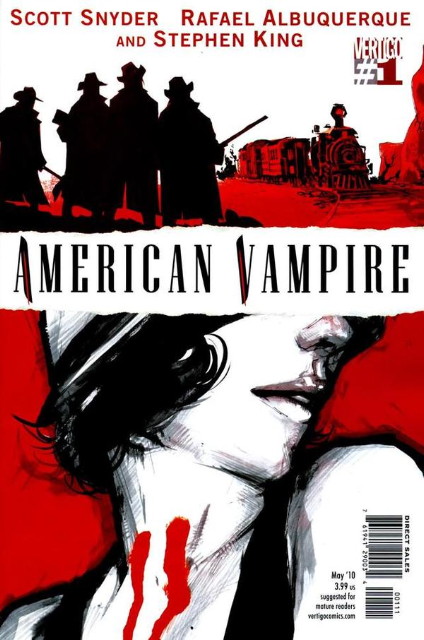
  • American Vampire #1, by Scott Snyder, Stephen King & Rafael Albuquerque (DC/Vertigo)
  • The Brave and the Bold #32, by J. Michael Straczynski & Jesus Saiz (DC)
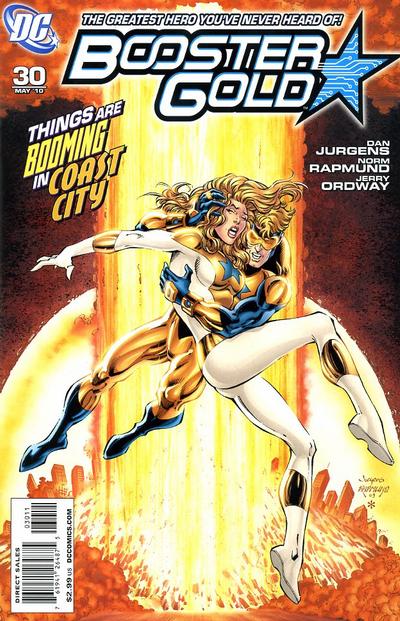
  • Booster Gold #30, by Dan Jurgens, Norm Rapmund & Jerry Ordway (DC)
  • Fables #93, by Bill Willingham & David Lapham (DC/Vertigo)
  • Green Lantern Corps #46, by Peter J. Tomasi, Patrick Gleason, Rebecca Buchman, Keith Champagne & Tom Nguyen (DC)
  • Guardians of the Galaxy #24, by Dan Abnett, Andy Lanning, Wes Craig & Serge LaPointe (Marvel)
  • Nova #35, by Dan Abnett, Andy Lanning, Mahmud A. Asrar & Scott Hanna (Marvel)
  • Echo #20, by Terry Moore (Abstract)
  • Chip #1 of 2, by Richard Moore (Antarctic)
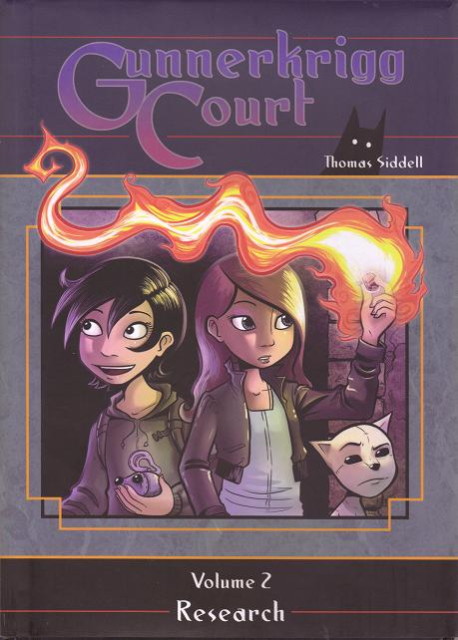
  • Gunnerkrigg Court: Research vol 2 HC, by Tom Siddell (Archaia)
  • Irredeemable #12, by Mark Waid & Peter Krause (Boom)
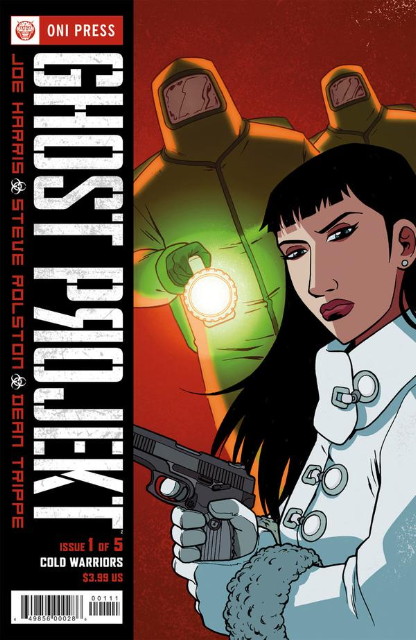
  • Ghost Projekt #1 of 5, by Joe Harris & Steve Rolston (Oni)
With dropping Hercules this week, I decided to try something new, the new Vertigo series American Vampire, especially since my local store ordered dozens of them. While the series was created by Scott Snyder (whose work I don’t think I’ve read before), presumably the hoopla is because the second story is written by Stephen King. The whole package is illustrated by Rafael Albuquerque, who I’m also not familiar with.

The double-sized first issue is… merely okay. The first story features Pearl, a young woman in 1925 Hollywood working multiple jobs trying for a big break, and who gets invited to a party thrown by a famous movie producer, featuring a cliffhanger ending. The second story the arrest and transportation by rail of Skinner Sweet, a notorious robber in the old west of 1880 who stages a daring escape but ends up taking on more than he’d bargained for. From what I’ve read, both of these characters will be the vampires of the series, following their escapades throughout the landscape of 20th century America as figures grounded in their particular eras.

The stories are decent but not especially impressive, and Albuquerque’s art is pretty good although he makes extensive use of heavy lines in the inking, with a style apparently influenced by Howard Chaykin, making everything look a little too staged and not quite dynamic enough.

Overall it’s a decent package as a fairly typical vampire yarn – which seems like exactly what it’s trying not to be, unfortunately. Admittedly I am not much of a fan of horror, and have a limited interest in suspense-for-the-sake-of-suspense. (I was disappointed, for example, that Joe Hill’s Locke & Key ended up being more suspense and horror and mystery and discovery.) So arguably I’m just not part of American Vampire‘s target audience. I’ll stick around for a few issues and see if there’s more to it than meets the eye. On the other hand, if vampires and horror are exactly your thing, then this one seems pretty well crafted and worth a look.

I believe this month’s Booster Gold is Dan Jurgen’s swan song on his second turn with the character he broke into DC with. The series’ sales have fallen since Geoff Johns – who launched the current series – left, but really the quality has been about the same all along, although Jurgens is certainly a quirkier writer than Johns. The biggest disappointment is that Jurgens didn’t have a concrete storyline he was working with on his run, so it read like one little adventure (or misadventure) after another, without much tying them together. Fun, but lightweight.

On the other hand, this issue ends with a nice revelation about Booster’s future, not so much dropping hints as to what’s to come as jumping straight to the end to show us that everything will, eventually, turn out all right, even though we have no idea what challenges will have to be surmounted to get there. In its way it’s just as touching as Johns’ last issue when he gave Booster and his sister a happy ending (for the moment).

Keith Giffen is apparently taking over the writing chores, so anything could happen, as Giffen’s books range from outstanding to annoying. I’ll keep reading for a while, but I think the key will be for Giffen to stay true to the character and tone of the series that’s been set; too radical a change would just wreck what’s fun about the book.

I’ve written about the great webcomics Gunnerkrigg Court before (here and here), and I’m sure I will again. After the long delay for the first book, it’s great that Archaia has been able to come out with the second collection a little over a year later. The strip is as good today as when it started – maybe better, since creator Tom Siddell’s art is certainly much better – and he continues to inject a sense of wonder into nearly every story, as well as spooky, mysterious and sometimes outright baffling bits, and a nifty braiding of science and magic. Greg Burgas has a comprehensive review, and he likes it a lot, too.

This volume has several excellent chapters: “Red Returns” features a pair of faeries becoming students at the Court after having transitioned to being human. Antimony and Kat befriend Red and try to cheer her up, but it turns out that faeries’ means of happiness and emotional connection are nothing like what they’re used to. “S1″ features the return of Robot, whom Antimony created in the first chapter of the series to take her second shadow back to Gillitie Wood, and starts to shed some light on the history of the Court which will become part of our heroines’ adventures in later chapters. “Power Station” goes back to the strange girls Zimmy and Gamma – whose nature still isn’t really clear to me – and obliquely looks at Zimmy’s nature some more, through what appears to be a flashforward (or maybe a dream sequence). Even in the bits I don’t really understand, Siddell’s storytelling is still strong and moving, so I’m inclined to think he’s either being obscure for effect, or because the mysteries will be revealed in time.

Highly recommended; Gunnerkrigg Court is one of the best webcomics out there.

What is it about secret Soviet research projects and horror comics? Must be the stark architecture and hard-assed characters who always seem to make it into such stories. And Joe Harris & Steve Rolston use it to good effect in the first issue of their series Ghost Projekt, which I only heard about because of Greg Burgas’ review. But it’s great stuff, off to a rousing start when two criminals break into an old research facility and end up infected with… something. Then a pair of Americans show up to investigate and clean up the site, before a Russian operative arrives to tell them it’s under their jurisdiction.

Even if the story plays out in a predictable manner – the Americans refuse to be told off and investigate on their own, the Russians end up with problems greater than they’d dreamed, and the criminals end up as the spearhead of something really nasty getting out – it could still be a fun series. If there are a few curveballs in there, then it could be downright terrific.

Okay, Ghost Projekt is nominally a suspense/horror comic like American Vampire is, but I liked it much more. Why? Well, the setting is more interesting, and there’s a lot more mystery and intrigue here than in AV. I don’t mind suspense and horror, but I’m not so much into stories whose raison d’etre is suspense and horror. They’re a storytelling mechanism, but not the reason I show up. In fact, Ghost Projekt has more in common with Gunnerkrigg Court with a cat who knowingly follows the characters around, and the air of mystery surrounding fundamentally likable characters. GK is a more playful comic, but Ghost Projekt has that hook of curiosity, too.

In any event, the first issue left me pretty enthusiastic; check it out.

Monsters of Webcomics

Saturday we went up to the Cartoon Art Museum in San Francisco, mainly because I wanted to see their Monsters of Webcomics exhibition before it departs later this month.

If you’ve never been to the Cartoon Art Museum, it’s definitely worth a trip. Admission is reasonable (currently $6 for adults), and you get a lot for your money: The museum consists of 5 rooms, each with a different exhibit. If you’re afraid that it’s full of superhero comics art, nothing could be further from the truth: I features all sorts of sequential art, and usually there are only a few pages of superhero comics. For example, we saw a collection of concept art, color test art, and animation cels from Disney’s Sleeping Beauty, many from the collection of one of the artists, Ron Dias. Another is an exhibition of an underground cartoonist from San Francisco, Spain Rodriguez. While underground comics aren’t my thing, there’s something for everyone (well, most people) here. The museum also has a bookstore in front with an eclectic selection.

The webcomics exhibit was pretty good, featuring ten webcomics, most of which I’d heard of, but only one of which (Girl Genius) I read. Though I probably should be reading Dicebox and Templar, Arizona (I’d never heard of the former, I’d come across the latter but not gotten into it). The other seven arguably have more in common with the underground comics I’m not fond of than with traditional cartoons or comic art, so I’m not sure any of them will be my thing (the art styles aren’t generally to my taste, and surrealistic stories and jokes aren’t for me). Still, it’s always good to see what’s out there.

The museum’s exhibits always feature copious notes, and this exhibit contained descriptions by the strip creators of how they got into webcomics, and how they produce their comics. The Dicebox exhibit contained a step-by-step illustration of how the creator produces a page, using both paper and digital techniques.

It’s been several years since I’d last visited the museum. I should wander by their web page more often and try to go once a year or so, because I always enjoy it. Plus, it’s an excuse to get up to the city, which us South Bay dwellers can be reluctant to do.

The Hidden Side of Webcomics

Interesting article at Robot 6 about webcomics that come to an end. The basic economy of webcomics – they’re freely available, and almost always free to read – means that the barrier to entry for a creator is low, but the return on investment can also be low. So many webcomics end after a few strips, and many more end – deliberately or through neglect – some time later:

“Over 15,000 webcomics now exist online,” Wikipedia tells us, but probably 14,000 of those stopped updating after six episodes. This is the dark side of The Promise of Webcomics: It is true that anyone can start a webcomic, and that without the usual barriers to publication, such as editors and budgets, the web has become a seething cauldron of creativity. However, things like slush piles and contracts and editors are there for a reason: Not just to keep the crap out, but also to make sure the creator finishes the damn comic. The internet imposes no such restrictions. Consequently, many webcomics start with a burst of enthusiasm and fizzle when the creator runs out of ideas or has to study for finals.

The parallels to blogging are obvious. I’ve been blogging for over 12 years now, and my direct return on that investment is measured in Amazon.com referrals. The indirect returns, on the other hand – in the form of friends and acquaintances and the things that friends and acquaintances can bring you – have been much greater. Not to mention that I enjoy blogging, which is the direct impetus keeping me going. (I could arguably make some money by putting ads on my blog. I doubt it would be enough money to make a difference in my life – I’m just not a popular enough blogger – and it might not even be enough to justify the effort to put up the ads in the first place.)

I’m enthusiastic enough about the webcomics I read that I have a fairly meticulous system for keeping up with them through RSS feeds and bookmarks. I also enjoy finding a great new webcomic with an extensive archive, and I will buy the print collections of the webcomics I most enjoy. But apparently I’m unusual in that respect, and for many readers a large backstory is a barrier to entry.

But then, this is a problem that mainstream superhero comic books have been dealing with for years: How to satisfy their meat-and-potatoes fans who are into the continuity, while still bringing in new readers. Television series have the same problem. The economics of those media are different, but the problem is similar.

Myself, I’d suggest to someone who finds a new webcomic they enjoy with a large archive not to be put off by it. Enjoy the recent strips for what they are, but also consider going back to read through the archive, even if over a period of weeks or months. You might find it well worth the time invested. And I’d suggest to the creators of those strips that they keep their “About This Comic”/”New Readers” pages up-to-date so new readers can jump in and feel oriented right away; it’s unfortunately quite common to come across strips whose orientation pages seem years old. (As a reader, I’d also rather see an orientation page than a list of cast members; I’d rather learn about the cast by reading the strip.)

For new webcomic creators who find their enthusiasm waning after a few strips, consider that someone who seems like an “overnight success” usually has put in years of work to get to that point, it just seems to other people like that success came overnight. But I bet that much like blogging, you need to be doing a webcomic because it’s what you want to do. Because I don’t think very many people make a living drawing webcomics.

(Another interesting read is State of the Webcomics Union by Jeph Jacques of Questionable Content.)

This Week’s Haul

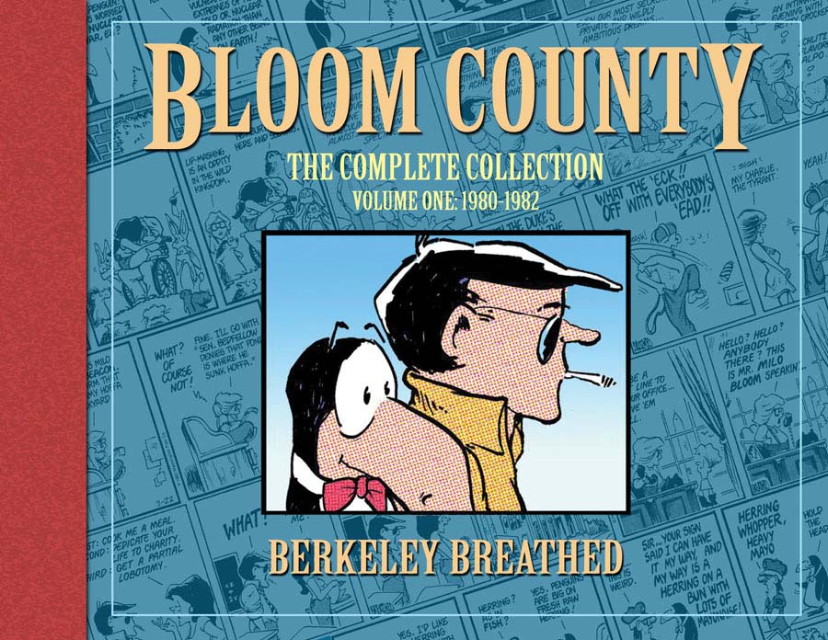
Bloom County: The Complete Library volume 1: 1980-1982 Berke Breathed’s Bloom County was one of the most popular comic strips of the 1980s (the previous “most popular” strip being Garfield, and the next being Calvin & Hobbes). What always perplexed me about its popularity is that, well, for most of its run it wasn’t very good. And most of the best stuff is collected in this volume, the first of five from IDW collecting the whole series.

At the beginning, Bloom County was essentially a satire of small town America, as well as a satire of the rest of America as seen by people in that small town. Rather than commenting on American politics, as Doonesbury did, Bloom County focused on the quirks of pop culture (our inexplicable fascination with the British royal family, for example) and elements of local culture which had gained more visibility in the age of mass communication. But ultimately it shared qualities with many of the best comic strips: It was about its characters, especially smart-alec Milo Bloom, who was a young boy with a weird man apparently struggling to get out, and Michael Binkley, his insecure friend. The early cast also featured Steve Dallas, Cutter John, Bobbie Harlow, Binkley’s penguin Opus, Milo’s grandfather the Major, the perpetually-drunk Senator Bedfellow (maybe the best character name in the history of humor strips), Binkley’s father, and town busybody Otis Oracle. The strip was frequently off-the-wall, with a manic energy unlike most other strips in history. Breathed’s art both conveyed that energy and was more sophisticated than your traditional humor strips of the day (contrast it with the simplistic, repetitive art of Garfield, for instance).

For me, though, the series’ downfall arrived early, in the form of Bill the Cat, a self-conscious parody of Garfield which seemed to utterly miss the point that taking something that wasn’t very funny to start with (yet was inexplicably popular) and making it a little disgusting besides was, well, not very funny, yet still disgusting. Bill showed up in June 1982, and was immediately not-funny. Breathed would eventually use Bill to explore the excesses of popular culture, and he continued to be shocking unfunny, a character purchased after his sell-by date. Over time, Breathed phased out Bobbie Harlow (the character most responsible for character-based humor in the early strips), as well as Oracle, Bedfellow and the Major (three of his best tools for satirizing the narrow-minded right wing), leaving the cast with a group of eccentric characters largely devoid of warmth or meaning. Occasionally Milo would show signs of his early life, but the strip revolved around Opus and Bill, which just wasn’t as much fun. (The less said about the sequels to the strip, Outland and Opus, the better; both were largely unreadable and completely unfunny.)

Despite all this I’ve been looking forward to this volume since it was announced, as it collects many strips which – as far as I know – haven’t been printed since their first newspaper run, and are from the period of the strip I enjoyed the most, those earliest years: Steve Dallas and Cutter John competing for Bobbie Harlow’s affections, Binkley’s insecurities, Milo as both the voice of reason and the journalistic hack hunting for Senator Bedfellow’s head, and the weird individuals inhabiting the rural community of Bloom County.

I doubt I’ll pick up more than one volume after this one, but really, this one is all you need. It holds up pretty well 30 years later, its dated subject matter feeling more quaint than irrelevant, and it’s funny stuff. And as usual for IDW, it’s an attractive hardcover book, with an introduction and occasional strip comments by Breathed. A wonky chronicle of an unusual era, for both America and for comic strips.

Webcomics I Read

I love comic strips. The World Wide Web has ushered in a new golden age of comic strips. And not only do many of these strips have great artwork, but they’ve broken free of the bland mediocrity that plagues strips in the newspaper; webcomics have an adventurousness and irreverence that you won’t often find in the paper (well, maybe in Funky Winkerbean).

There are hundreds of Webcomics out there, and I couldn’t possibly read them all – nor would I want to, since many of them are not to my taste. But I read quite a few, and try new ones that look interesting as I discover them. Most strips I read have good otr even great artwork, although a few have such strong writing that it overcomes their artistic deficiencies.

Here are all the Webcomics I’m reading these days, grouped into inadequate yet hopefully-helpful cateories:

Gag-a-Day Strips

The emphasis in these strips is to provide a joke in each episode. Some of them may have an ongoing continuity, but that’s not (to my mind) their main point.

  • Basic Instructions, by Scott Meyer: A very sarcastic strip featuring the artist as protagonist, with faux-realistic illustrations of the characters. The humor’s all in the dialogue, which parodies “how to” and “self help” books by twisting well-meaning advice into silly situations involving snarky people. It took a while for it to grow on me, but some of the strips are hilarious.
  • Comic Critics, by Sean Whitmore & Brandon Harvey: A group of friends who produce a podcast critiquing comic books, it’s sort of a meta comic strip, in that it’s never clear whether their criticisms reflect the opinions of the creators (I’m assuming not), but which presents critiques of real comic books and creators (consequently, non-comics fans might not find it accessible). It has an ongoing continity, but a loose one..
  • Courting Disaster, by Brad Guigar: Guigar is better known for his Evil Inc. daily (see below), but Courting Disaster is a weekly single-panel strip about love, sex and relationships. It’s sarcastic pillories both genders more-or-less equally, but it’s not very deep. On the other hand, how much depth do you expect from a single-panel weekly?
  • Dork Tower, by John Kovalic: Long-running comic satirizing geeks, especially FRPG gaming geeks. It has some ongoing character threads, but for the most part it’s a gag-a-day strip, often with horrible puns. Kovalic’s art is pretty simple, but it’s his writing that makes the strip work.
  • Garfield Minus Garfield, by Jim Davis & Dan Walsh: The minor media phenomenon, Walsh discovered that if he subtracted Garfield from his own strip, then it became a twisted strip about the foibles of Jon Arbuckle, who talks to himself and reacts to nothing. Walsh cheats a little in his doctoring of Jim Davis’ panels, but mostly it’s amusing and clever. Davis approved of the concept and a collection has been published.
  • Inktank, by Barry T. Smith: Smith used to draw several strips, the best-known of which was Angst Technology, the chronicle of a small computer game company. He ended his other strips a few years ago, and eventually started Inktank, which is semi-autobiographical, but features the AT crew. His humor features a lot of sarcasm, which I appreciate, but his art can get a little repetitive at times.
  • The Joy of Tech, by Nitrozac & Snaggy (Liza Schmalcel & Bruce Evans): Technology industry humor, drawn in a retro style, often with a focus on Apple. Very hit-or-miss, but worth following if you follow the tech industry.
  • Last Call, by Megan Steckler: I stumbled across this one back when Steckler was updating it only occasionally, and it focused on the main character, Abby, drinking at the local bar and talking to her imaginary alter ego, Lily, a scantily-clad succubus only she can see. Since she started updating regularly, it often focuses on the relationship between Abby and her husband Beau, who are both geeks. It seems like Steckler intended to make this a bit of a gamer’s comic strip too, as Abby’s background involves working at a game store, but that aspect never really materialized.

    Anyway, it’s quirky and cartoony and irreverent, which explains why I like it, although it’s got more of a ‘home brew’ feel than many of the other strips I read.
  • Penny Arcade, by Jerry Holkins & Mike Krahulik: One of the most successful webcomics ever, Penny Arcade nominally comments on the computer gaming industry through the persons of its creators’ fictional avatars, although with regular forays into other pop culture arenas or into utter nonsense. It can be crude, bloody, and tasteless at times, and there’s rarely anything resembling an ongoing story. Some of the gags are hilarious, but it’s not one of my favorites.
  • PvP, by Scott Kurtz: Arguably the other most successful webcomic ever, it chronicles the lives of employees at a computer gaming magazine company, one of whom is an imaginary troll. Kurtz probably has his finger on the pulse of pop culture as much as any other webcomics artist, with a particular love of 70s television and of comic books of any era. Ridiculous nonsense is frequently the order of the day, but it also has an ongoing storyline. The strip often blurs the line between reality and fantasy. I’m not sure anything sums up the series better than this episode of The Adventures of LOLbat (and you can read the follow-up storyline for more such silliness). Kurtz is also a very talented artist, whose style has developed from stiff and repetitive into one that’s imaginative and flexible (see, for instance, his satire of Watchmen, Ombudsmen). Not everything in PvP works for me, but when it does work, it’s excellent.
  • Sinfest, by Tatsuya Ishida: The third-most-successful webcomics strip? Hard to say, since the author seems to keep his cards close to his chest; maybe the others just get more publicity. Nonetheless, Ishida is a fantastic artist with a twisted sense of humor, which he brings to bear in an ongoing character drama with a dose of current events satire. Strongly reminiscent of the best of Bloom Country (before Bill the Cat showed up), it’s been running for years and is worth reading from the beginning. Start with the collection.
  • XKCD, by Randall Munroe: Über-geeky strip which comments on math, computers, and romance, drawn with stick figures. The James Bond strip or the Mac sudo strip are good examples. Or maybe the regular expressions one. I’m particular partial to the one on getting some perspective. But I think my favorite has to be duty calls.

    Anyway, be sure to mouse over the image to see the tooltip for an extra punchline.

Humorous Adventure

Ongoing adventure strips with a strong humor component.

  • Evil Inc, by Brad Guigar: Guigar’s main strip, about supervillains running a corporation to, well, support supervillains. With a large cast, often-complex story arcs, it’s one of the more ambitious comics out there. Guigar’s got a cartoony style that translates very well to superheroics. The humor is frequently broad, with sight gags, character-based humor, and puns. Worth reading from the beginning – it’ll take you a while! Alternately, you can buy the collections (four published to date), which tell the story reformatted for a full-page format. (The original strips are better, though.)
  • Girl Genius, by Phil & Kaja Foglio: To be over-the-top about it, Girl Genius is the sine qua non of webcomics. To come clean I’ve been a huge fan of Phil Foglio’s writing and art for 30 years now, and I own nearly everything he’s published that I can get my hands on (most of it in hardcover). His work has been hilariously funny, devilishly inventive, utterly irreverent, and creatively and maniacally drawn.

    Girl Genius adds into this mix a complicated backstory (mad scientists co-opt the industrial revolution, and our heroine is the lost daughter of two of the greatest mad scientist heroes of the recent war), a huge cast, politics, romance, and period attire. While some of the manic energy doesn’t make the transition to this long-form story, and there are sequences that drag at times, it’s still an hugely satisfying ongoing adventure story, with laughs and drama and excitement. Updated 3 times a week, no one else does webcomics better.
  • Rocket Road Trip, by Shawn Boyles & Isaac Stewart: I just discovered this strip this week; it’s the charming story of a semi-competent monster hunter, his disfunctional family, and the monsters he hunts. It’s sort of like PVP crossed with an especially demented Calvin & Hobbes. A relatively new strip, it’s pretty funny.
  • Sidekick Girl, by Laura Cascos & Erika Wagner: I stumbled on this a few months ago and laughed my ass off. Sidekick Girl is Val, a woman who was rejected as a superhero (despite some pretty potent abilities) because she, uh, couldn’t pass the physical. She was assigned as a sidekick to Illumina, who could pass the physical, but whose lights aren’t turned up all the way in her attic. Val doesn’t wear a costume and carries a baseball bat. It’s a fine satire of superhero comics, and a must-read for any fan of the genre. Unfortunately the current story involves virtual reality D&D, but hopefully it’ll get back to its roots soon.
  • Wapsi Square, by Paul Taylor: Wapsi Square has been two rather different comic strips since it launched in 2001. The first few years it was a slice-of-life strip centered around Monica, a young anthropologist, and her eccentric gang of friends. But a few years ago it changed into a light adventure strip in which Monica learns that she and her friends need to figure out how to stop the world from ending in 2012 at the end of the current Mayan calendar. The strip has several supernatural elements (spirits, a minor deity, a sphinx, teleportation, prophecy) and the character interplay has decreased significantly.

    Overall I enjoyed the sillier, more character-driven strips of the earlier days – I think my favorite sequence is when Monica buys a new bicycle – which is surprising considering how plot-oriented I tend to be. But the more recent strips are not as funny, and I have a hard time following (or, really, caring to follow) the ins and outs of the plan to keep the world from ending. It’s a more sophisticated strip, but I don’t think it’s as much fun.

    Taylor’s artwork has also changed a lot over the years. The earliest strips are much less polished, but the most recent strips feel almost too polished, and something about the way he draws faces changed so that the characters today look a bit too artificial. Compare, for instance, this early strip (which is still quite well-drawn – look at the backgrounds), to this strip from a few years later, to this recent strip. I think the middle one is the best of the three, and I tend to prefer the more organic style of the earlier strip over the precise look of the later strip, in which the characters look a little creepy.

    So although I was very enthusastic about Wapsi Square when I first discovered it and started reading the archives from the beginning, the more recent strips just don’t excite me as much. I’d like Taylor to find a happy medium between the complex ongoing plot and the more freewheeling style of the earlier strips.

  • Plan B, by Mitz: I discovered this recently when looking at Chris Sim’s Woman of A.C.T.I.O.N., and loved it immediately. The main character is a supervillain, Veronica (her name and her code-name) who learned she was married to a super-hero, and who turned to a life of crime when their marriage broke up. The details are still being revealed. Veronica is twisted but very self-aware, and also pretty grumpy and nasty, so we see the usual superhero fights and schemes from the villain’s side, although she’s not your usual villain. Despite being a comical deconstruction of the superhero genre, there’s a heavy dose of violence and innuendo in the strip, giving it a sharp edge. It’s sort of the evil version of Sidekick Girl, and really just as good.

Serious Adventure

The hard stuff: Funny occasionally, but these are strips with serious ongoing stories.

  • Afterstrife, by Ali Graham: Megan and Stitch are two young people who pass away and find themselves in a purgatory-like afterlife. Their souls are linked somehow, and so they’re stuck with each other even though they don’t really like each other, but they have to work off their karmic debts in order to move on, and some of the rulers of this afterlife don’t want them to get away. It’s pretty serious and often tense and suspenseful, and Graham does a good job keeping my interest. Graham’s art is inventive but his figures and faces aren’t as dynamic or expressive as some other artists. It seems to be nearing a climax lately.
  • Danielle Dark, by Jay Bradley: A full-page weekly, the heroine is a vampire who was turned in the 19th century, and who moves from place to place since she doesn’t age. Despite this, it’s sort of a “young adult sitcom” with vaguely threatening overtones, with Danielle recently falling for one of her victims – who also happens to be in the witness protection program. Bradley has a nice clean style, although his facial expressions get very exaggerated at times. Early in the strip he endowed Danielle with big boobs, because they attract more prey that way, you see (and readers too, presumably).
  • FreakAngels, by Warren Ellis & Paul Duffield: Comics writer Ellis is the brains behind this weekly post-apocalyptic strip in which a group of telepaths accidentally cause the end of the world, and then set out (well, most of them) to rebuild a pocket of civilization in Whitechapel, London. They don’t really all like each other, but mostly work together towards a common cause. Naturally, the world (what remains of it) is both hostile towards and jealous of them and what they’ve built, so there are threats from every corner, including from within. The first two chapters (try the trade paperbacks) take place over just two days, so this strip could go on for quite a while. Who knows?

    Duffield has a distinctive, clean, style, with a strong sense of place and architecture, and the art is lovingly colored. He really brings the future Whitechapel to life. How he hasn’t gotten a high-profile gig at a major comics publisher, I have no idea.
  • Gunnerkrigg Court, by Tom Siddell: I’ve written before about this excellent comic, chronicling the adventures of the young Antimony Carver at the otherworldly school of Gunnerkrigg Court. It’s one of the very best out there, just a smidge below Girl Genius. Not to be missed. You can also buy the collection.

Soap Opera/Slice of Life

A little bit of everything: Humor, drama, ongoing stories, but mainly tracking the stories of their characters and their relationships.

  • Girls With Slingshots, by Danielle Corsetto: The daily adventuresof two quirky women, and their friendships and relationships. Often rather explicit in its content, it’s also silly and sarcastic. Corsetto has an attractive cartoony style with characters who look very different from one another. Probably my second-favorite strip in this category, behind…
  • Questionable Content, by Jeph Jacques: My first close encounter with soap opera webcomics, and it’s probably the best of them. It follows the lives of a group of friends living in western Massachusetts (near “Smif” college), and despite running for years, the in-strip continuity has lasted less than a year so far. The main characters are the shy Marten and the overbearing Faye, who become roommates early on. Significant characters include Marten’s girlfriend and Faye’s boss, Dora; Marten’s anthropomorphic PC Pintsize; and Hannelore, who has extreme OCD. The strips vary between charming and sarcastic, but are often frickin’ hilarious. Jacques isn’t the best artist on the Web, but he’s good enough for his subject matter, and most importantly does a fine job with expressions and body language, which is what the strip demands.
  • Least I Could Do, by Ryan Sohmer & Lar deSouza: I just started reading this one, but it’s been running for a while. It seems to be the daily adventures of self-centered and promiscuous Rayne and his cast of characters. Its earnestness takes some of the edge off its slightly distasteful protagonist, but it hasn’t won me over yet.
  • Sweet Fat Life, by Lauren & Genny: I came across this recently and other than being somewhat focused on its two protagonists being large women, it feels a lot like a slightly wonkier Girls With Slingshots. Updating has been erratic since I started reading it, and the archives are something of a grab-bag, but if it can get on a regular schedule and establish an ongoing continuity, it could develop into a good one.

I don’t have any particular approach to discovering new webcomics. Going through Comixpedia systematically seems like a way to spend a lot of time while only finding a couple of strips I want to read. I actually check out some of the strips that advertise through Project Wonderful which appears on the front pages of Wapsi Square and Girls With Slingshots, although few of them have seemed like my cup of tea. But it’s not like I have a shortage of strips to read.

What’s good out there that I ought to be reading?

This Week’s Haul

  • Booster Gold #22, by Dan Jurgens & Norm Rapmund (DC)
  • Green Lantern #43, by Geoff Johns, Doug Mahnke & Christian Alamy (DC)
  • Superman: Whatever Happened to the Man of Tomorrow? Deluxe Edition HC, by Alan Moore, Curt Swan, Dave Gibbons, Rick Veitch, George Pérez & Kurt Schaffenberger (DC)
  • The Unwritten #3, by Mike Carey & Peter Gross (DC/Vertigo)
  • Wednesday Comics #1, by various (DC)
  • B.P.R.D.: 1947 #1 of 5, by Mike Mignola, Joshua Dysart, Gabriel Bá & Fábio Moon (Dark Horse)
  • Sinfest vol 1 TPB, by Tatsuya Ishida (Dark Horse)
  • Star Trek: Crew #5 of 6, by John Byrne (IDW)
Superman: Whatever Happened to the Man of Tomorrow? Deluxe Edition HC Alan Moore’s Superman stories from the 1980s get the spiffy hardcover collection treatment this week.

The titular story in Whatever Happened to the Man of Tomorrow? was Moore’s coda to the pre-Crisis Superman, and is one of the best Superman stories ever, especially for people who grew up reading his 50s, 60s and 70s adventures as I did. All of Superman’s old enemies come back at once, disrupting his life and threatening the lives of his friends. Superman retreats to his Fortress of Solitude to await the end of his career and perhaps his life. While Moore brings a modern sensibility to what seemed like silly menaces of past decades, the themes are fundamentally those of classic Superman: Help others even at cost to yourself, and that Superman can never kill, no matter how dire the threat. Before Spider-Man codified the principle of great power conveying great responsibility, Superman was living by it, and Moore focuses on that as the central element of the character’s classic portrayal. with art by Curt Swan, George Pérez and Kurt Schaffenberger, it has a classic visual style too.

The other major work here is “For the Man Who Has Everything”, in which Batman, Robin and Wonder Woman visit the Fortress for Superman’s birthday, and find him incapacitated by an alien plant that induces a dream/trance state, and his enemy Mongol ready to take over the world with Superman out of the way. Aside from the battle in the real world (which ends with a terrific moment for Robin), Superman’s dream of life if Krypton hadn’t exploded is exactly as poignant and tragic as you might expect. Moore’s career in the 80s was full of melancholy stories despite the heroic deeds done in them, and this story fits right in with them. Dave Gibbons draws the story, in a style which seems like a transition from his earlier style in which everything looked slightly shiny, and his ultra-realistic Watchmen style.

The third story is a largely-forgettable Superman/Swamp Thing story from a team-up book illustrated by Rick Veitch, whose art I’ve never really warmed to. Not everything Moore wrote was a winner even in his heyday, so this one is for completists only. Nonetheless, this is a terrific package worth picking up if you haven’t read the big two stories before and you have any interest at all in the Man of Steel.

Wednesday Comics #1 A large slice of the comics blogosphere has gone all melty over Wednesday Comics (for instance, see here, here, or here). This is DC’s new weekly anthology series where each chapter of each story is 1 page long. On the other hand, it’s a big page, printed on newspaper-tabloid-sized paper, albeit on paper of lower quality than your typical modern comic book (but better than newsprint). The series is slated to run 12 issues, which means at the end we’ll have gotten 15 12-page stories for $3.99 per issue.

The format has the obvious drawback that the first issue barely gets anywhere in any of the stories because, well, they’re only a page long. So the best pages are the ones that go for broke on the artwork: Kyle Baker’s deeply textured Hawkman page, or Jose-Luis Garcia Lopez and Kevin Nowlan’s Metal Men page (JLGL’s layout style was made for this large format). Other strips look either pedestrian, or overdrawn. Ben Caldwell’s Wonder Woman is so intricate it’s practically unreadable, while Barbara Ciardo’s colors over Lee Bernejo’s Superman make the page look stiff.

You could call Wednesday Comics a “micro-anthology” book, and it evokes the feel of newspaper adventure strips with the tabloid format. For me it more directly recalls the Action Comics Weekly series of 1988-89, which I think illustrated how difficult anthology comics are to pull off in the modern era, especially with publishers’ priorities to market their trademarked properties above all else. Wednesday Comics has a leg up on ACW in that it contains the work of many A-list creators (Baker, Busiek, Gaiman, Pope, Kubert), but it remains to be seen whether they’ll have the latitude to produce noteworthy stories. It’s far too soon to tell if any stories here will be much good.

When Wednesday Comics was announced, my reaction was, “Enh, anthology comic. I bet the stories will be entirely forgotten in a year or so.” I wasn’t even planning to buy it, but all the hype made me change my mind. I still think it will end up being largely forgettable, but there could be a couple of exceptions. We’ll see.

Sinfest vol 1 Tatsuya Ishida’s Sinfest is a terrific webcomic, dynamically drawn and utterly irreverent, yet charming and funny, it’s been around for nearly 10 years. There have been three collections via CafePress, and now Dark Horse has issued a new collection. I haven’t checked to see what the differences are between the collections – other than the cover and some of Ishida’s college material in the new one – but I decided to pick it up anyway.

Broadly, the premise involves the ongoing struggle between God and Satan for the soul of Slick, a young man (who resembles Calvin with sunglasses) who wants eternal hedonism. The main supporting character is Monique, the object of Slick’s desire, albeit one who’s completely her own person and isn’t going to let him just have his own way. The strip is PG-13 rated, with strong innuendoes (and language) but no nudity; it’s oddly clean, yet dirty.

Fundamentally, the strip’s humor is based in characters who have strong wants and drives which conflict with one another. This may be best exemplified in Percy and Pooch, the artist’s cat and dog (or fictional representations thereof) who play, argue, fight, and follow their drives while their owner is away. Their adventures are the favorite part of many of the strip’s fans, as he’s got the nature of and differences between cats and dogs perfectly nailed for comedic purposes.

I’ve been reading the strip for years and although it sometimes feels like its edge has been a bit blunted, these early strips feel as fresh as ever. While it might not be for everyone, it should appeal to anyone who enjoys irreverent humor, especially people who enjoyed the early Bloom County strips before Bill the Cat sent it into its downhill spiral.

(Looks like the second volume will be out in December.)